
The development of seamless garments has changed the way apparel manufacturers approach comfort, appearance, and production efficiency. Unlike conventional garments that rely heavily on stitched seams, seamless clothing uses bonding technologies to create smooth connections between different textile components. This approach is widely used for sportswear, underwear, shapewear, activewear, swimwear, and other garments where flexibility and a clean appearance are important. Among the bonding materials available for these applications, textile adhesive film provides a practical solution for creating strong and flexible textile-to-textile connections.
Textile adhesive film is a thin thermoplastic adhesive material designed to bond fabrics when exposed to controlled heat and pressure. During the bonding process, the film melts or softens, penetrates or adheres to the textile surfaces, and forms a stable connection after cooling. For seamless garment manufacturing, the adhesive must provide reliable bonding performance without making the fabric excessively stiff or affecting its appearance.
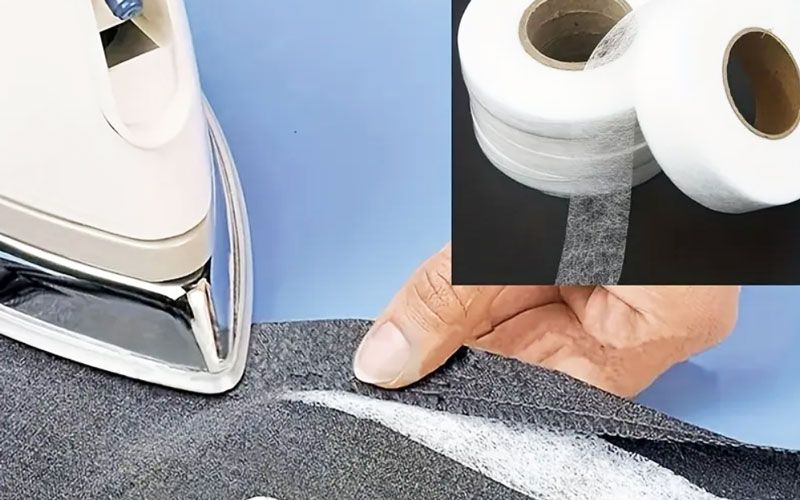
What Is Textile Adhesive Film?
Textile adhesive film is a heat-activated adhesive layer supplied in film form. Depending on the application, it can be manufactured with different thicknesses, widths, melting temperatures, softness levels, elasticity, and bonding strengths.
The film is normally positioned between two textile layers or between a fabric and another garment component. Heat and pressure are then applied through equipment such as a heat press, rotary heat press, or continuous bonding machine. Once the adhesive reaches its activation temperature, it flows sufficiently to create contact with the textile surfaces. After cooling, the bonded area becomes stable.
Compared with liquid adhesives, textile adhesive film offers several advantages for garment production. It can provide controlled adhesive thickness, clean application, consistent coverage, and relatively easy handling. These characteristics make it suitable for industrial production environments where repeatable bonding quality is important.
Why Use Textile Adhesive Film for Seamless Garments?
Seamless garments require more than simply joining two pieces of fabric. The bonded area must usually remain flexible, comfortable, and visually clean while withstanding repeated stretching and washing.
A suitable textile adhesive film can support these requirements in several ways.
Smooth and Clean Appearance
Traditional stitched seams can create visible sewing lines, raised areas, or pressure points. Bonding can reduce the visual and physical bulk around certain garment constructions.
For products such as underwear, sports bras, leggings, and compression garments, a flatter connection can contribute to a cleaner appearance and a more comfortable wearing experience.
Flexible Bonding
Many seamless garments are manufactured from elastic fabrics containing materials such as nylon, polyester, spandex, or other stretch fibers. The adhesive needs to accommodate fabric movement rather than creating a rigid section.
A flexible textile adhesive film can maintain the connection while allowing the surrounding fabric to stretch during wearing and movement.
Consistent Production
Film-based adhesives provide a predefined adhesive layer, helping manufacturers control the amount of adhesive applied to each bonding area. This can improve consistency between production batches.
For large-volume garment manufacturing, consistent bonding is especially important because uneven adhesive application may result in weak areas, visible marks, or differences in garment appearance.
Key Properties of Textile Adhesive Film for Seamless Garments
Not every adhesive film is suitable for seamless apparel. The appropriate material should be selected according to the fabric, bonding equipment, garment construction, and expected end-use conditions.
Adhesion Strength
The adhesive should create a reliable bond between the selected textile materials. Insufficient adhesion may cause peeling during stretching, washing, or repeated use.
However, extremely high bonding strength alone does not guarantee a good result. The adhesive must also remain compatible with the flexibility and structure of the garment.
Elasticity and Flexibility
Stretchability is one of the most important considerations for seamless clothing. When the garment stretches, the bonded area should be able to accommodate movement.
An adhesive film that becomes too rigid after activation can negatively affect garment comfort and may create stress around the bonded area.
Soft Hand Feel
Garments are worn directly against the skin, particularly underwear, base layers, sports bras, and shapewear. Therefore, the bonded area should ideally maintain a soft and comfortable hand feel.
The thickness and formulation of the adhesive film can influence the final touch and flexibility of the garment.
Heat Activation Temperature
The activation temperature should match the thermal resistance of the textile materials. If the temperature is too high, sensitive fabrics, coatings, dyes, or elastic components may be damaged.
Manufacturers should therefore evaluate the recommended processing temperature, pressure, and dwell time before starting mass production.
Washing and Durability
Seamless garments are frequently washed, stretched, folded, and exposed to sweat and body moisture. A suitable adhesive must maintain bonding performance after repeated use.
Washing tests, stretch tests, peel tests, and heat resistance evaluations can help determine whether a textile adhesive film is appropriate for the intended garment.
Textile Adhesive Film and Seamless Garment Production
The bonding process can vary depending on garment construction and production equipment, but the general workflow is relatively straightforward.
First, the textile components are prepared and cut according to the garment design. The bonding area should be clean and free from dust, oil, excessive moisture, or other contaminants.
Next, the textile adhesive film is positioned between the materials that need to be joined. Accurate placement is important because excessive adhesive outside the intended bonding area may affect garment appearance.
The assembly is then transferred to a heat press or continuous bonding system. Temperature, pressure, and bonding time are controlled according to the adhesive film and textile combination.
During heating, the adhesive becomes activated and forms contact with the textile surfaces. Pressure helps maintain close contact during this stage. After the required processing time, the material is cooled and the bond stabilizes.
Manufacturers should avoid evaluating the bond immediately after pressing if the adhesive requires additional cooling or conditioning time. Final testing should be performed under controlled conditions.
Choosing the Right Textile Adhesive Film
Material selection should begin with the textile rather than the adhesive alone. Different fabrics can have very different surface characteristics and heat sensitivities.
For example, synthetic fabrics may respond differently from cotton-based textiles or coated fabrics. Highly elastic fabrics also require an adhesive system capable of maintaining flexibility during repeated stretching.
Manufacturers should consider several factors:
- Fabric composition
- Fabric thickness
- Fabric elasticity
- Surface structure
- Required bonding strength
- Activation temperature
- Pressing equipment
- Garment application
- Washing requirements
- Desired hand feel
- Production speed
For high-volume manufacturing, it is recommended to conduct sample testing before finalizing the adhesive film. A small production trial can reveal problems such as adhesive overflow, insufficient bonding, fabric discoloration, stiffness, or edge lifting.
Applications of Textile Adhesive Film in Seamless Clothing
Textile adhesive film can be used in many garment construction processes where a clean and flexible bond is required.
In seamless underwear, adhesive film can help connect textile components while minimizing bulky stitching. This can be useful for products designed for close contact with the body.
In sportswear, bonded construction can support lightweight garment designs while reducing unnecessary seam structures. This is particularly useful for garments used during running, cycling, fitness, and other activities.
In shapewear and compression garments, stable bonding is important because the material may remain under continuous tension during wear.
For sports bras and activewear, adhesive bonding can be applied to selected garment sections where flexibility and appearance are important.
The technology can also be used for bonding decorative elements, reinforcement components, elastic structures, labels, tapes, and other textile accessories, depending on the adhesive formulation.
Advantages for Garment Manufacturers
For manufacturers, textile adhesive film can provide benefits beyond the appearance of the final product.
A controlled film format can simplify adhesive handling and reduce the mess associated with liquid adhesives. It can also support automated or semi-automated production processes.
Bonding may reduce dependence on certain sewing operations, potentially improving production efficiency for suitable garment constructions. At the same time, manufacturers can create new product designs that would be difficult to achieve with conventional sewing alone.
Another advantage is design flexibility. By selecting different film thicknesses, widths, activation temperatures, and performance characteristics, manufacturers can adapt the bonding material to different garment structures.
Common Problems During Bonding
Even when the adhesive film is suitable, incorrect processing can affect the final result.
If the bonding temperature is too low, the adhesive may not activate sufficiently. This can result in weak adhesion or partial bonding.
If the temperature is too high, the adhesive may flow excessively or affect sensitive fabrics. Excessive pressure can also squeeze adhesive beyond the intended bonding area.
Insufficient pressing time may prevent the adhesive from properly bonding, while excessive time can create unnecessary thermal exposure.
Another common issue is poor surface preparation. Dust, oil, moisture, fabric finishes, and other contaminants can reduce adhesion.
For this reason, manufacturers should establish a controlled bonding process and verify the results through peel, stretch, washing, and appearance tests.
How to Improve Seamless Garment Bonding Quality
A reliable production process should combine suitable adhesive selection with accurate equipment settings.
Manufacturers should first test the textile adhesive film with the actual production fabric instead of relying only on general material specifications. Small differences in fabric construction can influence bonding performance.
The pressing temperature, pressure, and dwell time should then be optimized through trials. Production operators should also maintain consistent material positioning to prevent uneven bonding.
For large-scale production, regular quality inspections can help identify changes in adhesive performance, fabric characteristics, or equipment conditions before they affect a large batch.
Custom Textile Adhesive Film for Apparel Production
Different garment manufacturers may have different requirements for adhesive film. A standard product may work for one fabric combination but not necessarily provide the desired performance for another.
Custom textile adhesive film can be developed according to requirements such as thickness, width, bonding temperature, flexibility, adhesion strength, and application method.
For apparel manufacturers producing seamless garments in large quantities, customization can help match the adhesive more closely to the fabric and production process. Sample testing before bulk production is still important to verify compatibility and processing performance.
Conclusion
Textile adhesive film is an important bonding material for modern seamless garment production. By providing heat-activated bonding, controlled adhesive application, flexibility, and a clean appearance, it can support the production of underwear, sportswear, shapewear, activewear, and other textile products.
The best results depend on choosing an adhesive film that matches the fabric, garment structure, equipment, and performance requirements. Temperature, pressure, bonding time, surface condition, and cooling should also be carefully controlled.
For manufacturers looking to improve seamless garment construction, reduce bulky seams, and develop more flexible garment designs, textile adhesive film provides a practical bonding option for both standard and customized production applications.