
Modern lingerie manufacturing increasingly focuses on comfort, appearance, bonding strength, production efficiency, and cleaner manufacturing processes. As seamless and molded bra products become more common, manufacturers need reliable ways to bond materials without creating unnecessary stitches, adhesive contamination, or uneven surfaces. This is where a Bra Cup Adhesive Film Laminating Machine plays an important role.
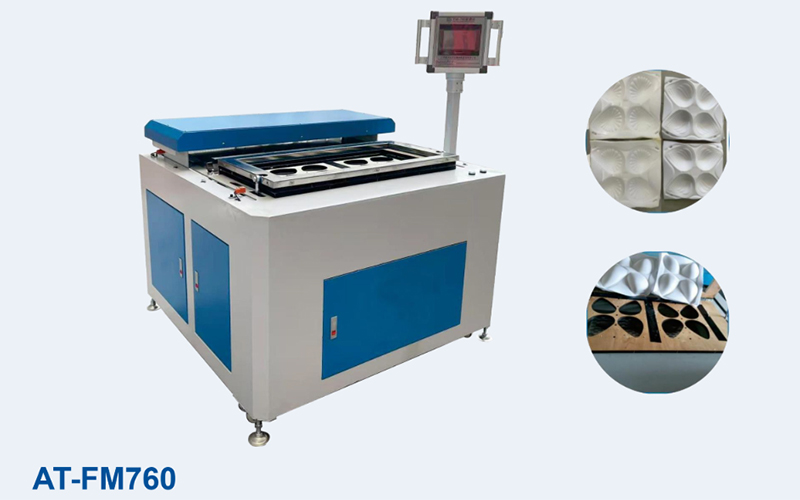
A Bra Cup Adhesive Film Laminating Machine is designed to apply hot melt adhesive film to bra cups through controlled heat and pressure. Instead of relying on traditional spray glue, the machine uses thermal fusion technology to create a more uniform adhesive layer. This helps manufacturers achieve stable bonding, improve the appearance of bra cups, and maintain consistent production quality. The AT-FM760, for example, is specifically designed for bra cup bonding and intimate apparel manufacturing and uses high-temperature thermal fusion technology for adhesive film lamination.
What Is a Bra Cup Adhesive Film Laminating Machine?
A Bra Cup Adhesive Film Laminating Machine is specialized equipment used to laminate adhesive film onto bra cups or related intimate apparel components. The basic purpose is to combine adhesive film with the target material through controlled heating and pressure so that the adhesive becomes activated and forms a stable bonding layer.
In traditional manufacturing, spray adhesives may be used to connect different layers or components. Although spray glue can provide adhesion, it can also create overspray, uneven adhesive distribution, adhesive waste, and a less controlled working environment. Film lamination offers an alternative by placing a defined adhesive material directly where bonding is required.
The machine therefore does more than simply heat a bra cup. It provides a controlled production process in which temperature, pressure, timing, and positioning can be managed to achieve repeatable bonding results.
For manufacturers producing large quantities of molded cups or seamless intimate apparel, this controlled process can be especially valuable.
The Main Function: Laminating Adhesive Film onto Bra Cups
The primary function of a Bra Cup Adhesive Film Laminating Machine is to laminate hot melt adhesive film onto the surface of a bra cup.
During the process, adhesive film is positioned between or on the required material surfaces. Heat activates the adhesive, while controlled pressure helps the film make consistent contact with the bra cup. After the bonding process, the adhesive cools and forms a stable connection.
This process allows manufacturers to create a relatively even adhesive layer instead of relying on manually sprayed glue. Consistent adhesive coverage is important because uneven bonding can affect the appearance, durability, and overall performance of the finished product.
For bra cup manufacturing, where the shape and surface condition of the cup are important, controlled lamination can help maintain a cleaner and more consistent production process.
Replacing Traditional Spray Glue Processes
One of the important roles of a Bra Cup Adhesive Film Laminating Machine is to provide an alternative to traditional spray adhesive bonding.
Spray glue can be difficult to control precisely. Depending on the spraying method, operator experience, and production conditions, adhesive may spread beyond the intended bonding area. This can lead to unnecessary adhesive consumption and contamination around the working area.
Adhesive film lamination uses a solid film material rather than spraying liquid adhesive across the production area. The adhesive is applied through a controlled thermal process, which can reduce adhesive overspray and make the bonding operation cleaner.
The AT-FM760 is specifically described as a spray-free bonding solution, with thermal fusion technology designed to replace traditional spray glue processes.
For factories seeking cleaner production methods, this is one of the most significant functions of the equipment.
Creating More Uniform Adhesive Coverage
Another major function is improving the consistency of adhesive distribution.
For intimate apparel, bonding quality can influence how different layers work together. If adhesive is distributed unevenly, some areas may have insufficient bonding while other areas may receive excessive adhesive.
A film-based process provides a predefined adhesive material that can be positioned before thermal activation. When the machine applies appropriate heat and pressure, the adhesive film can spread and bond across the intended surface.
This controlled approach helps manufacturers achieve smoother and more uniform adhesive coverage. The AT-FM760 product information highlights uniform adhesive distribution as a key feature and connects it with strong and reliable bonding performance.
Consistent coverage can also help reduce visible defects and contribute to a cleaner finished appearance.
Improving Bra Cup Fit and Finished Appearance
A Bra Cup Adhesive Film Laminating Machine also supports the quality requirements of modern lingerie products.
Bra cups are not simply flat pieces of fabric. Their shape, structure, and surface appearance can affect the fit and appearance of the finished garment. Bonding processes therefore need to be controlled carefully to avoid unnecessary deformation or inconsistent adhesion.
By using controlled heat lamination, manufacturers can create more predictable bonding conditions. The adhesive layer can be applied consistently, helping different components work together more effectively.
The result can be a cleaner-looking bra cup with fewer visible signs of adhesive application. This is particularly useful for seamless underwear and molded lingerie, where smooth surfaces and minimal visible construction are important.
Supporting Strong and Durable Bonding
Another important purpose of the machine is to create reliable bonding performance.
Hot melt adhesive film is activated by heat and then bonds materials as it cools. When the appropriate adhesive film is selected for the material and the process parameters are properly controlled, the resulting bonded area can provide strong and durable adhesion.
The exact performance depends on the adhesive film, substrate, temperature, pressure, bonding time, and application requirements. Therefore, manufacturers should select adhesive film according to the specific materials being processed rather than assuming that one film is suitable for every application.
The product information for the AT-FM760 notes that appropriate adhesive selection and bonding conditions are important for achieving stable results.
This makes the machine useful for manufacturers who need repeatable bonding rather than relying heavily on manual adhesive application.
Increasing Production Efficiency
Production efficiency is another central function of a Bra Cup Adhesive Film Laminating Machine.
Manual bonding processes can require repeated positioning, adhesive application, and handling. These operations can become time-consuming when production volumes increase. A dedicated machine can standardize the bonding process and allow operators to process multiple products continuously.
The AT-FM760 has a stated production capacity of approximately 12–16 pairs of cups per minute, depending on production conditions.
This type of production capacity makes the equipment suitable for factories that need consistent output for larger orders. Higher process efficiency can also help manufacturers organize production lines more effectively and reduce unnecessary manual operations.
Providing Easier Process Control
Modern bonding equipment needs to do more than provide heat. It must also allow operators to control the production process accurately.
The AT-FM760 uses a PLC control system together with a touchscreen operation interface. This allows operators to manage machine settings through a more structured control system rather than relying entirely on manual adjustments.
Temperature, pressure, and processing time are particularly important in thermal bonding. Different materials and adhesive films may require different processing conditions. A controlled machine therefore gives manufacturers greater flexibility when adapting the process to different production requirements.
Better process control can also help reduce variations between production batches.
Supporting Flexible Bra Cup Production
Different lingerie products may have different cup designs, materials, and bonding requirements. For this reason, production flexibility is another important consideration.
The AT-FM760 uses a universal mold design, allowing the machine to support different bra cup production requirements. Its working area is listed as 760 × 300 mm, while the mold size is 930 × 440 mm.
A universal design can be useful for manufacturers producing multiple product styles instead of operating a production line dedicated to only one bra cup specification.
This flexibility can help factories respond to different customer orders while keeping the same basic thermal lamination process.
Applications Beyond Basic Bra Cup Bonding
Although the primary purpose of a Bra Cup Adhesive Film Laminating Machine is bra cup lamination, the technology can also support related intimate apparel manufacturing processes.
The equipment can be used for molded cup production, lingerie manufacturing, seamless underwear processing, adhesive film lamination, and other applications requiring controlled bonding.
This makes the machine relevant to manufacturers producing different types of seamless or bonded apparel.
The broader principle is simple: whenever a production process requires adhesive film to be activated and bonded consistently through controlled heat and pressure, thermal lamination technology can provide a practical manufacturing solution.
Why the Machine Matters for Modern Lingerie Manufacturing
The main value of a Bra Cup Adhesive Film Laminating Machine comes from combining several functions into one controlled process.
It can replace spray glue with adhesive film lamination, provide more uniform adhesive coverage, support strong bonding, improve finished appearance, increase production efficiency, and simplify process control.
At the same time, spray-free operation can contribute to a cleaner production environment by reducing adhesive overspray and unnecessary contamination. This is particularly relevant for manufacturers that are looking for more controlled and organized production methods.
For factories producing bra cups and seamless intimate apparel at scale, these advantages can make thermal adhesive film lamination an important part of the manufacturing process.
Key Factors When Using a Bra Cup Adhesive Film Laminating Machine
Choosing the right machine is only one part of achieving good bonding results. Manufacturers should also consider the adhesive film, bra cup material, operating temperature, pressure, bonding time, mold configuration, and production speed.
Hot melt adhesive films are available in different material types and thicknesses, including options designed for different fabrics and applications. The adhesive should therefore be matched to the materials being bonded.
Operators should also establish suitable processing parameters through testing before mass production. Proper parameter control can help balance bonding strength, appearance, production speed, and material protection.
Conclusion
A Bra Cup Adhesive Film Laminating Machine is primarily used to create controlled, consistent, and efficient adhesive film bonding for bra cups and intimate apparel. Its role extends beyond simple heating: it helps standardize adhesive application, improve bonding consistency, reduce reliance on spray glue, support cleaner production, and increase manufacturing efficiency.
For modern lingerie manufacturers, thermal film lamination can provide a practical approach to producing smooth, durable, and consistently bonded bra cups. With features such as PLC control, touchscreen operation, universal mold design, and production capacity of 12–16 pairs of cups per minute, the AT-FM760 demonstrates how specialized bonding equipment can integrate precision and productivity into bra cup manufacturing.
As demand for seamless and aesthetically clean intimate apparel continues to shape manufacturing requirements, dedicated adhesive film laminating equipment can help factories build a more controlled and efficient bonding process while maintaining consistent product quality.