
In modern garment manufacturing, traditional sewing is no longer the only way to join fabrics and textile components. As consumers demand lighter, more comfortable, better-fitting, and more functional clothing, manufacturers are increasingly adopting advanced bonding technologies. Among these technologies, TPU bonding film has become an important material for creating clean, flexible, and durable textile connections.
TPU bonding film is a thermoplastic polyurethane film that can be activated by heat and pressure to bond different textile materials together. Unlike conventional liquid adhesives, it is supplied as a solid film with a controlled thickness and consistent adhesive distribution. This makes it suitable for applications where manufacturers need precise bonding, a clean appearance, and stable production performance.
In the garment industry, TPU bonding film can be used for seam sealing, fabric lamination, logo attachment, decorative components, elastic bonding, reinforcement, and other textile bonding processes. Its combination of flexibility, elasticity, adhesion, and processing convenience makes it particularly useful for sportswear, underwear, functional clothing, outdoor garments, and seamless apparel.
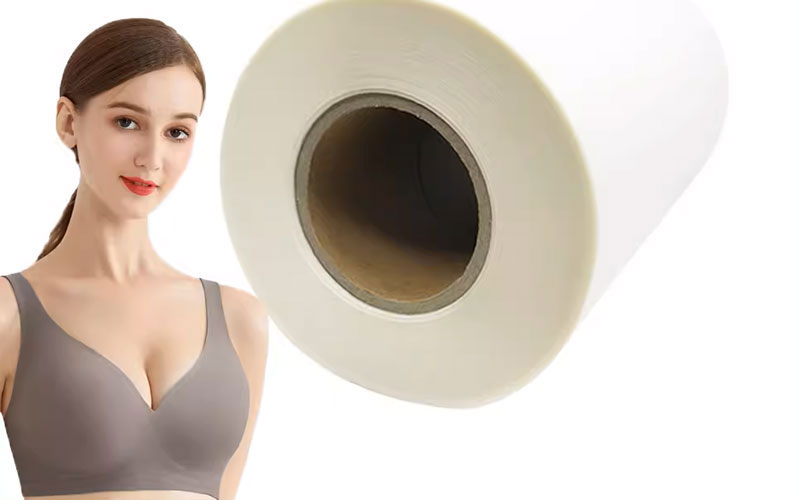
What Is TPU Bonding Film?
TPU bonding film is made from thermoplastic polyurethane and is designed to melt or soften at a specific temperature before forming an adhesive bond as it cools. During the bonding process, heat and pressure activate the film, allowing it to connect two textile surfaces.
The film can be produced in different thicknesses, widths, colors, and performance grades according to the requirements of the final garment. Depending on the formulation, it can provide different levels of elasticity, softness, adhesion, and resistance to washing or environmental conditions.
One of the most important characteristics of TPU bonding film is that it does not require the application of liquid glue during production. The pre-formed film can be cut, positioned, and heat-pressed between textile layers. This provides manufacturers with better control over adhesive placement and helps create more consistent bonding results.
1. Creating Seamless Garment Connections
One of the most important applications of TPU bonding film is helping manufacturers reduce or replace conventional sewn seams.
Traditional stitching creates needle holes and raised seam structures. These characteristics may be acceptable for ordinary garments, but they can become uncomfortable or undesirable in sportswear, underwear, swimwear, and close-fitting functional clothing.
With a bonding film, two fabric components can be joined through controlled heat and pressure. The resulting connection can be thinner and smoother than a conventional sewn seam.
For garments worn directly against the skin, this can help improve comfort by reducing bulky seam structures and minimizing potential friction. For manufacturers producing seamless or partially seamless garments, TPU bonding film provides an additional method for constructing clean textile connections.
2. Improving Comfort in Sportswear
Sportswear is one of the major application areas for textile bonding technology. Athletic garments need to provide flexibility while remaining comfortable during repeated movement.
When athletes run, stretch, cycle, or perform other activities, garment seams are continuously exposed to movement and tension. Heavy or rigid seams can affect comfort and may create pressure points against the skin.
TPU bonding film can be used to bond fabric panels, reinforce specific areas, or create low-profile seam constructions. Because TPU is inherently flexible, a properly selected film can maintain a degree of flexibility after bonding.
This makes the material useful for products such as running shirts, cycling clothing, compression garments, yoga wear, training apparel, and other performance-oriented clothing.
3. Supporting Fabric Lamination
Another important function of TPU bonding film is fabric-to-fabric lamination.
Modern garments often contain multiple textile layers. A manufacturer may need to combine an outer fabric with a functional membrane, lining, mesh, foam, or other textile material.
TPU bonding film can act as an intermediate bonding layer between compatible materials. Heat and pressure activate the film, allowing it to connect the layers without applying liquid adhesive over the entire fabric surface.
This approach can help manufacturers achieve more controlled lamination while maintaining the flexibility of the finished textile structure. The appropriate film must be selected according to the fabrics, processing temperature, bonding equipment, and performance requirements of the garment.
4. Helping Create Waterproof and Weather-Resistant Garments
For outdoor clothing, waterproof and weather-resistant performance is often an important consideration. Even when the main fabric is waterproof, needle holes created during sewing can become potential pathways for moisture.
TPU bonding technology can be used in seam-sealing applications to cover or reinforce seams and reduce water penetration through vulnerable areas.
For example, a narrow TPU film or seam tape can be applied over a sewn seam. When activated under controlled heat and pressure, it forms a bonded layer over the seam area.
This technology is commonly considered for rainwear, outdoor jackets, protective garments, and other clothing products where moisture resistance is required. The final performance depends on the fabric structure, seam construction, film specification, and bonding process.
5. Attaching Logos, Labels, and Decorative Elements
TPU bonding film is also useful for attaching garment logos, labels, patches, and decorative elements.
Traditional embroidery and sewing can add thickness and may require additional production steps. Heat bonding provides another option for attaching certain textile decorations.
A TPU film can be placed between the garment and the decorative component before being processed with a heat press or other suitable equipment. After activation and cooling, the film creates an adhesive connection.
This method can be useful for sportswear logos, clothing labels, printed graphics, reflective components, and decorative textile details. It can also help create a cleaner surface appearance when manufacturers want to minimize visible stitching.
6. Maintaining Flexibility and Stretch
Garments are not static products. Fabrics can stretch, bend, twist, and recover repeatedly during use. Therefore, the adhesive used in textile applications needs to work with the fabric rather than making the bonded area excessively rigid.
TPU is known for its combination of flexibility and elasticity. Depending on the specific grade, TPU bonding film can provide a flexible bonding layer that follows the movement of the textile.
This characteristic is particularly valuable for stretch fabrics containing elastane or other elastic fibers. In applications such as compression clothing, underwear, sportswear, and fitted garments, the bonding material should be carefully selected so that the bonded area does not unnecessarily restrict fabric movement.
7. Reducing the Need for Liquid Adhesives
Compared with liquid adhesive application, film-based bonding provides a more controlled adhesive format.
Liquid adhesives need to be dispensed, spread, or coated onto a specific area. Factors such as application thickness, viscosity, drying conditions, and adhesive distribution can affect the final result.
By contrast, TPU hot bonding film is already manufactured into a controlled film thickness. The operator can position the film between the materials and activate it using appropriate heat and pressure.
This can simplify certain textile bonding processes and reduce problems associated with uneven adhesive application. It may also contribute to a cleaner production environment because there is less direct handling of liquid adhesive during the bonding stage.
8. Supporting Lightweight Garment Design
The fashion and sportswear industries continue to explore lightweight garment construction. When a garment needs to remain thin and flexible, bulky seams and excessive material layers can affect the final design.
TPU bonding film can be manufactured in thin formats, allowing it to function as a bonding layer without necessarily adding significant bulk.
This makes it suitable for lightweight jackets, sports tops, underwear, activewear, and other garments where manufacturers want to maintain a relatively thin construction.
The film thickness should be matched to the application. A thicker film is not automatically better because excessive adhesive material may influence the hand feel, flexibility, appearance, or weight of the finished garment.
9. Improving Production Consistency
For garment manufacturers, bonding technology is not only about the properties of the final product. Production consistency is equally important.
A pre-formed TPU bonding film provides a relatively standardized adhesive format. When temperature, pressure, bonding time, and positioning are properly controlled, manufacturers can establish repeatable production conditions.
This can be especially useful for large-volume garment production, where consistent bonding quality is required across many pieces.
Automated and semi-automated bonding equipment can further improve production efficiency by controlling parameters such as heating temperature, pressure, feeding speed, and bonding duration.
10. Applications Across Different Garment Categories
The versatility of TPU bonding film allows it to be considered for a wide range of clothing products.
In sportswear, it can be used for seam bonding, reinforcement, fabric lamination, and logo attachment. In underwear, it can support low-profile connections and help reduce bulky stitching.
For outdoor clothing, TPU bonding technology can be used for seam sealing and multilayer fabric construction. In fashion garments, it can support decorative applications, labels, and innovative garment structures.
It can also be considered for protective clothing, workwear, swimwear, cycling apparel, children’s clothing, and other textile products where flexible bonding is required.
Choosing the Right TPU Bonding Film
Not every TPU bonding film is suitable for every garment application. Manufacturers need to consider several factors before selecting a material.
The first consideration is the fabric type. Polyester, nylon, cotton, blended fabrics, elastic textiles, membranes, and coated materials can have different bonding requirements.
The second is the processing temperature. The film needs to activate effectively under the available equipment conditions without damaging the fabric.
Other important factors include film thickness, elasticity, softness, adhesion strength, washing resistance, appearance, and long-term durability.
Manufacturers should also consider the final garment’s expected use. A film for everyday fashion clothing may have different requirements from one designed for outdoor sportswear or industrial protective clothing.
Conclusion
The main role of TPU bonding film in the garment industry is to provide a controlled and flexible method of joining textile materials. It can support seamless garment construction, fabric lamination, seam sealing, logo and label attachment, reinforcement, and decorative applications.
Its heat-activated bonding process makes it particularly suitable for modern textile manufacturing, while the flexibility of TPU can help maintain the movement and comfort required by many garments.
As apparel manufacturers continue to develop lightweight, functional, seamless, and performance-oriented products, TPU bonding film offers a practical bonding solution for a wide range of textile applications. By selecting the appropriate film specification and controlling temperature, pressure, and bonding time, manufacturers can integrate TPU bonding technology into different garment production processes while maintaining the desired appearance, flexibility, and performance of the finished product.