
The textile and garment industry has continuously evolved with increasing demands for higher precision, faster production speed, and more complex fabric designs. Traditional cutting methods often face challenges such as material waste, uneven cutting edges, and limited processing flexibility. To overcome these problems, advanced laser cutting technology has become an essential solution for modern fabric manufacturing.
A Laser Cutting Machine for Fabric uses a high-energy laser beam to cut textile materials with exceptional accuracy and efficiency. Unlike traditional mechanical cutting tools, laser cutting provides clean edges, reduces material deformation, and supports highly detailed patterns. It is widely applied in garment production, fashion design, technical textiles, leather products, and customized fabric processing.
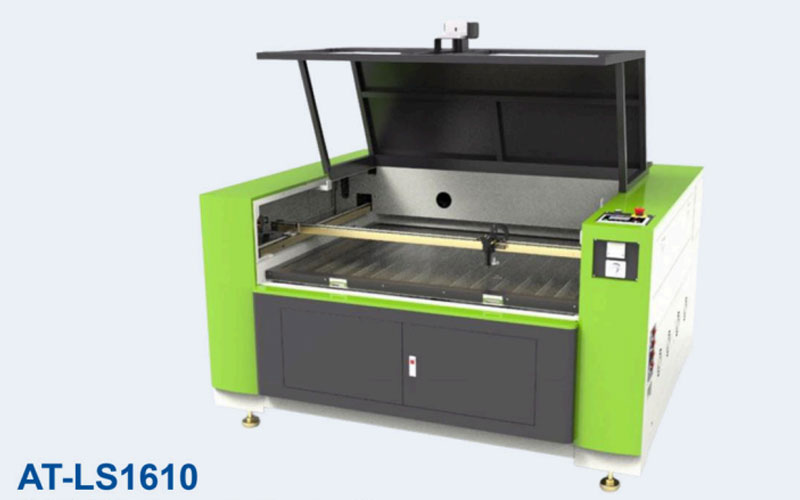
The AT-LS1610 Laser Cutting Machine is designed specifically for manufacturers requiring stable performance and precise fabric processing. With a 1600×1000mm working area, ±0.1mm positioning accuracy, high-quality laser source, and advanced motion system, it provides an efficient cutting solution for various fabric applications.
What Is a Laser Cutting Machine for Fabric?
A Laser Cutting Machine for Fabric is an automated cutting system that uses a focused laser beam to cut textile materials according to digital designs. The laser energy instantly melts or vaporizes the material along the cutting path, creating accurate shapes without physical contact.
Compared with traditional blade cutting methods, laser cutting offers several advantages:
- Higher cutting accuracy
- Faster processing speed
- Cleaner cutting edges
- Reduced material waste
- Ability to create complex patterns
- Lower tool maintenance requirements
The non-contact cutting process allows the machine to handle delicate fabrics without causing stretching, distortion, or mechanical damage. This makes laser technology especially suitable for thin fabrics, synthetic materials, lace, leather, and composite textiles.
Main Applications of Laser Cutting Machine for Fabric
1. Garment and Apparel Manufacturing
One of the most common applications of a Laser Cutting Machine for Fabric is garment production. Clothing manufacturers use laser cutting systems to process various fabrics for shirts, jackets, sportswear, underwear, and fashion garments.
In traditional garment manufacturing, cutting accuracy directly affects sewing quality and final product appearance. Even small cutting errors can lead to incorrect sizing or poor assembly. Laser cutting technology ensures precise pattern cutting, allowing manufacturers to maintain consistent quality across large production batches.
The AT-LS1610 Laser Cutting Machine provides accurate digital pattern cutting, helping garment factories produce:
- Clothing panels
- Sleeve components
- Collar pieces
- Decorative fabric patterns
- Custom apparel designs
Its large working area allows multiple fabric pieces to be processed efficiently, improving overall production productivity.
2. Sportswear and Functional Textile Production
Modern sportswear requires advanced materials with lightweight structures, flexibility, and precise design. Laser cutting is widely used for manufacturing athletic clothing, yoga wear, compression garments, and outdoor apparel.
Many functional fabrics are sensitive to mechanical pressure. Traditional blades may cause fabric deformation or fraying, while laser cutting provides a smoother and more controlled cutting process.
Applications include:
- Stretch fabric cutting
- Breathable mesh processing
- Performance textile manufacturing
- Heat-sensitive material cutting
- Seamless sportswear production
The stable laser output of the AT-LS1610 ensures consistent cutting performance even when processing complex textile structures.
3. Lace and Decorative Fabric Cutting
Fashion industries often require intricate patterns and detailed decorative elements. Lace, embroidery fabric, and decorative textiles are difficult to process using conventional cutting tools because of their delicate structures.
A fabric laser cutting machine can create:
- Fine lace patterns
- Decorative edges
- Complex fashion elements
- Customized textile designs
The precise laser beam allows manufacturers to achieve detailed shapes while maintaining the original appearance of the material.
4. Leather and Synthetic Material Processing
Although mainly designed for fabric applications, laser cutting technology is also widely used for leather and synthetic materials.
Industries such as footwear, handbags, accessories, and automotive interiors use laser cutting systems to produce accurate components.
Common applications include:
- Leather shoes
- Wallets and handbags
- Automotive seat covers
- Decorative leather panels
- Synthetic leather products
The clean cutting effect reduces additional finishing processes and improves production efficiency.
5. Home Textile Manufacturing
Home textile products often require large-area fabric cutting with consistent dimensions. Laser cutting machines help manufacturers process materials used for:
- Curtains
- Sofa fabrics
- Bedding products
- Decorative textiles
- Upholstery materials
The AT-LS1610 provides a 1600×1000mm working area, making it suitable for various home textile cutting applications.
6. Customized and Small-Batch Production
With the growth of personalized products and flexible manufacturing, customized textile production has become increasingly important.
Laser cutting technology allows manufacturers to quickly change designs through digital files without creating additional cutting tools. This makes it ideal for:
- Custom clothing
- Fashion samples
- Small production orders
- Personalized textile products
- Designer collections
Manufacturers can easily import design files in formats such as AI, DXF, PLT, BMP, JPG, and PNG, improving production flexibility.
Advantages of Using Laser Cutting Machine for Fabric
High Precision Cutting Performance
Precision is one of the biggest advantages of laser cutting technology. The AT-LS1610 achieves positioning accuracy of ±0.1mm, ensuring accurate pattern reproduction and consistent cutting results.
High precision is especially important for:
- Multi-layer fabric cutting
- Complex designs
- Small components
- High-end fashion products
Clean and Smooth Cutting Edges
Traditional cutting methods may leave rough edges or require additional trimming. Laser cutting creates clean edges by using concentrated heat energy.
Benefits include:
- Reduced fabric fraying
- Improved product appearance
- Less secondary processing
- Better production efficiency
For synthetic fabrics, the laser can also slightly seal the edge during cutting, improving durability.
Faster Production Efficiency
Modern textile factories require equipment that can increase output while maintaining quality. Laser cutting machines provide fast processing speeds and continuous operation capability.
The AT-LS1610 features a high-speed motion system with travel speeds up to 1000mm/s, helping manufacturers shorten production cycles and improve productivity.
Flexible Digital Processing
Laser cutting eliminates the need for physical cutting templates. Operators can directly use digital designs, making it easier to modify patterns and switch between different products.
This flexibility helps manufacturers:
- Reduce preparation time
- Lower tooling costs
- Respond quickly to market changes
- Produce customized designs efficiently
Reduced Material Waste
Accurate laser cutting improves fabric utilization by optimizing cutting layouts. Better material usage reduces production costs and supports more sustainable manufacturing practices.
For expensive fabrics such as leather, technical textiles, and specialty materials, reducing waste can significantly improve profitability.
Why Choose AT-LS1610 Laser Cutting Machine for Fabric?
The AT-LS1610 Laser Cutting Machine combines advanced laser technology with a stable mechanical structure to meet the requirements of modern textile manufacturers.
Key advantages include:
High-Quality Laser Source
The machine uses a high-quality laser source that provides excellent beam quality and stable power output. This ensures consistent cutting performance during long-term operation.
Stable Gantry Structure
The rigid gantry-style machine frame improves operational stability and reduces vibration during high-speed movement.
This structure helps maintain:
- Cutting accuracy
- Processing consistency
- Equipment durability
Advanced Aluminum Motion System
The independently developed aluminum motion system features lightweight construction and high rigidity. It improves dynamic response while maintaining accurate movement control.
Easy Operation and Monitoring
The large viewing window allows operators to monitor the internal cutting process easily, improving convenience and production safety.
Conclusion
A Laser Cutting Machine for Fabric has become an important tool for modern textile and garment manufacturers. From apparel production and sportswear processing to lace cutting, leather applications, and customized textile manufacturing, laser technology provides higher precision, better efficiency, and greater flexibility compared with traditional cutting methods.
The AT-LS1610 Laser Cutting Machine offers stable laser performance, accurate positioning, a large working area, and reliable industrial construction. It helps manufacturers improve cutting quality, reduce material waste, and achieve efficient production in today’s competitive textile market.
For companies looking to upgrade their fabric cutting process, investing in advanced laser cutting technology is an effective way to improve productivity, product quality, and long-term manufacturing capability.