
The demand for seamless garments has grown rapidly as manufacturers and consumers place greater emphasis on comfort, flexibility, clean appearance, and lightweight construction. In this production environment, narrow-width bonding technologies play an important role in creating smooth garment structures without bulky stitching or visible seams. A Lace Laminating Machine is designed specifically to support these applications by providing controlled heat, adjustable working speed, and stable bonding performance for lace, TPU strips, adhesive films, and other narrow textile materials.
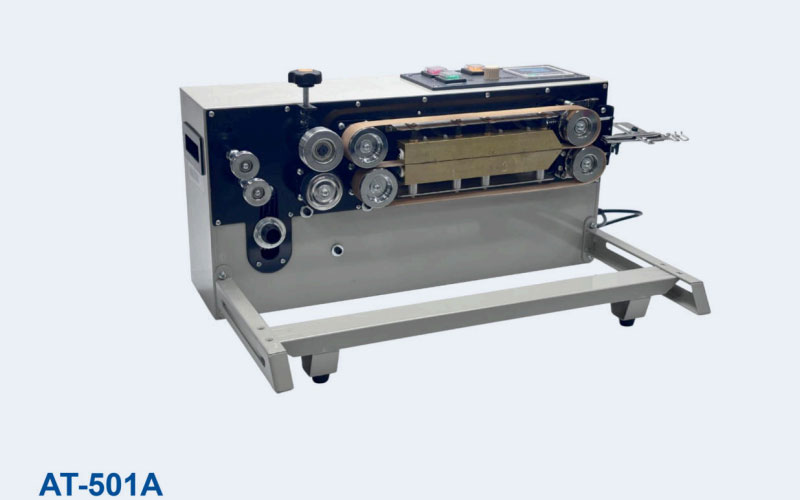
For seamless underwear, lingerie, sportswear, and functional apparel, the bonding process must be accurate and consistent. Even a small variation in temperature, pressure, or processing speed can affect the final appearance and durability of the garment. The AT-501A Lace Laminating Machine provides a compact solution for manufacturers that need precise lamination of materials with a maximum working width of 35 mm.
Why Lamination Is Important for Seamless Garments
Seamless garment production requires more than simply eliminating conventional sewing lines. Different textile components often need to be joined while maintaining flexibility, elasticity, softness, and a clean surface. Traditional stitching can create raised areas or uncomfortable edges, particularly in underwear and close-fitting sportswear.
Lamination provides an alternative joining method. By using heat-activated TPU adhesive films or related bonding materials, manufacturers can connect narrow textile components without relying entirely on conventional thread-based seams. This can help create smoother transitions between materials and support the modern appearance expected from seamless garments.
Lace, elastic strips, TPU rubber strips, and narrow technical textiles can all require carefully controlled bonding conditions. A dedicated laminating machine allows operators to adjust the processing parameters according to the material combination and adhesive system being used.
AT-501A Lace Laminating Machine for Narrow Materials
The AT-501A is designed for applications involving narrow-width materials. Its maximum working width is 35 mm, making it suitable for lace edges, narrow TPU strips, elastic components, and other small-area bonding applications.
Unlike larger textile laminating systems intended for wide fabric panels, the AT-501A focuses on precision processing in restricted areas. This makes it particularly useful when a garment contains narrow decorative or functional components that need to be bonded accurately.
The machine offers a working speed from 0 to 50 mm/s. This adjustable speed allows operators to select an appropriate processing rate according to the characteristics of the fabric, adhesive film, and desired bonding result. Slower processing can be useful for materials requiring longer heat exposure, while higher speeds can improve productivity when the bonding conditions permit.
Temperature Control for TPU Adhesive Film
Temperature is one of the most important factors in textile lamination. Different TPU adhesive films and textile combinations may require different activation temperatures. Insufficient heat can result in weak bonding, while excessive heat may affect sensitive fabrics or adhesive materials.
The AT-501A provides temperature adjustment up to 300°C. This high-temperature capability gives manufacturers greater flexibility when processing different adhesive systems and materials.
Operators can establish suitable temperature settings based on the adhesive film’s activation requirements, textile composition, thickness, and production conditions. Combining appropriate temperature with controlled speed helps achieve a more stable lamination process.
For seamless garment production, this control is especially important because many applications involve lightweight, elastic, or decorative fabrics that require careful handling.
Adjustable Working Speed for Consistent Bonding
Different materials do not necessarily require the same processing speed. A thin lace material may respond differently to heat compared with a thicker TPU strip or elastic component. Therefore, fixed-speed processing may not provide the flexibility required for different production jobs.
The AT-501A offers a working speed range of 0–50 mm/s, allowing operators to fine-tune the movement of materials through the bonding area.
Speed adjustment can help manufacturers balance productivity and bonding quality. When a longer heating time is required, the operator can reduce the working speed. When materials can be bonded effectively at a faster rate, increasing the speed can help improve production efficiency.
This flexibility makes the machine suitable for both repeated production tasks and customized garment processing.
Applications in Seamless Underwear Production
Seamless underwear is one of the key application areas for narrow-width lamination. Modern underwear designs often use bonded edges, elastic components, lace decoration, and functional strips to create a smooth appearance while reducing uncomfortable seams.
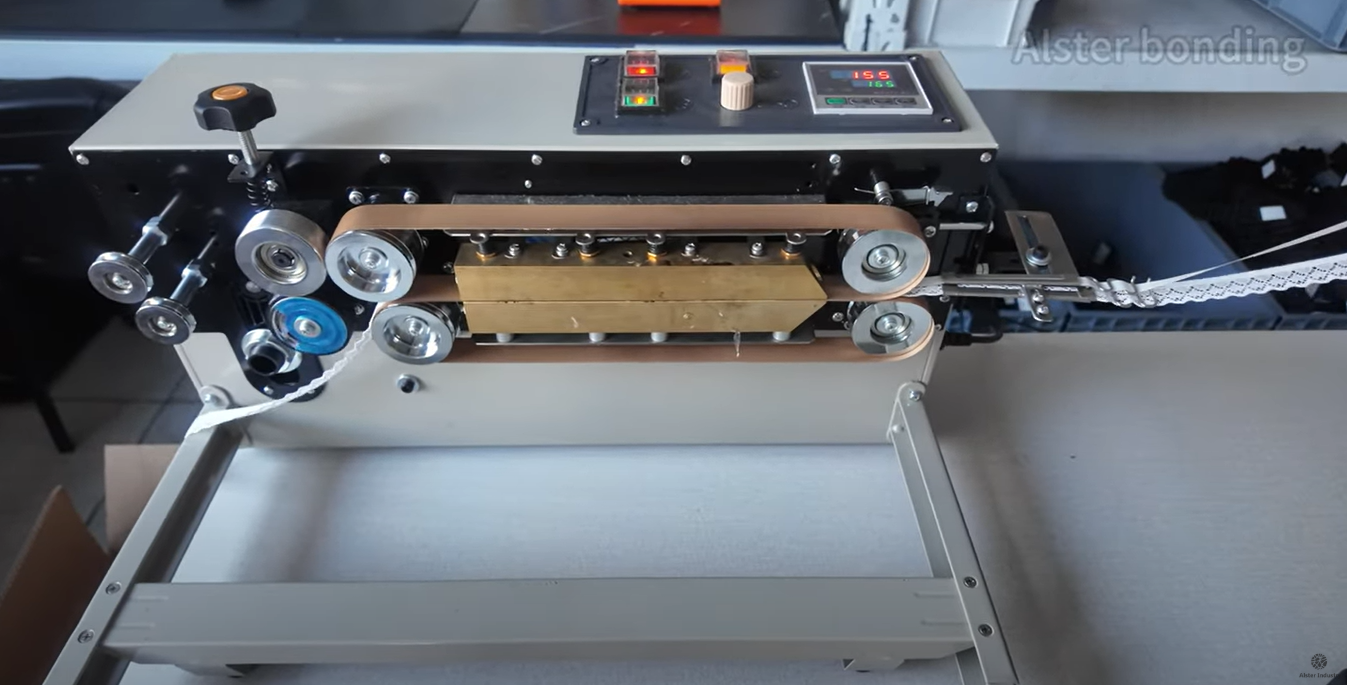
A Lace Laminating Machine can be used to bond lace components with TPU adhesive films or narrow rubber strips. The compact processing area is suitable for applications where only a small section of material needs to be joined.
Potential applications include:
- Lace edge bonding
- Elastic strip lamination
- TPU tape bonding
- Decorative lace attachment
- Narrow waistband components
- Bonded underwear details
- Seamless garment finishing
The precise bonding process can help manufacturers produce cleaner garment edges while maintaining the flexibility required for close-fitting products.
Lace and Lingerie Manufacturing
Lace is commonly used in lingerie and fashion apparel because of its decorative appearance and lightweight structure. However, lace can be delicate, making controlled processing important during bonding.
The AT-501A can support narrow-area bonding between lace and compatible adhesive materials. Its adjustable temperature and speed allow manufacturers to develop processing parameters suited to their specific material combinations.
For lingerie production, the goal is often to create a connection that is visually neat and comfortable against the skin. Narrow-width lamination can contribute to this requirement by reducing dependence on bulky conventional seams in selected areas.
Sportswear and Functional Apparel
The application of narrow bonding is not limited to underwear and lingerie. Sportswear manufacturers also use TPU strips and adhesive components for functional garment construction.
Sports garments may require bonded elastic sections, reinforcement strips, edge finishing, or other narrow components. These applications can benefit from controlled heat and speed because the bonding process needs to maintain both structural integrity and garment flexibility.
The AT-501A can therefore be integrated into selected sportswear processing operations where the bonding width remains within its 35 mm capacity.
Functional textiles can also involve specialized materials with different thermal characteristics. The machine’s adjustable temperature and processing speed provide greater flexibility when manufacturers test and optimize different material combinations.
Compact Design for Flexible Production
Production space is an important consideration for garment factories, sample rooms, and small-batch processing facilities. Large industrial laminating systems can require significant floor space and may be unnecessary for narrow-width applications.
The AT-501A has a compact structure and a net weight of approximately 29 kg. Its listed machine dimensions are approximately 600 × 300 × 300 mm, making it relatively convenient for installation in production areas where space is limited.
Its compact format can also be useful for manufacturers handling customized orders, product development, sampling, or small production batches. Instead of using a large laminating system for narrow components, manufacturers can employ a machine designed specifically for these smaller bonding tasks.
Key Specifications of the AT-501A
The main specifications of the machine include:
| Specification | AT-501A |
|---|---|
| Working Speed | 0–50 mm/s |
| Maximum Width | 35 mm |
| Maximum Temperature | 300°C |
| Power | 1200 W |
| Power Supply | Single-phase 220 V, 50/60 Hz |
| Net Weight | 29 kg |
| Machine Size | Approx. 600 × 300 × 300 mm |
These specifications make the machine suitable for manufacturers looking for a dedicated solution for narrow textile lamination. Before production, users should select suitable temperature and speed settings based on the adhesive film and materials being processed.
Advantages for Seamless Garment Manufacturers
Using dedicated narrow-width lamination equipment can provide several production advantages.
Precise bonding: The machine is designed around narrow materials, making it suitable for detailed garment components.
Adjustable processing: Temperature and working speed can be independently adjusted to accommodate different bonding requirements.
High-temperature capability: A maximum temperature of 300°C provides flexibility for compatible TPU adhesive films and other heat-activated bonding materials.
Compact footprint: The relatively small machine size is suitable for factories, workshops, sample rooms, and flexible production environments.
Consistent processing: Controlled heat and speed can help reduce variations between individual bonding operations.
Versatile applications: The machine can be used for lace, TPU strips, elastic components, and other narrow-width seamless materials.
How to Achieve Better Lamination Results
Good lamination results depend not only on machine performance but also on appropriate process settings. Before starting regular production, manufacturers should test the selected adhesive film and textile combination.
First, determine the recommended activation temperature of the adhesive material. Then select an initial working speed and conduct a bonding test. The finished sample should be evaluated for adhesion strength, appearance, flexibility, and resistance to peeling.
If the bonding is insufficient, the temperature or processing conditions may need adjustment. If the fabric shows signs of heat damage or deformation, the parameters should be reviewed. Operators should also ensure that the materials are correctly aligned before entering the bonding area.
Developing a stable set of processing parameters for each material combination can improve production consistency and reduce material waste.
Choosing a Lace Laminating Machine
When selecting equipment for seamless garment production, manufacturers should consider the maximum bonding width, temperature range, working speed, power requirements, machine dimensions, and the types of materials to be processed.
For applications involving lace, TPU strips, elastic components, and other narrow materials below 35 mm, the AT-501A offers a focused solution. Its adjustable speed and temperature make it adaptable to different bonding requirements, while its compact construction supports flexible production environments.
For manufacturers producing seamless underwear, lingerie, sportswear, and functional apparel, selecting appropriate lamination equipment can contribute to more efficient and consistent narrow-area bonding.
Conclusion
A Lace Laminating Machine is an important piece of equipment for manufacturers working with narrow-width bonding applications in modern garment production. By combining controlled heating, adjustable working speed, and a compact structure, the AT-501A is designed to support lace, TPU strip, elastic, and adhesive film lamination.
With a maximum working width of 35 mm, temperature capability up to 300°C, and speed adjustment from 0 to 50 mm/s, the machine provides flexibility for different seamless garment applications. For underwear, lingerie, sportswear, functional apparel, and customized textile production, it can help manufacturers achieve precise and consistent bonding while supporting cleaner and more comfortable garment construction.