
Modern garment manufacturing is increasingly moving beyond traditional sewing and exploring cleaner, lighter, and more flexible ways to join textile components. Among these technologies, heat bonding film for garments provides an efficient solution for connecting fabrics, reinforcing garment areas, attaching components, and creating low-profile seams. By using controlled heat and pressure, the film can form an adhesive connection between suitable materials without requiring conventional stitching across every bonding area.
Heat bonding film is particularly useful in sportswear, underwear, activewear, seamless garments, outdoor clothing, functional apparel, and other textile products where comfort, appearance, flexibility, and production consistency are important. The film is normally placed between two materials and activated at a suitable temperature. Pressure is then applied to promote contact between the adhesive and textile surfaces. After cooling, the bonded area forms a stable connection.
For garment manufacturers, understanding the main functions and applications of heat bonding film for garments can help them determine where film-based bonding can complement or replace traditional joining methods.
What Is Heat Bonding Film for Garments?
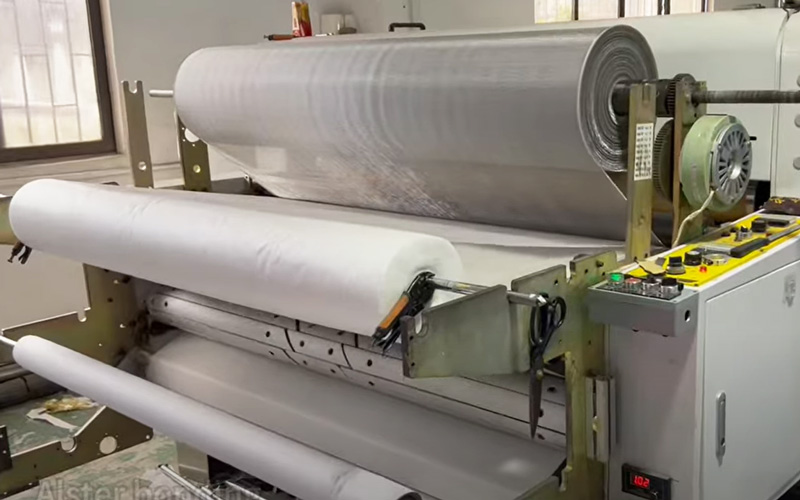
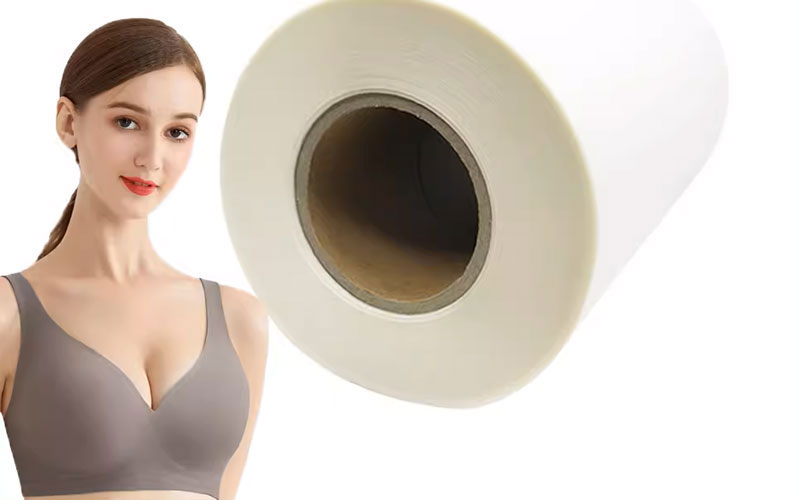
Heat bonding film is a solid adhesive film designed to be activated by heat. Unlike liquid adhesives, it is supplied in a controlled film form with a defined thickness and can be cut or applied according to the shape of the bonding area.
During garment production, the film is positioned between compatible textile materials or between a garment and an additional component. A heat press or specialized bonding machine applies heat and pressure for a predetermined period. The adhesive softens or melts under the required processing conditions and creates a connection between the surfaces.
Different film materials can be developed for different textile applications. TPU, TPE, EVA, PES, PO, and PA-based adhesive films can provide different combinations of flexibility, adhesion, softness, elasticity, and resistance. Therefore, manufacturers should select the film according to the fabric, garment construction, processing temperature, and final performance requirements.
1. Creating Low-Profile Garment Seams
One of the most important applications of heat bonding film for garments is creating low-profile connections between textile components.
Traditional sewing uses needles and thread to join fabric. While this method remains widely used, stitching can produce raised seams and additional material thickness. In garments worn directly against the skin, these structures may affect comfort or create friction during movement.
Heat bonding provides an alternative joining method for suitable fabrics. A narrow film can be placed between two textile components and activated with heat and pressure. The resulting bonded area can be relatively thin and smooth when the appropriate film thickness and process parameters are selected.
This makes heat bonding particularly relevant to underwear, sportswear, compression garments, leggings, and other close-fitting apparel.
2. Supporting Seamless Garment Construction
Seamless apparel focuses on reducing traditional stitched structures and creating garments with smoother transitions between components.
Heat bonding film for garments can support this manufacturing approach by joining selected textile areas without relying exclusively on thread. The technology can be incorporated into specific garment sections rather than necessarily replacing sewing throughout the entire product.
For example, bonding can be used around selected edges, openings, panels, or reinforcement areas. Manufacturers can combine sewing and heat bonding according to the construction requirements of the garment.
This flexibility allows garment factories to explore different construction methods while maintaining the required strength and functionality.
3. Improving Comfort for Sportswear
Sportswear needs to accommodate frequent and sometimes extensive body movement. Running, cycling, stretching, training, and other activities can repeatedly place stress on garment seams and bonded areas.
Bulky seams may become noticeable during prolonged use, particularly when the garment fits closely against the body. Heat bonding film can help create thinner connections in suitable applications.
When an adhesive film with appropriate elasticity is selected, the bonded area can retain a degree of flexibility. This is important for garments made from stretchable textile materials.
For activewear manufacturers, heat bonding can therefore contribute to garment construction where flexibility, smoothness, and wearer comfort are key considerations.
4. Bonding Stretch Fabrics
Stretch fabrics present specific challenges for garment manufacturers. The textile may repeatedly extend and recover, meaning the bonding material needs to accommodate movement.
Certain heat bonding film for garments formulations are designed with flexible or elastic characteristics. When matched correctly with the textile, the film can provide a bonded connection while allowing the garment structure to retain some of its intended movement.
This can be useful for leggings, yoga wear, compression clothing, sports tops, underwear, and other stretch garments.
However, the adhesive should always be tested with the actual fabric. Different textile compositions, coatings, fabric weights, and elastic structures can influence bonding performance.
5. Supporting Fabric Lamination
Heat bonding film can also act as an intermediate layer when two or more fabrics need to be laminated.
Garments may contain an outer textile, lining, membrane, mesh, foam, or other functional layer. These materials may need to be combined while preserving the flexibility and appearance of the finished garment.
The film is positioned between the layers before heat and pressure are applied. Once activated, it bonds the materials together.
For curved or shaped garment components, a suitable heat press can provide controlled pressure over the target area. This is especially useful when the textile construction contains three-dimensional shapes.
6. Reinforcing High-Stress Areas
Some parts of a garment experience more stress than others. Edges, openings, attachment points, and specific movement areas may require additional reinforcement.
Heat bonding film can be used with reinforcement materials to strengthen selected areas without adding a conventional stitched layer.
For example, a manufacturer may bond a narrow reinforcement tape or textile piece around a garment opening. The film helps connect the reinforcement material to the base fabric.
This application can be particularly useful when the manufacturer wants to maintain a clean appearance while adding functional reinforcement.
7. Attaching Labels, Patches, and Decorative Components
Another application of heat bonding film for garments is attaching selected labels, patches, logos, graphics, and decorative textile elements.
Instead of sewing a patch onto the garment, an adhesive film can be positioned between the patch and the fabric. Heat and pressure activate the adhesive and create the required connection.
This can reduce visible stitching and provide greater freedom for certain decorative designs.
The process can be adapted to different garment shapes and production requirements. When a component needs to be applied to a curved section, a curved hot press may be used to provide more appropriate contact during bonding.
8. Supporting Seam Sealing
For outdoor and functional clothing, seam sealing is another important application.
Even when a fabric itself has good resistance to water penetration, sewn seams may contain needle holes. These openings can become potential paths for moisture.
Heat bonding film or compatible seam-sealing tape can be applied over selected seams. The adhesive is activated through heat and pressure, creating a bonded covering over the seam.
This approach can be used in rainwear, outdoor jackets, protective garments, and other products where improved moisture resistance is required.
The final performance depends on the fabric, seam structure, film, equipment, and processing conditions.
9. Reducing Liquid Adhesive Application
A major practical advantage of film-based bonding is the controlled physical form of the adhesive.
Liquid adhesives need to be dispensed or coated onto the substrate. Application thickness and distribution may vary depending on equipment and production conditions.
With heat bonding film, the adhesive is already formed into a consistent sheet. Operators can position the film in the required area before pressing.
This can simplify certain production processes and make adhesive placement more predictable. It can also reduce the need for direct handling of liquid adhesive in applications where a solid film is suitable.
10. Helping Maintain a Clean Appearance
Appearance is particularly important in fashion and performance clothing.
Consumers often expect modern sportswear and functional garments to have smooth surfaces, minimal visible construction details, and a streamlined appearance.
Heat bonding can support these design requirements by creating relatively low-profile connections. When the correct film thickness and bonding conditions are used, the adhesive layer can remain integrated between the textile components rather than becoming a prominent visual element.
Designers can therefore consider bonding as part of the garment construction process rather than treating it only as a replacement for sewing.
11. Improving Production Consistency
Production consistency is essential for garment factories producing large quantities.
Manual bonding can be affected by variations in temperature, pressure, timing, and operator technique. A controlled heat pressing process can establish standardized parameters for repeated production.
Manufacturers can determine suitable temperature, pressure, and heating time during the testing stage. These parameters can then be incorporated into the production procedure.
Consistent processing helps reduce variations between individual garments and makes quality control easier.
However, the correct settings depend on the adhesive and textile combination. Manufacturers should conduct trials rather than applying a single temperature or time setting to every material.
12. Supporting Lightweight Garment Design
Lightweight construction is another reason manufacturers may consider heat bonding.
Traditional sewn connections can require thread, seam allowances, and overlapping fabric structures. For some garment designs, these elements can increase bulk.
A thin heat bonding film can provide a bonding layer while minimizing additional material thickness.
This is useful for lightweight sportswear, underwear, base layers, performance garments, and other products where maintaining a thin construction is important.
The film thickness should be selected according to the bonding requirement. Using a thicker adhesive film does not necessarily result in a better garment because excessive adhesive can influence softness, flexibility, appearance, and hand feel.
Choosing the Right Heat Bonding Film
Selecting the appropriate heat bonding film for garments requires consideration of several factors.
The first is fabric compatibility. Polyester, nylon, cotton blends, elastic fabrics, mesh, coated textiles, and multilayer materials may require different adhesive solutions.
The second factor is processing temperature. The adhesive must activate effectively while remaining compatible with the textile. Excessive heat may affect sensitive fabrics, coatings, dyes, or elastic components.
Film thickness, elasticity, softness, adhesion strength, washing resistance, and durability should also be considered.
Finally, manufacturers should evaluate the intended use of the garment. Everyday clothing, sportswear, outdoor apparel, and protective garments may have different bonding requirements.
Conclusion
The main role of heat bonding film for garments is to provide a controlled method for joining textile materials and garment components through heat and pressure. It can support low-profile seams, seamless garment construction, stretch fabric bonding, fabric lamination, reinforcement, logo attachment, decorative applications, and seam sealing.
Its solid film format provides controlled adhesive placement, while the heat-activated bonding process can be integrated into different garment production workflows. When the film is correctly matched with the textile and processed under suitable conditions, it can help manufacturers develop garments with smooth construction, flexibility, and consistent bonding performance.
As clothing manufacturers continue to explore seamless designs, lightweight structures, functional textiles, and advanced production methods, heat bonding film provides a versatile option for selected garment applications. Combining the appropriate adhesive film with suitable heat pressing equipment and carefully controlled processing parameters allows manufacturers to develop bonding processes tailored to the specific requirements of modern apparel.