
The Extended Ultrasonic Lace Machine is an advanced textile processing machine designed to improve the way lace, synthetic fabrics, and technical textiles are cut, sealed, bonded, perforated, stripped, and molded. Unlike conventional textile equipment that often depends on thread sewing, mechanical cutting, or multiple separate processing machines, an ultrasonic lace machine uses high-frequency ultrasonic vibration to process suitable textile materials with greater precision and efficiency.
For manufacturers working with lace products, synthetic fabrics, garment accessories, and continuous textile materials, the main value of an Extended Ultrasonic Lace Machine is its ability to combine several processing functions into one production solution. It can create clean edges, reduce fraying and unraveling, support threadless finishing, and provide flexible processing for different product designs.
As textile manufacturing continues to move toward higher productivity, cleaner finishing, and more automated production, understanding the role of an Extended Ultrasonic Lace Machine can help manufacturers determine where ultrasonic processing can improve their production processes.
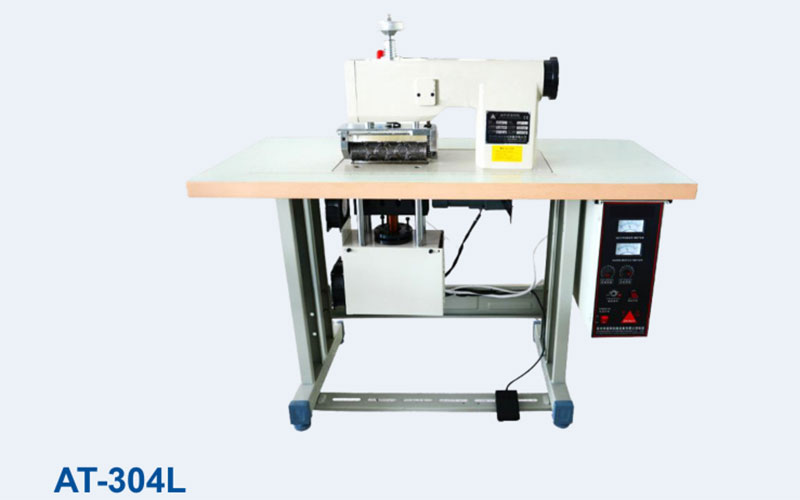
What Is an Extended Ultrasonic Lace Machine?
An Extended Ultrasonic Lace Machine is a specialized ultrasonic textile processing machine developed for materials such as synthetic fabrics, lace, and selected technical textiles. It uses ultrasonic energy to generate high-frequency mechanical vibration at the processing point. Depending on the tooling and material, this energy can be used for cutting, sealing, bonding, perforating, stripping, and forming.
The term “extended” generally refers to the machine structure being designed to provide greater processing flexibility for wider or continuous materials. Instead of being limited to small individual components, the machine can support continuous production requirements where textile materials need to move through the processing area efficiently.
One of its important functions is edge sealing. During ultrasonic processing, localized heat generated by high-frequency vibration can help fuse suitable synthetic fibers. This can create a neat edge without relying on traditional thread-based sewing. For lace and synthetic textile products, this capability can be particularly useful when a clean and stable edge is required.
An Extended Ultrasonic Lace Machine can therefore serve not simply as a cutting machine, but as a multifunctional textile processing solution.
How Does an Extended Ultrasonic Lace Machine Work?
The operating principle of ultrasonic textile processing is based on high-frequency vibration. The machine transfers ultrasonic vibration through a horn or specialized tooling to the material being processed. The concentrated energy at the contact area produces localized friction and heat.
For thermoplastic synthetic materials, this localized energy can soften or fuse fibers. When the material is cut while being exposed to ultrasonic energy, the edge can be sealed at the same time. This is one reason ultrasonic processing is valuable for synthetic lace and fabrics that are susceptible to fraying.
The exact result depends on several factors, including material composition, thickness, processing speed, ultrasonic power, pressure, tooling design, and machine settings.
A customized mold or processing tool can also be used when manufacturers need a specific shape or pattern. This makes the machine adaptable to different textile products rather than limiting production to a single standard design.
The Main Role of the Extended Ultrasonic Lace Machine
The primary role of an Extended Ultrasonic Lace Machine is to provide efficient and precise processing of suitable textile materials while reducing dependence on conventional sewing and mechanical processing methods.
Its major functions include:
1. Ultrasonic Cutting
Ultrasonic cutting is one of the most important applications. The machine can cut suitable synthetic textile materials while simultaneously helping to stabilize the cut edge.
Traditional cutting may leave loose fibers or require additional edge treatment. Ultrasonic cutting can combine cutting and edge sealing into a single operation when the material is compatible with ultrasonic processing.
This is useful for manufacturers producing lace strips, decorative textile components, synthetic fabric pieces, and other products where edge appearance is important.
2. Threadless Edge Sealing
Another major function is threadless sealing. Conventional textile products often require stitching to reinforce or finish an edge. However, certain synthetic materials can be sealed using ultrasonic energy.
The resulting edge can be neat and resistant to unraveling. This can help manufacturers create products with a cleaner appearance while reducing the need for thread-based finishing operations.
For delicate lace products and synthetic textile accessories, threadless sealing can be especially useful when a visible stitched edge would affect the desired appearance.
3. Fabric Bonding
The Extended Ultrasonic Lace Machine can also support bonding applications for suitable synthetic textile materials.
Ultrasonic bonding uses vibration and localized heat to join compatible material layers. Depending on the product structure and material properties, this can provide an alternative to some adhesive or stitching processes.
This function is useful for textile components that require clean joining without adding conventional thread lines.
4. Perforating
Perforation is another application supported by ultrasonic processing. With appropriate tooling or customized molds, the machine can create holes, patterns, or repeated openings in suitable textile materials.
Perforation may be required for decorative lace designs, ventilation structures, technical textile components, or specialized textile products.
Customized tooling allows manufacturers to produce different patterns according to product requirements.
5. Stripping
The machine can also be configured for stripping operations. This can be useful when certain layers, edges, or sections of textile material need to be selectively removed or processed.
The exact stripping method depends on the material and tooling configuration. Manufacturers can select appropriate processing parameters according to the desired product structure.
6. Molding and Shaping
With customizable molds, ultrasonic processing can go beyond simple cutting and sealing. It can also support specific forming or molding requirements.
This flexibility is valuable for manufacturers producing textile products with non-standard shapes. Instead of relying exclusively on standard tooling, customized molds can be developed according to the product design.
Why Is It Suitable for Lace Processing?
Lace is often characterized by intricate patterns, delicate structures, and relatively fine edges. Conventional cutting and sewing methods may create challenges when manufacturers need both high production efficiency and a clean finished appearance.
An Extended Ultrasonic Lace Machine can help address these requirements by combining processing and edge finishing.
When suitable synthetic lace is processed ultrasonically, the cutting action can be accompanied by edge sealing. This can reduce loose threads and help prevent unraveling around the processed area.
The machine is therefore particularly useful when manufacturers need:
- Clean and precise lace edges
- Threadless edge finishing
- Continuous lace processing
- Customized patterns or shapes
- Stable production speed
- Reduced secondary finishing operations
- Flexible processing of synthetic materials
For decorative lace, garment accessories, and other textile components, the ability to create a clean edge without traditional sewing can improve both production efficiency and product appearance.
Extended Design for Continuous Textile Processing
A key advantage of the Extended Ultrasonic Lace Machine is its ability to accommodate wider or continuous materials.
The machine described above supports a width range of approximately 60 mm to 200 mm and a working speed of 5 to 20 m/min, depending on material and processing requirements.
This makes the machine suitable for manufacturers that work with continuous textile strips, rolls, lace materials, and other long-format textile products.
Continuous processing can reduce the number of manual interventions required during production. Instead of cutting individual pieces and processing them separately, manufacturers can establish a more streamlined workflow.
The extended working structure also provides greater flexibility for different product dimensions. This is particularly valuable for textile manufacturers producing several product types rather than a single standardized component.
Improving Production Efficiency
Production efficiency is one of the most important reasons manufacturers consider ultrasonic textile equipment.
Traditional textile processing may require several separate steps. For example, a manufacturer may need to cut a material first, sew or seal its edge afterward, and then perform additional finishing operations.
When ultrasonic technology can combine cutting and sealing, some of these steps may be integrated into a single process.
The result can be a simpler production workflow with fewer intermediate operations.
The AT-304L Extended Ultrasonic Lace Machine, for example, uses a servo motor control system and supports adjustable working speeds from 5 to 20 m/min. This allows manufacturers to select an appropriate operating speed based on the material, product design, and required finishing quality.
Higher efficiency does not simply mean increasing speed. Stable processing, accurate positioning, consistent edges, and reduced rework are also important factors in overall productivity.
Reducing Fraying and Unraveling
Fraying is a common concern when processing textile materials. Cut synthetic fabrics can develop loose fibers along their edges, while delicate lace may require additional treatment to maintain its structure.
Ultrasonic sealing can help address this issue for suitable thermoplastic materials by fusing fibers around the processed edge.
This can provide several potential benefits:
- Cleaner product appearance
- Reduced loose fibers
- Improved edge stability
- Less need for secondary edge finishing
- Better consistency during repeated production
The actual sealing effect depends on the material composition and processing parameters. Therefore, manufacturers should test their specific fabrics before establishing final production settings.
The Importance of Customized Molds
One of the most useful features of an Extended Ultrasonic Lace Machine is customizable mold design.
Different textile products may require different shapes, perforation patterns, cutting profiles, or sealing structures. A standard tool may not always meet these requirements.
Customized molds allow the machine to be adapted to the product rather than forcing the product design to fit a fixed processing method.
For example, manufacturers may require:
- Special lace patterns
- Repeated decorative shapes
- Custom perforation designs
- Non-standard cutting profiles
- Specific edge shapes
- Specialized textile components
By using suitable customized tooling, ultrasonic processing can become a more flexible solution for specialized textile production.
Key Technical Specifications
The performance and configuration of an Extended Ultrasonic Lace Machine should always be evaluated according to the manufacturer’s technical specifications and the material being processed.
For the AT-304L model, the main specifications include:
| Specification | AT-304L |
|---|---|
| Input Power Supply | 110V/220V, 50/60Hz |
| Power | 1.5KW–2KW |
| Working Speed | 5–20 m/min |
| Width Range | 60–200 mm |
| Mold | Customizable |
| Air Pressure | 0.5–0.8 MPa |
| Machine Size | 1200 × 540 × 1180 mm |
These specifications provide manufacturers with flexibility when integrating the machine into different production environments.
Conclusion
The Extended Ultrasonic Lace Machine plays an important role in modern textile manufacturing by providing a multifunctional method for processing lace, synthetic fabrics, and selected technical textiles. Its ultrasonic technology can support cutting, sealing, bonding, perforating, stripping, and molding, making it more versatile than equipment designed for only one processing function.
For suitable synthetic materials, the machine can create clean, threadless edges while helping reduce fraying and unraveling. Its extended structure makes it suitable for wider and continuous materials, while adjustable speed and servo motor control support stable production.
Customizable molds further expand its application range, allowing manufacturers to develop specialized textile products with unique shapes and patterns.
As textile manufacturers continue to seek cleaner finishing, efficient production, and greater automation, the Extended Ultrasonic Lace Machine provides a practical solution for integrating multiple textile processing functions into a streamlined manufacturing process. For businesses producing lace products, synthetic fabric components, garment accessories, and technical textiles, ultrasonic processing can offer an effective way to improve production flexibility, edge quality, and operational efficiency.