
The development of seamless clothing has transformed modern apparel manufacturing. Consumers increasingly expect garments that are lightweight, comfortable, flexible, and free from bulky seams. To meet these expectations, manufacturers are moving beyond traditional sewing and exploring advanced bonding technologies. Among these technologies, garment bonding film has become an important material for producing high-quality seamless garment products.
Garment bonding film is a thermoplastic adhesive material designed to join fabrics and textile components through controlled heat and pressure. Instead of relying entirely on thread and stitching, manufacturers can use bonding film to create smooth, flexible connections between different layers or components. This makes it particularly suitable for seamless garment manufacturing, where appearance, comfort, stretchability, and durability are essential.
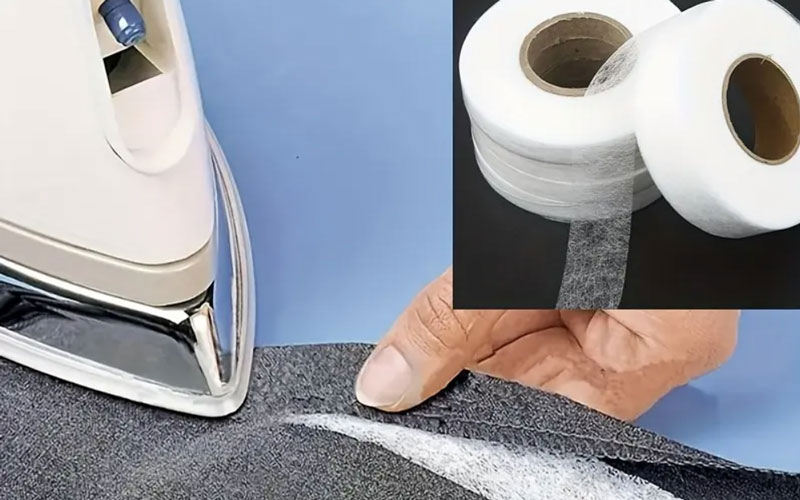
What Is Garment Bonding Film?
Garment bonding film is a thin adhesive film that melts or softens when exposed to a specific temperature and bonds textile materials together under pressure. After cooling, the adhesive solidifies and forms a strong connection.
Depending on the application, garment bonding film can be made from different thermoplastic adhesive materials, such as polyurethane-based or polyamide-based formulations. The choice depends on fabric type, required elasticity, washing resistance, bonding temperature, and final garment performance.
Unlike conventional sewing, bonding technology does not require needle penetration. This helps manufacturers reduce visible stitching and create cleaner garment surfaces. For seamless garments, this is especially valuable because even small seams can affect comfort and appearance.
Why Garment Bonding Film Matters for Seamless Garments
Seamless garment production focuses on minimizing traditional seams while maintaining structural strength. Sportswear, underwear, shapewear, leggings, swimwear, and other close-fitting products can benefit significantly from adhesive bonding.
One major advantage of garment bonding film is its ability to create flat and low-profile connections. Traditional stitched seams may produce raised edges or pressure points against the skin. Bonded areas can be thinner and smoother, improving comfort during prolonged wear.
Garment bonding film can also support the clean appearance expected from modern apparel. Designers can reduce visible stitching and achieve a more streamlined surface, which is particularly important for tight-fitting clothing.
Another benefit is flexibility. When the adhesive film is correctly selected and processed, the bonded area can maintain a degree of stretch and recovery. This makes it suitable for fabrics used in activewear and other garments requiring frequent movement.
Applications in Seamless Garment Manufacturing
Garment bonding film can be used in many areas of seamless garment production. One common application is bonding fabric panels where traditional stitching would create an unwanted seam.
In sportswear, the technology can be used to join performance fabrics, reinforce specific areas, or attach functional components. Running shirts, compression garments, cycling clothing, and yoga wear often require lightweight construction and high flexibility, making adhesive bonding an attractive option.
In underwear and intimate apparel, garment bonding film can help create smooth edges and reduce irritation. It can also be used for attaching elastic components, waistbands, labels, and other textile parts when compatible materials are selected.
Shapewear is another important application. Because these garments fit closely against the body, thick seams can reduce comfort and create visible lines underneath outer clothing. Bonding technology allows manufacturers to produce flatter connections and cleaner contours.
Garment Bonding Film vs. Traditional Sewing
Traditional sewing remains essential in the apparel industry, but adhesive bonding provides an alternative for specific applications.
Sewing creates mechanical connections using thread and needle penetration. While this method offers excellent strength for many garments, it can leave visible stitch lines and may affect the stretch characteristics of certain fabrics.
Garment bonding film works differently. The adhesive forms a connection between surfaces without creating needle holes. This can be advantageous when working with thin, elastic, laminated, or technical fabrics.
However, bonding is not simply a replacement for sewing in every garment. Manufacturers must evaluate fabric composition, bonding strength, washing performance, temperature resistance, and production conditions before selecting an adhesive solution. In many advanced garments, sewing and bonding technologies can also be combined.
Key Factors When Selecting Garment Bonding Film
Choosing the right garment bonding film is critical for seamless garment performance. The first consideration is fabric compatibility. Polyester, nylon, elastane, cotton blends, and laminated textiles may respond differently to adhesives and heat.
Bonding temperature is another important factor. The film should activate within a suitable temperature range without damaging the fabric. Excessive heat may cause discoloration, shrinkage, deformation, or loss of elasticity.
Elasticity is particularly important for seamless garments. If the adhesive becomes too rigid after cooling, the bonded area may restrict garment movement or create stress concentrations. A flexible formulation is therefore preferable for highly elastic applications.
Washing and dry-cleaning resistance should also be considered. Garments are repeatedly exposed to water, detergents, heat, and mechanical movement. A suitable garment bonding film must maintain adhesion throughout the expected product life.
Film thickness is another consideration. Thinner films can provide a low-profile finish, while thicker films may be appropriate when greater reinforcement or gap filling is required.
The Garment Bonding Process
Although exact production parameters depend on the adhesive and fabric, the general bonding process is straightforward.
First, the fabric surfaces must be clean and properly aligned. The garment bonding film is positioned between the materials that need to be joined. The assembly is then exposed to controlled heat and pressure using suitable textile bonding equipment.
During heating, the thermoplastic adhesive softens or melts and flows into the textile surfaces. Pressure helps distribute the adhesive evenly and ensures close contact between the materials.
After the required bonding time, the assembly is cooled. The adhesive solidifies and forms the final connection.
Precise control of temperature, pressure, and bonding time is essential. Incorrect parameters may result in weak adhesion, adhesive overflow, fabric damage, or inconsistent bonding quality.
Advantages for Apparel Manufacturers
Using garment bonding film can provide several production advantages. It can reduce dependence on conventional stitching for selected operations and support cleaner garment construction.
Bonding can also simplify the appearance of finished products. Fewer visible seams can help manufacturers meet the aesthetic requirements of premium sportswear and seamless fashion.
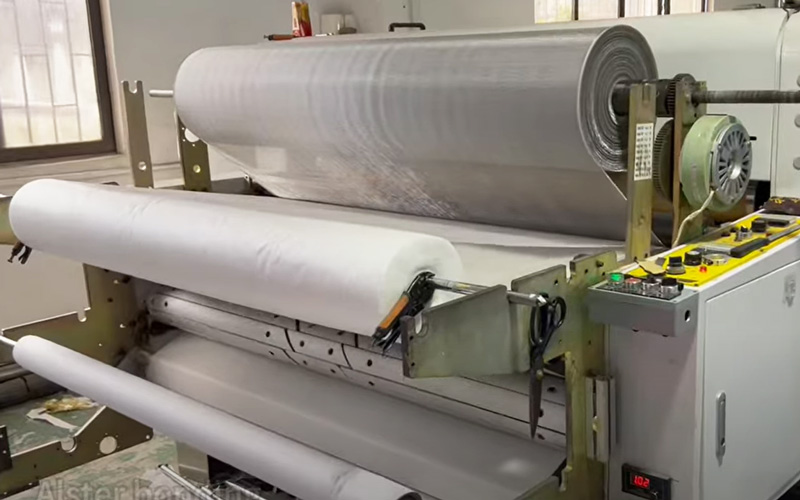
In addition, adhesive bonding can support automation. With suitable machinery, film placement, heating, pressure, and cooling can be incorporated into repeatable production processes. This can improve consistency and reduce variation between garments.
For manufacturers producing large quantities of seamless garments, process consistency is especially important. A stable bonding system can help maintain uniform appearance and connection strength across production batches.
Future Trends in Seamless Garment Bonding
As textile technology continues to develop, seamless garment manufacturing is expected to become increasingly sophisticated. Consumers are looking for clothing that combines comfort, performance, durability, and attractive design, while manufacturers are seeking more efficient production methods.
Garment bonding film is positioned to support these trends by enabling low-profile connections and innovative garment construction. Future adhesive films may focus on improved stretchability, lower activation temperatures, better washing durability, and compatibility with a wider range of technical fabrics.
Sustainability is also becoming increasingly important. Manufacturers are paying greater attention to material efficiency, production waste, energy consumption, and recyclable textile systems. Adhesive technologies that support efficient processing and lightweight garment construction may become increasingly relevant.
Conclusion
Garment bonding film is an important technology for modern seamless garment manufacturing. By creating thin, flexible, and clean connections between textile components, it can help manufacturers produce sportswear, underwear, shapewear, and other performance garments with improved comfort and appearance.
The successful use of bonding film depends on selecting the right adhesive formulation, film thickness, activation temperature, and processing conditions for the specific fabric and application. When properly integrated into the production process, garment bonding film can complement traditional sewing methods while enabling new possibilities in seamless garment design.
As demand for comfortable, lightweight, and high-performance apparel continues to grow, garment bonding technology will remain an important solution for manufacturers looking to develop the next generation of seamless garments.