
The development of seamless clothing has changed the way many garments are designed and manufactured. Instead of relying entirely on traditional stitching, modern apparel production can use heat-activated adhesive materials to join fabrics, attach components, reinforce edges, and create smoother garment structures. Among these materials, bonding film for seamless clothing has become an important solution for manufacturers looking to combine comfort, flexibility, appearance, and production efficiency.
Seamless construction is particularly relevant to underwear, sportswear, activewear, and lightweight apparel. These garments are often worn close to the body, so bulky seams, exposed stitching, and rigid joining areas can affect the wearing experience. Bonding film provides an alternative method for connecting compatible textile materials by using controlled heat and pressure.
In practical garment production, bonding film can be applied to different areas depending on the product design. For seamless men’s underwear, it can help join fabric panels and create low-profile edges. For women’s underwear, it can support smooth connections around waistbands, leg openings, and other components. For men’s polo shirts, it can be used for selected construction details, reinforcement, labels, and decorative or functional components.
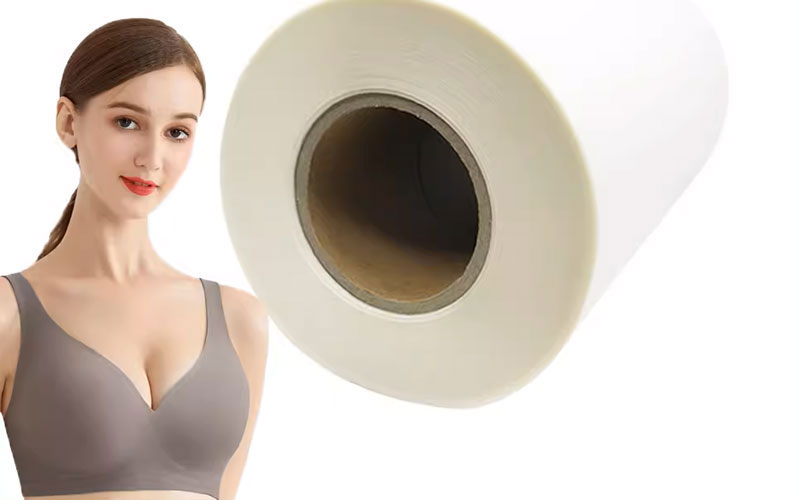
What Is Bonding Film for Seamless Clothing?
Bonding film is a solid thermoplastic adhesive material that can be activated by heat. It is normally placed between two compatible materials before being processed with a heat press or specialized bonding equipment.
When the temperature reaches the appropriate activation range, the adhesive softens or melts. Pressure brings the materials into close contact, allowing the adhesive to form a connection. After the bonding cycle, the material cools and becomes solid again.
Different bonding films can provide different characteristics, including flexibility, elasticity, softness, adhesion strength, and resistance to washing. TPU-based films are particularly relevant to many textile applications because they can offer a combination of flexibility and bonding performance.
The correct film depends on the fabric, garment structure, required elasticity, processing temperature, and expected use of the finished product.
Why Bonding Film Is Important for Seamless Clothing
The purpose of seamless clothing is not simply to remove every stitch. Instead, seamless construction allows manufacturers to rethink how individual components are connected.
Traditional sewing creates a mechanical connection using thread and needles. Bonding creates an adhesive connection between material surfaces. In suitable applications, this can reduce seam thickness and provide a smoother transition between components.
This is especially useful for close-fitting garments. Men’s underwear, women’s underwear, sportswear, and other garments can remain in direct contact with the skin for extended periods. A low-profile bonded area may help reduce the bulk associated with conventional seams.
Bonding can also give designers greater flexibility when developing garment structures that would be difficult to produce through sewing alone.
Bonding Film for Seamless Men’s Underwear
Men’s underwear is one of the practical applications of bonding film for seamless clothing.
Underwear needs to provide comfort while accommodating frequent body movement. Waistbands, leg openings, front panels, back panels, and other sections can experience repeated stretching and recovery.
Traditional stitching can create visible or raised seam structures. For close-fitting underwear, these areas may influence comfort and the overall appearance of the garment.
Bonding film can be used to join selected fabric sections without creating the same type of stitched construction. When an appropriate elastic bonding film is matched with the fabric, the bonded area can maintain flexibility while connecting the textile components.
For example, bonding can be considered for side seams, waistband connections, leg openings, and selected reinforcement areas. The exact application depends on the design and fabric construction.
Bonding Waistbands and Edges
The waistband is an important part of men’s underwear because it needs to remain secure while allowing comfortable movement.
A bonding film can be positioned between suitable fabric layers or between the fabric and a waistband component. Heat and pressure activate the adhesive and create the connection.
Compared with some traditional sewn constructions, a bonded waistband can have a flatter profile. This can be useful for underwear designs where manufacturers want to reduce bulky construction around the waist.
Bonding Leg Openings
Leg openings also require flexibility because they move with the wearer. A bonding solution needs to accommodate repeated stretching without unnecessarily restricting the fabric.
The film should therefore be selected according to the elasticity and composition of the textile. Testing is important to determine whether the bonded area maintains the required flexibility and durability after repeated movement and washing.
Bonding Film for Women’s Underwear
Women’s underwear is another important application for bonding film for seamless clothing.
Modern women’s underwear can include multiple components, such as fabric panels, waistbands, elastic sections, decorative elements, lining, and support structures. Because many of these components are positioned close to the skin, manufacturers often pay particular attention to seam thickness and surface comfort.
Bonding film can help create smooth connections between compatible materials.
Supporting Smooth Waistband Construction
A bonded waistband can provide an alternative to conventional stitching in suitable underwear designs. The adhesive film can be positioned between the fabric layers before heat pressing.
When properly processed, the bonded area can remain relatively flat and flexible.
This approach can be particularly useful for lightweight underwear and other garments where manufacturers want to minimize visible construction details.
Bonding Around Leg Openings
Leg openings are another area where seamless construction can be valuable. Traditional stitching can create additional thickness around the edge, while bonding can provide a different construction method.
The film needs to work with the elasticity of the fabric and maintain sufficient adhesion during repeated stretching. Washing and durability testing are also important because underwear is frequently washed and exposed to repeated mechanical stress.
Attaching Functional Components
Bonding film can also be used to attach selected textile components, labels, reinforcement materials, or decorative details.
This gives manufacturers additional design possibilities without requiring every component to be sewn into place.
Bonding Film for Men’s Polo Shirts
Although seamless technology is strongly associated with underwear and sportswear, bonding film for seamless clothing can also be applied to selected areas of men’s polo shirts.
A polo shirt typically contains a collar, placket, cuffs, shoulder areas, side seams, labels, and decorative components. Not every part of a polo shirt needs to be bonded, but bonding technology can be introduced into specific construction areas.
Bonding Collar Components
The collar is one of the most visible structural elements of a polo shirt. Bonding film can be considered for joining compatible layers within the collar or attaching reinforcement components.
A bonded construction can help reduce visible stitching in selected areas and provide a clean appearance.
The film must be compatible with the fabric and maintain the desired collar shape and flexibility.
Bonding Placket Components
The placket is another potential application area.
A polo shirt placket may contain several layers of fabric and reinforcement. Heat-activated bonding film can help connect selected layers, depending on the garment design.
This can simplify certain construction steps while maintaining a neat appearance.
Supporting Labels and Decorative Elements
Bonding film can also be used to attach suitable labels, patches, graphics, and decorative textile elements to polo shirts.
For manufacturers producing customized or branded apparel, heat bonding can provide an alternative to stitching for certain applications.
When the component is attached correctly, the finished garment can maintain a clean surface without additional visible thread around the applied element.
Advantages of Bonding Film in Seamless Clothing
One of the main advantages of bonding film for seamless clothing is its ability to create relatively low-profile connections.
Other potential benefits include controlled adhesive application, flexible bonding, compatibility with automated heat pressing, and support for modern garment designs.
The film format also makes adhesive positioning easier than applying liquid glue in some production processes. Manufacturers can cut the film to the required shape and place it precisely between the materials.
Heat bonding can also support production consistency because temperature, pressure, and bonding time can be standardized.
Bonding Film and Stretch Fabrics
Stretch fabrics are widely used in seamless clothing, especially underwear and sportswear.
However, bonding an elastic textile requires more than simply selecting a strong adhesive. The bonded connection must work with the movement of the fabric.
If the film is excessively rigid, it may restrict stretching or change the hand feel of the garment. If adhesion is insufficient, repeated stretching may cause the connection to fail.
For this reason, manufacturers should evaluate elasticity, softness, adhesive strength, and recovery performance when selecting a bonding film.
TPU-based bonding films are commonly considered for applications requiring flexible connections, but the actual film specification should always be matched to the fabric and production process.
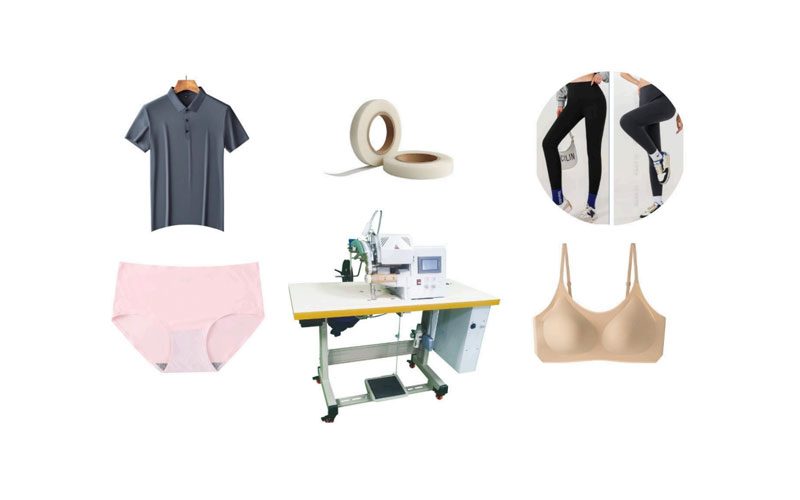
Bonding Process for Seamless Garments
A typical bonding process begins with fabric preparation. The surfaces should be clean and suitable for bonding.
The bonding film is then cut according to the required shape and positioned between the materials. The assembly is placed in a suitable heat press.
Temperature, pressure, and heating time are then controlled according to the adhesive and textile combination.
After pressing, the bonded area should be allowed to cool sufficiently before the garment is handled or subjected to further processing.
Manufacturers should conduct tests before mass production. Adhesion, flexibility, appearance, washing resistance, and dimensional stability should all be evaluated.
How to Choose Bonding Film for Seamless Clothing
Selecting the correct bonding film for seamless clothing requires consideration of the entire garment construction.
Fabric composition is the first factor. Polyester, nylon, cotton blends, elastic textiles, mesh, and coated fabrics can have different bonding requirements.
Film thickness is also important. A thinner film may be appropriate for lightweight underwear, while a different thickness may be required for reinforcement or multilayer applications.
Manufacturers should also evaluate activation temperature, elasticity, softness, washing resistance, bonding strength, and final hand feel.
The intended application should determine the selection rather than using the same film specification for every garment.
Conclusion
Bonding film for seamless clothing provides garment manufacturers with an alternative method for joining textile materials through controlled heat and pressure. It can help create low-profile connections and support modern seamless garment construction.
For seamless men’s underwear, bonding film can be used for selected waistbands, leg openings, fabric panels, and reinforcement components. For women’s underwear, it can support smooth waistband and edge construction while providing options for attaching functional or decorative components. For men’s polo shirts, bonding technology can be introduced into collars, plackets, labels, reinforcement areas, and selected decorative applications.
The success of the bonding process depends on choosing a compatible film and controlling temperature, pressure, and heating time. Fabric composition, elasticity, thickness, washing requirements, and final garment performance should all be considered before production.
As apparel manufacturers continue developing smoother, lighter, and more comfortable clothing, bonding film provides a flexible technology for combining textile components while supporting the design requirements of modern seamless garments.