
Bonding adhesive films are advanced material solutions widely used in modern manufacturing to achieve clean, efficient, and durable bonding between different substrates. Unlike traditional liquid adhesives, adhesive films are solid-state materials that activate under heat and pressure, forming a uniform bonding layer without the mess, inconsistency, or long curing times associated with wet adhesives.
These films are especially valuable in industries that require precision, automation compatibility, and high-performance adhesion, such as textiles, automotive interiors, electronics assembly, footwear production, packaging, and composite materials processing. Their ability to provide consistent thickness, controlled bonding strength, and clean application makes them a preferred choice for scalable industrial production.
Among the many variations available, bonding adhesive films can be categorized by their chemical base and functional properties. Each type offers distinct advantages depending on temperature resistance, elasticity, substrate compatibility, and final application requirements. This article explores the main types of bonding adhesive films, including hot melt adhesive film, TPU, TPE, EVA, PES, PO, and PA adhesive films, providing a detailed understanding of their characteristics and industrial uses.
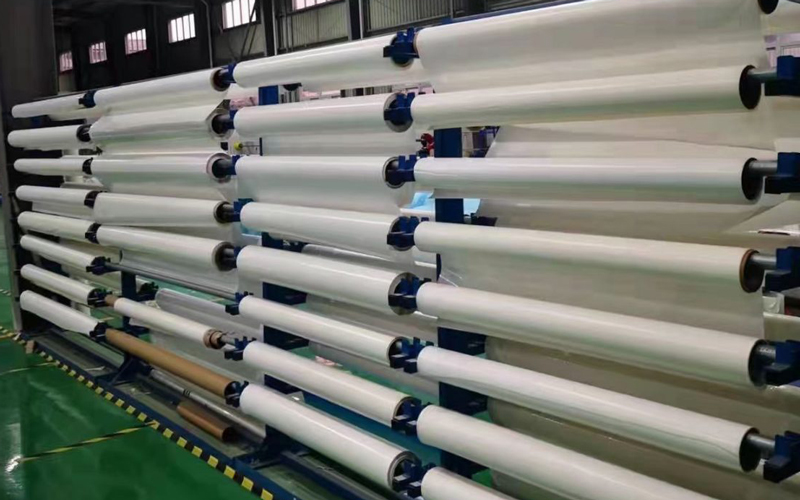
Overview of Bonding Adhesive Films
Bonding adhesive films are thermoplastic materials that soften when heated and solidify upon cooling, creating a strong bond between two surfaces. They are typically supplied in roll or sheet form and can be cut into customized shapes or applied in continuous industrial processes.
Key Characteristics:
- Solvent-free and environmentally friendly
- Precise thickness control
- High bonding consistency
- Compatible with automated lamination systems
- Fast processing speed
- Clean and residue-free application
Basic Working Principle:
- Heat activation softens the adhesive film
- Pressure ensures intimate contact between substrates
- Cooling solidifies the adhesive layer
- Strong molecular bonding is formed between materials
This simple yet effective mechanism makes adhesive films highly efficient for high-volume production environments.
Hot Melt Adhesive Film
Hot melt adhesive film is a broad category of thermoplastic adhesive materials that become tacky when heated and solidify upon cooling. It serves as the foundational technology behind many specialized adhesive films.
Properties:
- Fast melting and solidification
- Strong initial tack
- Good bonding strength on various substrates
- Solvent-free formulation
- Easy processing in heat-press systems
Advantages:
- High production efficiency
- No drying or curing time required
- Clean and environmentally friendly
- Suitable for automation and mass production
Applications:
- Textile lamination
- Label bonding
- Packaging sealing
- Automotive interior assembly
- Electronic component fixation
Limitations:
- Heat sensitivity after bonding
- May soften under high-temperature environments
- Limited elasticity depending on formulation
Hot melt adhesive films are widely used as a base technology for more specialized polymer-based adhesive films.
TPU Hot Melt Adhesive Film
TPU (Thermoplastic Polyurethane) hot melt adhesive film is known for its excellent elasticity, abrasion resistance, and strong bonding performance.
Properties:
- High elasticity and flexibility
- Excellent wear resistance
- Strong adhesion to textiles and plastics
- Good transparency options
- Excellent cold and heat resistance balance
Advantages:
- Outstanding stretch recovery
- Durable under repeated mechanical stress
- Soft hand feel after bonding
- Excellent wash durability for textile applications
Applications:
- Sportswear and functional apparel
- Seamless garments
- Shoe upper bonding
- Waterproof textile laminations
- Electronic wearables
Limitations:
- Higher cost compared to basic adhesive films
- Requires precise temperature control during processing
TPU adhesive film is widely used in high-end textile manufacturing where flexibility and durability are critical.
TPE Hot Melt Adhesive Film
TPE (Thermoplastic Elastomer) adhesive film combines rubber-like elasticity with thermoplastic processing advantages.
Properties:
- Rubber-like flexibility
- Soft texture
- Good elasticity and resilience
- Moderate bonding strength
- Comfortable tactile performance
Advantages:
- Excellent comfort for wearable applications
- Good flexibility under dynamic movement
- Lightweight bonding solution
- Environmentally friendly compared to traditional rubber adhesives
Applications:
- Medical textiles
- Wearable accessories
- Soft-touch consumer products
- Flexible packaging components
- Cushioning layers in footwear
Limitations:
- Lower heat resistance compared to TPU or PA films
- Not suitable for high-load structural bonding
TPE adhesive films are preferred in applications where softness and comfort are more important than extreme mechanical strength.
EVA Hot Melt Adhesive Film
EVA (Ethylene Vinyl Acetate) adhesive film is one of the most commonly used and cost-effective bonding solutions.
Properties:
- Good initial adhesion
- Low melting temperature
- Flexible bonding layer
- Cost-effective formulation
- Easy processing
Advantages:
- Excellent affordability
- Wide compatibility with materials
- Simple processing requirements
- Good bonding for low to medium stress applications
Applications:
- Packaging industry
- Light textile bonding
- Foam lamination
- Paper and board bonding
- Decorative materials
Limitations:
- Lower heat resistance
- Reduced long-term durability compared to engineering-grade films
- Limited chemical resistance
EVA adhesive film is ideal for general-purpose applications where cost efficiency is a key factor.
PES Hot Melt Adhesive Film
PES (Polyester-based) adhesive film offers high thermal stability and strong bonding performance, making it suitable for demanding industrial environments.
Properties:
- High temperature resistance
- Strong structural bonding
- Excellent dimensional stability
- Resistant to chemicals and aging
- Good mechanical strength
Advantages:
- Suitable for high-performance applications
- Maintains stability under heat exposure
- Long-lasting bonding strength
- Excellent resistance to environmental degradation
Applications:
- Automotive interior bonding
- Electronic assembly
- Metal and composite bonding
- High-temperature textile applications
- Industrial filtration materials
Limitations:
- Less flexible compared to TPU or TPE films
- Requires higher activation temperature
PES adhesive film is commonly selected for applications requiring durability and thermal resistance.
PO Hot Melt Adhesive Film
PO (Polyolefin) adhesive film includes polyethylene (PE) and polypropylene (PP)-based formulations, offering lightweight and chemically resistant bonding solutions.
Properties:
- Lightweight material structure
- Good chemical resistance
- Moderate flexibility
- Moisture resistance
- Cost-efficient production
Advantages:
- Excellent water resistance
- Strong compatibility with plastics
- Good balance between cost and performance
- Suitable for large-scale industrial use
Applications:
- Packaging lamination
- Automotive trims and panels
- Hygiene products
- Plastic component bonding
- Nonwoven fabric assembly
Limitations:
- Lower heat resistance than PES or PA films
- Moderate bonding strength compared to engineering adhesives
PO adhesive films are widely used in packaging and plastic bonding industries.
PA Hot Melt Adhesive Film
PA (Polyamide) adhesive film is a high-performance adhesive material known for its exceptional strength and heat resistance.
Properties:
- High bonding strength
- Excellent heat resistance
- Strong adhesion to metals and textiles
- Good chemical resistance
- Durable structural performance
Advantages:
- Suitable for heavy-duty bonding applications
- Maintains performance under high stress
- Strong adhesion to difficult substrates
- Long service life
Applications:
- Automotive structural components
- Metal-to-fabric bonding
- High-performance textiles
- Aerospace interior materials
- Industrial composite bonding
Limitations:
- Higher processing temperature required
- Less flexible compared to TPU or TPE films
- Higher material cost
PA adhesive film is ideal for demanding environments where maximum bonding strength is required.
Comparison of Main Bonding Adhesive Films
| Type | Flexibility | Heat Resistance | Bond Strength | Cost Level | Main Applications |
|---|---|---|---|---|---|
| Hot Melt | Medium | Medium | Medium | Low–Medium | General bonding |
| TPU | High | Medium | High | High | Apparel, footwear |
| TPE | High | Low–Medium | Medium | Medium | Soft products |
| EVA | Medium | Low | Medium | Low | Packaging, light use |
| PES | Low | High | High | Medium–High | Automotive, electronics |
| PO | Medium | Medium | Medium | Low–Medium | Packaging, plastics |
| PA | Low | Very High | Very High | High | Industrial, structural |
How to Choose the Right Bonding Adhesive Film
Selecting the appropriate adhesive film depends on several critical factors:
1. Substrate Material
- Textile-to-textile → TPU, EVA
- Metal-to-fabric → PA, PES
- Plastic-to-plastic → PO, EVA
2. Temperature Resistance
- High-temperature environments → PES, PA
- Medium → TPU, PO
- Low → EVA, TPE
3. Flexibility Requirements
- High flexibility → TPU, TPE
- Moderate → EVA, PO
- Low flexibility → PES, PA
4. Mechanical Strength
- Heavy-duty bonding → PA, PES
- General use → TPU, EVA
- Light applications → TPE
5. Production Cost
- Budget-friendly → EVA, PO
- Balanced performance → TPU, PES
- High-performance investment → PA
Industrial Applications of Bonding Adhesive Films
Bonding adhesive films are used across multiple industries due to their adaptability and performance consistency.
Textile Industry
- Seamless clothing
- Sportswear lamination
- Waterproof garments
- Decorative fabric bonding
Automotive Industry
- Interior panels
- Seat fabrics
- Noise insulation materials
- Trim assembly
Electronics Industry
- Flexible circuit bonding
- Insulation layers
- Component fixation
- Thermal protection layers
Packaging Industry
- Laminated packaging materials
- Protective layers
- Structural reinforcement
Footwear Industry
- Upper material bonding
- Sole lamination
- Reinforcement layers
Future Development Trends
The bonding adhesive film industry is evolving toward higher performance and sustainability.
Key Trends:
- Low-temperature activation films
- Eco-friendly and recyclable materials
- High elasticity multifunctional films
- Smart adhesive systems for electronics
- Ultra-thin precision coatings
As industries continue to demand cleaner and more efficient manufacturing processes, adhesive films will play an increasingly important role in replacing traditional wet adhesives and mechanical fastening methods.
Conclusion
Bonding adhesive films represent a highly efficient and versatile solution for modern industrial bonding needs. Each type—hot melt, TPU, TPE, EVA, PES, PO, and PA—offers unique performance characteristics suited to specific applications.
From flexible textile bonding to high-strength structural assembly, these materials provide clean processing, consistent quality, and scalable manufacturing advantages. Understanding the differences between each type allows manufacturers to select the most suitable solution for performance, cost, and durability requirements.
As technology continues to advance, bonding adhesive films will remain a key material in high-performance manufacturing systems across multiple industries.