
The Ultrasonic Bartacking Machine represents a major advancement in modern garment manufacturing, replacing traditional needle-and-thread reinforcement methods with high-frequency ultrasonic bonding. This technology uses mechanical vibration energy to generate localized heat through molecular friction, allowing synthetic fibers and composite textiles to fuse instantly without additional consumables such as thread or adhesives.
Among the most advanced configurations in this category is the Double-Head Ultrasonic Bartacking Machine, which significantly improves productivity and pattern flexibility. By integrating two ultrasonic heads into a single synchronized system, it enables simultaneous or sequential bartacking operations, making it highly suitable for high-volume production environments where efficiency, precision, and consistency are critical.
Unlike conventional sewing equipment, an Ultrasonic Bartacking Machine does not puncture the fabric. Instead, it creates clean, sealed bonding points that enhance both the appearance and structural integrity of garments. This makes it especially valuable in industries that require smooth finishes, such as sportswear, protective clothing, medical textiles, and non-woven disposable products.
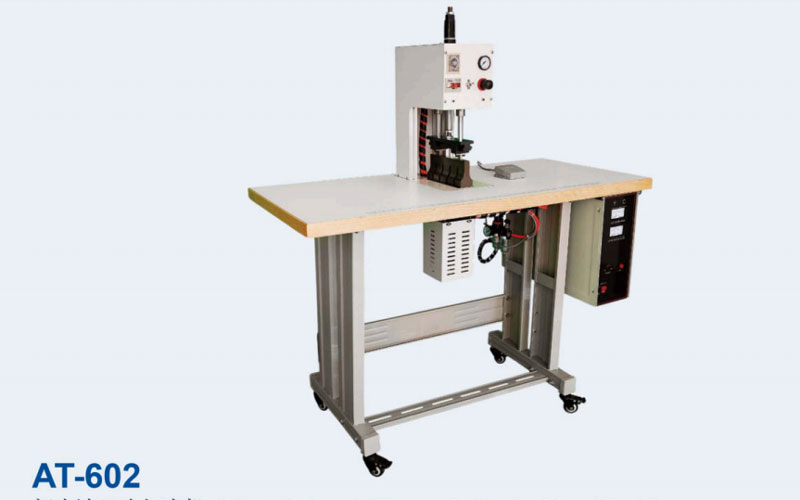
Core Working Principle of Ultrasonic Bartacking Machine
The core technology behind an Ultrasonic Bartacking Machine is ultrasonic vibration at typically 20kHz frequency. The system converts electrical energy into mechanical vibration through a transducer, which is then amplified by a booster and delivered to a horn or mold head.
When pressure is applied to fabric layers, the high-frequency vibration causes rapid friction between fibers. This friction generates localized heat that softens thermoplastic materials, allowing them to fuse together at the molecular level.
Key working stages include:
- Energy conversion from electrical power to ultrasonic vibration
- Transmission of vibration through the horn to the fabric interface
- Application of controlled pressure via pneumatic systems
- Instant fusion of fibers without external adhesives or thread
- Rapid cooling and solidification forming a permanent bond
This process results in strong, clean, and uniform bartack points that are resistant to unraveling, making the Ultrasonic Bartacking Machine superior for precision reinforcement tasks.
Main Functions of Double-Head Ultrasonic Bartacking Machine
The Double-Head Ultrasonic Bartacking Machine enhances standard ultrasonic bartacking capabilities by integrating dual working heads that operate in coordination. This configuration expands functionality across multiple dimensions: speed, pattern diversity, and production efficiency.
Dual-Head Synchronized Operation
One of the most important functions is synchronized dual-head operation. Each ultrasonic head can work independently or simultaneously depending on production requirements. This allows manufacturers to:
- Double output capacity without increasing machine footprint
- Perform parallel bartacking on different garment sections
- Reduce cycle time for repetitive reinforcement patterns
- Improve line balancing in automated production systems
This function is especially valuable in large-scale apparel manufacturing where production bottlenecks must be minimized.
High-Precision Seam Reinforcement
The machine provides extremely accurate bartacking for reinforcement areas such as pockets, zippers, straps, and structural seams. The ultrasonic bonding process ensures:
- No skipped stitches or thread breakage
- Uniform bonding strength across all products
- Clean surface finish without needle holes
- Reduced material deformation during processing
This level of precision is difficult to achieve with conventional sewing machines, especially when working with delicate synthetic fabrics.
Custom Pattern Formation Capability
Another essential function is customizable mold-based patterning. The Double-Head Ultrasonic Bartacking Machine supports interchangeable molds, allowing manufacturers to create:
- Straight bartacks
- Cross reinforcement patterns
- Decorative geometric designs
- Logo-based bonding structures
- Functional stress distribution patterns
This flexibility makes the Ultrasonic Bartacking Machine not only a reinforcement tool but also a design-enhancing production system.
Wide Working Area Adaptability
The machine supports a wide working width, enabling it to handle larger garment sections and complex layouts. This feature allows:
- Processing of oversized textile components
- Application in technical garments with broad reinforcement zones
- Flexibility in positioning multiple bartack points per cycle
- Reduced need for repositioning materials during production
A wider working area increases operational efficiency and reduces manual intervention.
Pneumatic Mold Lifting System
The integration of a pneumatic mold lifting system is another critical function. This system allows:
- Fast mold replacement
- Precise pressure control
- Reduced operator fatigue
- Stable and repeatable production cycles
By automating mold movement, the machine significantly improves workflow efficiency and reduces downtime between pattern changes.
Sliding Width Adjustment Mechanism
Sliding width adjustment enables quick configuration changes to accommodate different garment sizes and reinforcement positions. This function ensures:
- Flexible production setup for varied product lines
- Reduced machine adjustment time
- Improved adaptability for small batch customization
- Better alignment accuracy during bartacking operations
This feature is particularly useful for manufacturers handling diversified orders.
Technical Advantages of Ultrasonic Bartacking Machine Systems
The Ultrasonic Bartacking Machine offers several technical advantages that distinguish it from traditional mechanical sewing equipment.
Thread-Free Operation
Since ultrasonic bonding eliminates the need for thread, manufacturers benefit from:
- Lower material costs
- No thread breakage issues
- Reduced maintenance requirements
- Cleaner finished products
This also eliminates one of the most common causes of production delays in conventional sewing lines.
Non-Damaging Fabric Processing
Because there is no needle penetration, fabric integrity remains intact. This is particularly important for:
- Lightweight synthetic textiles
- Waterproof or coated fabrics
- Non-woven disposable materials
- Composite laminated fabrics
The absence of mechanical puncturing prevents weakening of structural fibers.
High-Speed Production Capability
The Double-Head Ultrasonic Bartacking Machine can achieve up to 40 cycles per minute depending on configuration and material type. This allows manufacturers to:
- Increase daily output significantly
- Reduce production bottlenecks
- Maintain consistent quality at high speeds
- Optimize labor efficiency
Energy Efficiency
Compared to traditional stitching machines, ultrasonic systems consume less energy due to:
- Short cycle times
- Efficient energy conversion systems
- Reduced mechanical friction components
This contributes to lower long-term operational costs.
Industrial Applications of Ultrasonic Bartacking Machine
The Ultrasonic Bartacking Machine is widely used across multiple industries due to its versatility and efficiency.
Synthetic Fabric Apparel Production
In synthetic garment manufacturing, it is commonly used for:
- Sportswear reinforcement
- Outdoor clothing seams
- Elastic fabric stabilization
- Functional garment construction
Synthetic fibers respond particularly well to ultrasonic bonding.
Non-Woven Product Manufacturing
Non-woven materials benefit greatly from ultrasonic bartacking in applications such as:
- Disposable medical gowns
- Protective masks
- Hygiene products
- Industrial disposable wear
The clean bonding process ensures hygiene compliance and structural reliability.
Technical and Protective Clothing
For high-performance garments, the machine is used in:
- Fire-resistant clothing reinforcement
- Industrial safety uniforms
- Military-grade textile production
- High-durability workwear
These applications require strong and reliable seam reinforcement.
Composite Material Processing
The machine is also suitable for layered composite textiles, including:
- Laminated waterproof fabrics
- Multi-layer insulation garments
- Bonded technical textiles
Ultrasonic bonding ensures stable adhesion between layers.
Decorative Garment Applications
Beyond functional use, the machine supports aesthetic applications such as:
- Embossed decorative patterns
- Branding and logo reinforcement
- Fashion detailing
- Structural design enhancement
This expands its role in fashion manufacturing beyond purely technical uses.
Comparison with Traditional Bartacking Methods
Traditional bartacking machines rely on needle and thread systems, which have inherent limitations compared to ultrasonic technology.
Traditional Bartacking Limitations
- Thread breakage risks
- Needle wear and replacement costs
- Visible stitching lines
- Limited compatibility with delicate fabrics
- Higher maintenance requirements
Ultrasonic Bartacking Advantages
- Seamless bonding without thread
- No mechanical puncturing of fabric
- Stronger and more uniform reinforcement
- Cleaner aesthetic appearance
- Lower operational maintenance
The comparison clearly shows that Ultrasonic Bartacking Machine systems provide a more advanced and efficient solution for modern textile production.
Workflow Integration in Production Lines
The Double-Head Ultrasonic Bartacking Machine is designed for seamless integration into automated garment production systems.
Integration Benefits
- Compatible with automated feeding systems
- Can be synchronized with cutting and sealing equipment
- Suitable for continuous production lines
- Easy adaptation to existing factory layouts
Operational Workflow
Typical workflow includes:
- Fabric positioning
- Pattern alignment
- Ultrasonic activation and bonding
- Cooling and stabilization
- Product discharge
This streamlined process reduces manual handling and improves consistency.
Maintenance and Operational Stability
Although highly advanced, the Ultrasonic Bartacking Machine is designed for stable and low-maintenance operation.
Maintenance Features
- Minimal mechanical wear components
- Easy mold replacement system
- Simplified cleaning procedures
- Long-lasting ultrasonic transducers
Operational Stability
The machine ensures stable output through:
- Digital frequency control systems
- Pneumatic pressure regulation
- Precision synchronization of dual heads
- Overload protection mechanisms
These features ensure long-term production reliability.
Selection Considerations for Manufacturers
When selecting an Ultrasonic Bartacking Machine, manufacturers should evaluate several factors:
- Production volume requirements
- Fabric type compatibility
- Pattern complexity needs
- Automation integration level
- Working width requirements
- Energy consumption efficiency
For high-volume production environments, the Double-Head configuration offers the most balanced combination of speed and flexibility.
Future Development Trends
The Ultrasonic Bartacking Machine technology continues to evolve with advancements in automation and smart manufacturing. Future trends include:
- AI-assisted pattern recognition
- Fully automated production line integration
- Enhanced energy optimization systems
- Multi-material adaptive bonding systems
- Smart maintenance monitoring
These developments will further strengthen its role in advanced textile manufacturing.
Conclusion
The Double-Head Ultrasonic Bartacking Machine represents a significant evolution in modern garment production technology. As a highly efficient Ultrasonic Bartacking Machine system, it combines precision, speed, and versatility to meet the demands of contemporary textile manufacturing.
Its dual-head configuration enhances productivity, while ultrasonic bonding technology ensures clean, durable, and thread-free reinforcement. With applications spanning synthetic fabrics, non-woven materials, composite textiles, and technical garments, it provides a comprehensive solution for both functional and decorative bartacking needs.
As manufacturing continues to shift toward automation and high-efficiency production systems, ultrasonic bartacking technology will remain a key driver of innovation, helping manufacturers achieve higher quality standards and improved operational performance.