
Seamless clothing has become increasingly important in modern apparel manufacturing because consumers expect garments to provide comfort, flexibility, clean appearance, and reliable performance. Unlike traditional sewn garments, seamless clothing often uses bonding technologies to join fabric components without visible stitching. In this process, adhesive film for clothing provides an efficient solution for creating smooth, lightweight, and durable garment connections.
For manufacturers of underwear, sportswear, activewear, swimwear, shapewear, and other close-fitting garments, adhesive film can help reduce bulky seams while maintaining fabric flexibility. When properly selected and applied, it can create a strong bond between compatible textile materials while supporting the soft, streamlined appearance expected from seamless clothing.
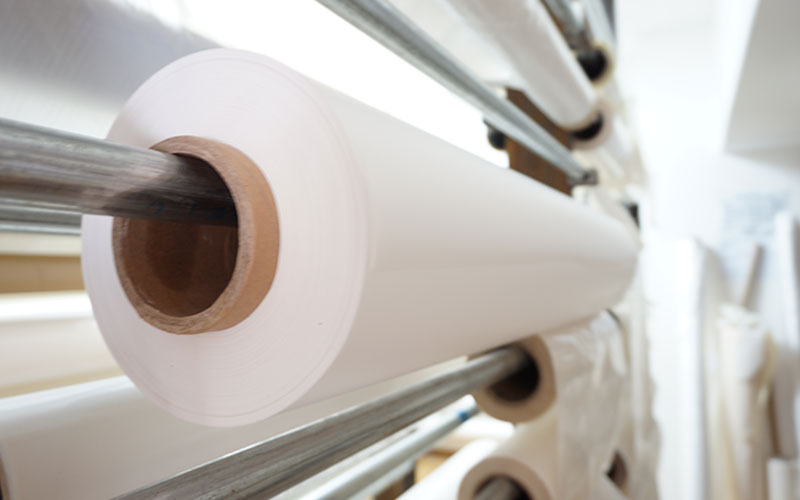
What Is Adhesive Film for Seamless Clothing?
Adhesive film for seamless clothing is a thin thermoplastic bonding material designed to join textile components through controlled heat and pressure. Instead of relying entirely on thread and stitching, manufacturers can place adhesive film between fabric layers and activate the adhesive using suitable heat press or bonding equipment.
The film becomes soft or melts within a specific activation temperature range and then flows into the surfaces of the materials being bonded. After cooling, it forms an adhesive layer that holds the textile components together.
This bonding method is particularly useful for seamless garments because it can eliminate or reduce conventional stitching. The resulting construction can have a flatter profile, which is valuable when the garment is worn directly against the skin or underneath other clothing.
Depending on the application, adhesive film can be supplied in different thicknesses, widths, colors, adhesive formulations, and activation temperature ranges. Manufacturers can therefore select a solution according to fabric composition, garment structure, production equipment, and required bonding performance.
Why Use Adhesive Film for Clothing?
Traditional sewing remains an important garment manufacturing method, but it is not always ideal for applications where a smooth surface and low-profile construction are required. Stitching can create raised areas, thread lines, or pressure points, especially in tight-fitting clothing.
Using adhesive film for clothing can provide several advantages.
1. Smooth and Low-Profile Seams
One of the main benefits is the ability to create flatter garment connections. Without conventional stitching, there is less material accumulation along the bonded area.
This is especially valuable for underwear, leggings, sports bras, compression garments, and other garments designed to fit closely to the body. A flatter seam can improve both appearance and wearing comfort.
2. Improved Garment Appearance
Seamless garments are often designed around a clean and minimalist appearance. Adhesive bonding can help maintain this visual effect by reducing visible stitch lines.
For fashion and performance apparel, manufacturers can use bonding techniques to create clean edges, decorative details, logos, panels, and functional garment structures without adding unnecessary stitching.
3. Flexible Bonding
A suitable adhesive film can maintain flexibility after bonding. This allows the joined textile components to move with the garment rather than creating a rigid connection.
Flexibility is particularly important for sportswear and activewear because these garments must withstand repeated stretching during running, training, cycling, yoga, fitness, and other physical activities.
4. Efficient Production
Adhesive bonding can simplify certain garment assembly operations. Instead of sewing every connection, manufacturers can position the adhesive film and apply controlled heat and pressure.
With suitable equipment and production parameters, this process can support consistent bonding and improve manufacturing efficiency for high-volume apparel production.
Applications of Adhesive Film in Seamless Clothing
Adhesive film can be used in many parts of modern garment manufacturing. Its application depends on the fabric structure, bonding requirements, and final product design.
Sportswear and Activewear
Sportswear requires garments that can withstand stretching, movement, perspiration, and repeated washing. Adhesive film can be used to bond fabric panels and create low-profile seams for running shirts, cycling garments, yoga wear, training clothes, and other performance apparel.
A suitable adhesive system can help maintain the connection between materials while allowing the garment to retain its flexibility.
Seamless Underwear
Underwear is one of the most common applications for low-profile bonding. Since the material is worn directly against the skin, bulky seams may affect comfort.
Adhesive film can be used for bonding elastic components, fabric edges, panels, and other sections where a smooth construction is preferred.
Shapewear and Compression Garments
Shapewear and compression clothing require close contact with the body. Their construction must balance stretch, support, comfort, and durability.
Adhesive film can help join textile components without creating unnecessarily thick stitched areas. This makes it suitable for selected bonding applications in compression garments and body-shaping products.
Swimwear
Swimwear is frequently exposed to water, stretching, body movement, and repeated use. Bonded construction can help manufacturers create clean garment designs while reducing conventional seam structures.
However, the adhesive formulation and bonding parameters must be carefully selected to ensure that the bond remains suitable for the intended environment.
Garment Decoration and Functional Components
Beyond joining fabric panels, adhesive film can be used for attaching labels, decorative elements, reinforcement materials, elastic components, and selected functional parts.
This gives garment manufacturers greater flexibility when designing modern clothing with clean surfaces and fewer visible stitches.
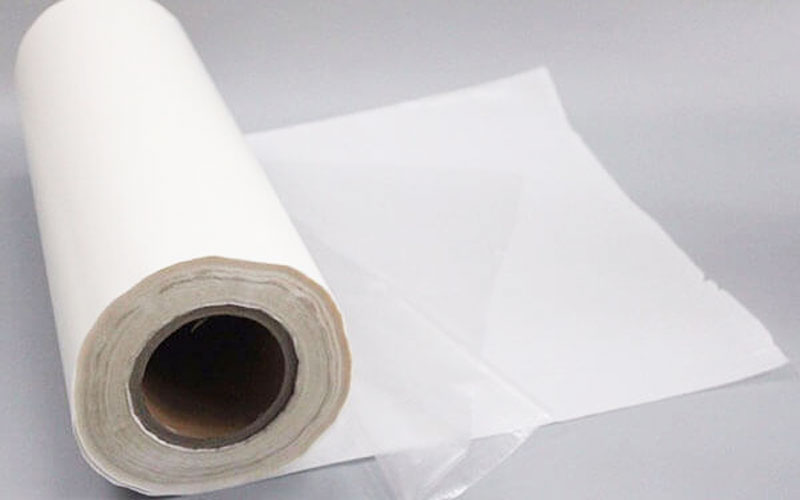
How Does Adhesive Film Bond Fabric?
The bonding process usually involves three essential elements: adhesive film, heat, and pressure.
First, the adhesive film is positioned between the materials that need to be joined. The fabric surfaces should be clean and properly prepared so that the adhesive can contact the intended bonding areas.
The assembly is then placed into suitable heat-press or bonding equipment. When the temperature reaches the required activation range, the adhesive film softens and begins to flow.
Pressure helps bring the materials into close contact with the adhesive. Once the heat is removed, the adhesive cools and solidifies, creating the final bond.
The exact temperature, pressure, and pressing time depend on the adhesive formulation and the materials being bonded. Manufacturers should therefore establish production parameters through testing rather than relying on a single setting for every fabric.
Factors to Consider When Choosing Adhesive Film for Clothing
Not every adhesive film is suitable for every textile application. Selecting the right product requires consideration of several factors.
Fabric Composition
Different fabrics have different surface characteristics. Polyester, nylon, elastane blends, cotton, synthetic textiles, coated fabrics, and laminated materials may require different adhesive properties.
Before mass production, manufacturers should test the film with the exact fabric combination used in the garment.
Adhesive Activation Temperature
The activation temperature is an important consideration because excessive heat can damage sensitive fabrics, coatings, elastic materials, or printed surfaces.
A film with a suitable processing temperature can help manufacturers achieve reliable bonding while reducing the risk of thermal damage.
Flexibility and Stretch
Seamless clothing frequently stretches during wearing. The adhesive should therefore provide an appropriate balance between bonding strength and flexibility.
For highly elastic garments, a rigid adhesive layer may negatively affect garment performance. Flexible adhesive systems are generally more suitable for applications where significant movement is expected.
Washing and Durability Requirements
Clothing is repeatedly washed, dried, stretched, and worn. A garment bond must therefore be evaluated under realistic conditions.
Manufacturers should consider washing resistance, temperature exposure, humidity, stretching, and long-term adhesion when selecting adhesive film for a particular garment.
Film Thickness
Film thickness can affect both bonding performance and garment feel. A thinner film may be preferred where a lightweight and low-profile construction is required, while a thicker film may provide additional adhesive volume for certain applications.
The correct thickness should be determined according to the fabric, bonding area, equipment, and performance requirements.
Adhesive Film vs. Traditional Sewing
The purpose of adhesive bonding is not necessarily to completely replace sewing in every garment. Instead, it provides manufacturers with another production method for applications where traditional stitching has limitations.
Sewing can provide excellent mechanical strength and remains suitable for many garment structures. Adhesive bonding, on the other hand, can provide a flatter appearance and reduce thread-related bulk.
For some products, a combination of sewing and adhesive bonding may provide the best solution. Manufacturers can use stitches for structural areas while applying adhesive film to selected seams, edges, labels, or decorative components.
This hybrid approach can provide greater design flexibility while maintaining appropriate garment strength.
Production Tips for Better Bonding Results
Successful bonding depends on more than simply selecting an adhesive film. Production conditions also play an important role.
The fabric should be clean and free from dust, oil, moisture, or other contaminants that could interfere with adhesion. The film should be positioned accurately to prevent adhesive from spreading outside the intended bonding area.
Heat, pressure, and pressing time should be controlled consistently. Excessive temperature may damage the textile, while insufficient heat may prevent the adhesive from activating properly.
Manufacturers should also conduct peel-strength and washing tests before beginning large-scale production. Testing the finished garment rather than only the adhesive material can provide a more realistic evaluation of performance.
Custom Adhesive Film for Clothing Manufacturing
Apparel manufacturers may have different requirements depending on garment design, textile composition, equipment, and production volume. For this reason, customized adhesive film solutions can be valuable for specialized seamless clothing applications.
Customization may involve film thickness, width, color, adhesive characteristics, activation temperature, and roll specifications. A supplier with experience in textile bonding can also help manufacturers evaluate compatibility with different fabrics and production processes.
For large-volume garment production, consistent film quality is especially important. Stable thickness, uniform adhesive distribution, reliable activation, and consistent bonding performance can help reduce production variations.
Conclusion
As apparel manufacturers continue to develop lighter, smoother, and more comfortable garments, seamless construction is becoming an increasingly important production approach. Adhesive film for clothing offers an effective bonding solution for reducing bulky seams and creating clean, flexible garment structures.
For seamless underwear, activewear, sportswear, shapewear, swimwear, and other close-fitting apparel, the right adhesive film can support both garment aesthetics and production efficiency. However, successful results depend on choosing a film compatible with the fabric and controlling activation temperature, pressure, pressing time, and other production conditions.
By testing adhesive compatibility and optimizing the bonding process before mass production, clothing manufacturers can use adhesive film to develop cleaner, more comfortable, and more functional seamless garments.