
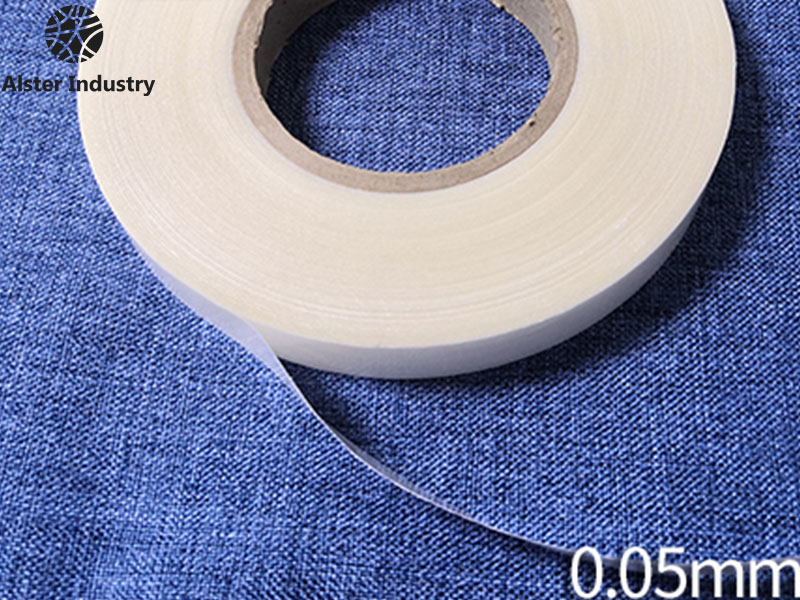
Fabric manufacturers and textile product producers are increasingly looking for bonding solutions that can improve production efficiency while maintaining flexibility, appearance, and durability. Traditional sewing can create visible seams, while liquid adhesives may require coating, drying, curing, and additional handling. For many textile applications, TPU Hot Melt Adhesive Film for Fabric offers a cleaner and more controllable alternative.
TPU hot melt adhesive film can be processed using heat and pressure to bond fabric layers, textile components, labels, decorative elements, and functional materials. Its flexibility and adjustable bonding characteristics make it suitable for apparel, sportswear, seamless garments, footwear, bags, home textiles, and technical textile products.
Choosing the right adhesive film is important because textile products can be exposed to stretching, washing, abrasion, moisture, and repeated mechanical movement. The adhesive needs to provide sufficient bonding strength without making the fabric unnecessarily stiff or affecting its appearance.
Flexible Bonding for Different Fabric Applications
One of the main reasons manufacturers choose TPU hot melt adhesive film is its flexibility.
Fabric is rarely a completely rigid material. Clothing stretches when people move, sportswear undergoes repeated deformation, and textile products may be folded, compressed, or bent during transportation and use. An adhesive that becomes excessively rigid after bonding can negatively affect the feel and performance of the finished product.
TPU adhesive films can provide a flexible bonding layer when the appropriate grade is selected. This makes them suitable for applications where the bonded area needs to move together with the surrounding textile.
For example, manufacturers of sportswear may use adhesive film for bonding textile components, reinforcement sections, decorative pieces, or labels. Seamless garment manufacturers can also select suitable TPU films for applications where flexibility and comfort are important.
The exact performance depends on film formulation, thickness, fabric construction, and processing conditions, so testing the actual material combination is recommended before mass production.
Clean and Controlled Processing
Another advantage of TPU hot melt adhesive film is its relatively clean processing method.
Liquid adhesives need to be applied to the substrate using spraying, coating, brushing, or dispensing equipment. Depending on the adhesive formulation, additional drying or curing may also be necessary.
With hot melt adhesive film, the adhesive is supplied as a solid film. The manufacturer can cut the material to the required size and position it between the fabrics or components that need to be bonded.
During heat pressing or lamination, the film softens and forms the required adhesive layer. After cooling, the bonded materials remain connected.
This process can help manufacturers control adhesive placement and reduce the possibility of liquid adhesive spreading outside the target bonding area. It can be particularly useful when producing products with precise bonding patterns, logos, patches, or small textile components.
Consistent Adhesive Thickness
For industrial textile production, consistency is extremely important. Variations in adhesive quantity can lead to differences in bonding strength, appearance, flexibility, and hand feel.
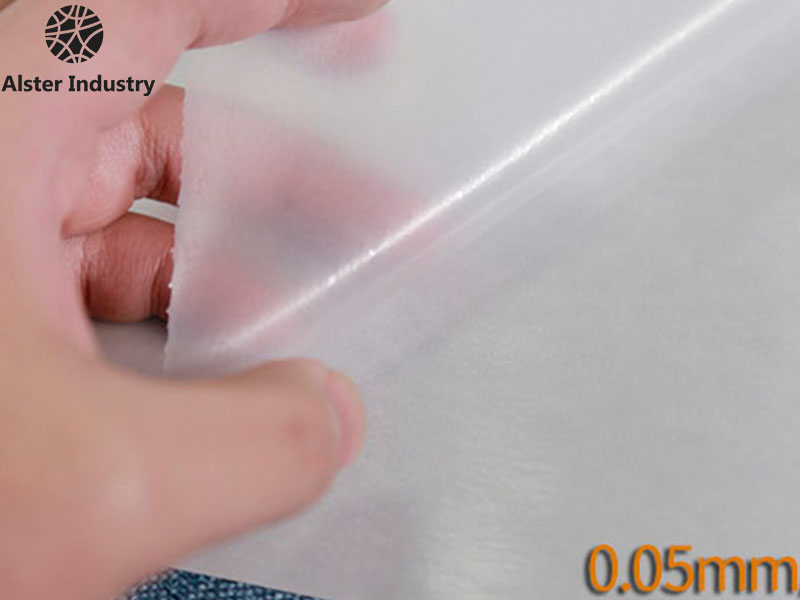
TPU hot melt adhesive film is manufactured with a controlled thickness. Depending on the application, manufacturers can select a thinner or thicker film to match the requirements of the textile construction.
A thin film may be suitable when the final product needs to remain lightweight and flexible. It can also help minimize the visibility of the adhesive layer.
A thicker film may be considered when the textile surface is more uneven or when additional adhesive material is required to achieve sufficient contact between the substrates.
By selecting an appropriate thickness, manufacturers can better control the bonding process compared with manually applying an uncontrolled amount of liquid adhesive.
Suitable for Stretchable Textiles
Stretchability is a major consideration in modern textile manufacturing.
Sportswear, underwear, compression garments, swimwear, seamless clothing, and elastic textile products can experience repeated stretching during use. If the adhesive cannot accommodate this movement, the bonded area may become damaged or separate from the substrate.
A suitable TPU adhesive film can provide the flexibility needed for these applications. The adhesive layer can work together with the textile instead of behaving like a completely rigid connection.
However, not every TPU film has the same elasticity. Buyers should evaluate elongation, recovery, adhesion strength, film thickness, and fabric compatibility when selecting a product for stretchable applications.
Production trials are especially important for fabrics containing elastane or other highly elastic fibers.
Good Compatibility with Textile Materials
Fabric products can contain many different materials, including polyester, nylon, cotton, blends, knitted fabrics, coated textiles, and functional fabrics.
TPU hot melt adhesive films can be formulated for different bonding requirements. However, compatibility should always be evaluated according to the actual fabric rather than assuming that one adhesive grade will work for every textile.
Polyester fabrics are widely used in garments, sportswear, bags, and industrial textiles. Nylon is common in outdoor products, luggage, footwear, and functional clothing. Cotton and blended fabrics are frequently used in apparel and home textiles.
The surface condition is also important. Dyeing, finishing agents, coatings, water-repellent treatments, and other surface modifications can affect adhesion.
For this reason, manufacturers should provide detailed substrate information when requesting an adhesive recommendation.
Strong Bonding Without Traditional Sewing
Sewing remains an important manufacturing method, but it is not ideal for every textile construction.
Visible stitching can affect the appearance of a product, while needle holes may be undesirable in certain thin, coated, or functional materials. Sewing also requires thread, needles, machine settings, and additional production operations.
TPU hot melt adhesive film can provide an alternative bonding method for selected applications.
It can be used for patches, labels, decorative components, reinforcement materials, and certain textile assemblies. In appropriate constructions, manufacturers can reduce or eliminate stitching in specific areas.
This can support cleaner product designs and provide greater flexibility when creating modern textile structures.
Useful for Seamless Clothing
Seamless clothing is one of the applications where adhesive technology can provide significant production advantages.
Traditional seams can create raised areas or pressure points that may affect comfort. Bonding selected textile components can help create flatter constructions.
TPU adhesive film can be used in suitable seamless textile applications where the adhesive must remain flexible and withstand repeated movement.
Manufacturers of underwear, sportswear, shapewear, compression garments, and other close-fitting clothing can consider TPU film when developing bonded textile structures.
The adhesive should be selected according to the fabric’s stretch characteristics, required washing resistance, processing temperature, and desired hand feel.
Applications in Sportswear
Sportswear places demanding requirements on textile bonding.
A sports garment may be repeatedly stretched, washed, folded, and exposed to sweat and moisture. Decorative elements and bonded components therefore need reliable adhesion while maintaining flexibility.
TPU hot melt adhesive film can be used for selected sportswear applications such as logos, labels, reinforcement pieces, textile overlays, and other components.
The correct film can help manufacturers achieve a clean appearance without relying entirely on stitching.
For high-performance sportswear, however, manufacturers should evaluate the complete construction rather than adhesive strength alone. Stretch recovery, washing durability, abrasion resistance, and comfort can all affect the final product.
Suitable for Footwear and Bags
TPU hot melt adhesive film is not limited to clothing.
Textile components are widely used in footwear uppers, backpacks, luggage, handbags, protective covers, and other products. These products often combine multiple layers of fabric or textile-based materials.
The adhesive film can be positioned between compatible substrates and activated through heat and pressure.
For footwear, the adhesive may be used with textile overlays, reinforcement components, labels, and decorative sections. For bags and luggage, it can support bonding between textile layers or selected structural components.
The exact application depends on the material combination and required durability.
Efficient Heat Pressing and Lamination
TPU adhesive film can be integrated into heat pressing and textile lamination processes.
A typical process involves placing the film between the materials, applying controlled temperature and pressure, and maintaining the required conditions for a specified period. Once the adhesive has flowed sufficiently and the assembly cools, the bonded structure can be inspected.
This makes TPU film suitable for manufacturers that already use heat presses or laminating equipment.
Production efficiency can be improved when the correct film specification is matched with stable machine settings. Consistent temperature, pressure, and heating time are essential because insufficient heat may result in incomplete bonding, while excessive heat may damage sensitive fabrics.
Better Control of the Finished Appearance
Appearance is particularly important in apparel and consumer textile products.
Excess liquid adhesive can spread beyond the intended bonding area and leave visible marks. Uneven application can also create differences in surface appearance.
A film format allows manufacturers to control the location and amount of adhesive more precisely. The film can be die-cut or otherwise converted into specific shapes for labels, logos, patches, reinforcement sections, and other components.
This can help create cleaner finished products, especially when bonding small or detailed textile components.
Considerations for Washing and Durability
Textile products are often washed many times during their service life. Therefore, adhesive performance after washing should be considered before selecting a TPU film.
Manufacturers should evaluate the expected washing temperature, detergent exposure, drying method, stretching, and frequency of washing.
For garments that will be washed frequently, testing should be performed under conditions that reflect actual customer use.
Other environmental factors may also matter. Outdoor textile products can experience moisture, temperature changes, sunlight, and mechanical stress. Industrial textile products may face oils, chemicals, abrasion, or repeated loading.
The right TPU adhesive film should be selected according to these specific conditions.
How to Choose the Right TPU Hot Melt Adhesive Film
Choosing a suitable film requires more than specifying TPU as the adhesive material.
Buyers should first identify the fabrics that need to be bonded. The fabric composition, thickness, surface treatment, stretchability, and construction can all influence adhesive performance.
Next, consider the required film thickness and processing temperature. The selected film should be compatible with the heat resistance of the fabric and other components.
Bonding strength, flexibility, elongation, washing resistance, and final hand feel should also be evaluated.
For large-scale production, manufacturers should conduct sample testing before placing a bulk order. Testing can identify issues such as poor adhesion, excessive stiffness, adhesive penetration, edge lifting, or fabric discoloration.
TPU Hot Melt Adhesive Film for Fabric vs. Other Bonding Methods
Different textile bonding methods have different advantages.
Sewing provides strong mechanical connections and remains widely used, but it can create visible seams and requires additional sewing operations.
Liquid adhesive can be suitable for certain substrates and production processes, but coating quantity and drying conditions need to be controlled.
TPU hot melt adhesive film offers a different approach based on pre-formed adhesive material activated by heat. It can provide controlled thickness, clean handling, and flexible bonding for suitable textile applications.
The best choice depends on the product design, production equipment, material combination, and performance requirements.
Conclusion
There are several reasons manufacturers choose TPU Hot Melt Adhesive Film for Fabric. It can provide flexible bonding, controlled adhesive thickness, clean processing, and compatibility with a wide range of textile applications.
From seamless clothing and sportswear to footwear, bags, labels, patches, and laminated fabrics, TPU adhesive film can help manufacturers develop cleaner and more efficient bonding processes.
However, successful application depends on selecting the correct film specification and matching it with the actual fabric and production conditions. Film thickness, processing temperature, pressure, heating time, adhesion strength, flexibility, and washing durability should all be evaluated.
For manufacturers looking to reduce sewing operations or replace certain liquid adhesive processes, TPU hot melt adhesive film can be a practical option for developing reliable, flexible, and visually clean textile products.