In modern intimate apparel manufacturing, bonding technology plays an important role in product quality, production efficiency, and the overall appearance of finished garments. A Bra Cup Adhesive Film Laminating Machine is mainly used to laminate adhesive film onto bra cups through controlled heat and pressure. Compared with traditional spray glue bonding, this process provides a cleaner and more consistent method for manufacturers producing bras, lingerie, seamless underwear, and other molded intimate apparel products.
With thermal fusion technology, adhesive film can be applied evenly to the required surface of a bra cup. This helps manufacturers achieve reliable bonding while reducing adhesive contamination and improving production conditions. The application of this machine is not limited to one type of bra. Its universal mold design and adjustable production process allow it to support different manufacturing requirements.
1. Bra Cup Bonding and Lamination
The primary application of a Bra Cup Adhesive Film Laminating Machine is bonding adhesive film to bra cups. During production, the machine applies controlled heat and pressure to activate the adhesive film and create a uniform bonding layer.
This process is particularly useful for molded bra cups and other cup components that require adhesive bonding. Instead of manually applying liquid glue or using spray adhesive, manufacturers can use adhesive film to create a more controlled bonding process.
Uniform lamination is important because uneven adhesive coverage can lead to weak bonding, wrinkles, visible defects, or inconsistent product performance. A dedicated laminating machine helps maintain stable processing conditions throughout production.
For manufacturers producing large quantities of bra cups, automated thermal lamination can also reduce repetitive manual operations and improve production consistency.
2. Lingerie Manufacturing
Another important application is lingerie manufacturing. Bras, padded lingerie, molded lingerie, and other intimate apparel products often require bonding between different materials or components.
Traditional sewing is not always the best solution for every lingerie structure. Seams can create additional thickness, affect comfort, or become visible through tight-fitting clothing. Adhesive film bonding provides an alternative for applications where a smoother construction is required.
A Bra Cup Adhesive Film Laminating Machine can support the production of lingerie components where adhesive film needs to be laminated accurately onto shaped surfaces. By combining heat, pressure, and adhesive film, manufacturers can achieve a clean bonding structure while maintaining an efficient production workflow.
This is especially useful for manufacturers focusing on high-quality lingerie where appearance, comfort, and construction consistency are important.
3. Seamless Underwear Production
Seamless underwear is another major application area. Seamless products are designed to reduce visible seams and create a smoother appearance against the body. As a result, bonding technologies are increasingly important in applications where conventional stitching may not provide the desired finish.
The Bra Cup Adhesive Film Laminating Machine can be used in bonding processes for molded cups and related seamless underwear components. Adhesive film allows selected materials to be joined without relying entirely on traditional thread-and-needle construction.
For seamless underwear manufacturers, the bonding process can help improve the visual appearance of products while supporting a more streamlined production method. When the correct adhesive film and processing parameters are selected, manufacturers can obtain stable bonding without excessive adhesive residue.
The machine is therefore suitable for factories producing seamless bras, seamless underwear, molded intimate apparel, and other products requiring smooth bonding areas.
4. Molded Bra Cup Production
Molded bra cups require accurate processing because their three-dimensional shape needs to be maintained throughout manufacturing. The bonding method must therefore provide sufficient adhesion without unnecessarily affecting the shape or appearance of the cup.
A thermal lamination machine can be integrated into the manufacturing process for molded cups where adhesive film is required. Its working structure and universal mold design provide flexibility for different production requirements.
During operation, the adhesive film is positioned on the target surface before controlled heat and pressure are applied. The thermal fusion process activates the adhesive layer and creates the required bond.
This application is valuable for manufacturers producing different bra cup styles because a flexible machine can reduce the need for completely separate equipment for every product specification.
5. Replacing Traditional Spray Glue Processes
One of the practical applications of this machine is replacing or reducing the use of traditional spray glue bonding. Spray adhesive can create overspray, adhesive residue, and additional cleaning requirements in a production environment.
Adhesive film lamination offers a more controlled alternative. Instead of spraying liquid adhesive over a large area, the manufacturer uses pre-formed adhesive film and applies it directly to the required bonding area.
This can help reduce unnecessary adhesive waste and keep surrounding production equipment cleaner. It can also make the bonding process easier to standardize because the adhesive material is supplied in a controlled film form.
For factories looking to improve workplace cleanliness and reduce dependence on spray-based bonding processes, thermal adhesive film lamination can be an attractive manufacturing solution.
6. High-Volume Intimate Apparel Production
Production capacity is an important consideration for large lingerie manufacturers. Manual adhesive application can become time-consuming when thousands of bra cups need to be processed.
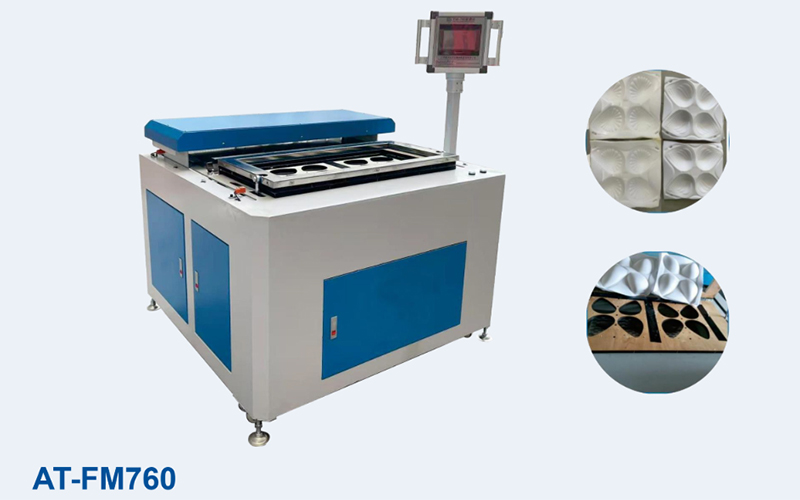
The AT-FM760 is designed for efficient production, with a stated capacity of approximately 12–16 pairs of cups per minute. This output makes the machine suitable for high-volume manufacturing environments where stable throughput is required.
High production efficiency can help manufacturers reduce processing time and organize production lines more effectively. Instead of relying heavily on manual bonding operations, factories can introduce a dedicated thermal lamination stage into their production workflow.
For manufacturers serving large retail orders, private-label lingerie programs, or international apparel markets, production consistency can be just as important as maximum speed.
7. Bonding Applications Requiring Uniform Coverage
Another important use is applications where uniform adhesive coverage is required. In intimate apparel manufacturing, inconsistent adhesive distribution can affect both bonding strength and the appearance of the finished product.
Thermal lamination provides controlled application of adhesive film across the required surface. When machine parameters are properly adjusted, manufacturers can maintain more consistent temperature, pressure, and processing time.
This is particularly useful for production environments where repeatability matters. Once suitable parameters have been established for a particular material combination, operators can follow a standardized process instead of depending entirely on manual application techniques.
Consistent processing can also help reduce variation between production batches and improve quality control.
8. Custom and Flexible Bra Cup Production
Different lingerie manufacturers may work with different cup shapes, materials, designs, and production requirements. A machine designed with a universal mold concept can therefore provide greater flexibility than equipment dedicated to a single product.
The universal mold design of the AT-FM760 allows manufacturers to adapt the equipment to different bra cup production requirements. This can be useful for factories that manufacture multiple product styles rather than focusing on one standardized cup.
Flexibility is particularly valuable for OEM and private-label manufacturers. Such factories may receive orders from different customers with different product specifications. Equipment that can accommodate changing requirements can help manufacturers avoid unnecessary equipment duplication.
9. Improving Finished Product Appearance
The bonding method used during intimate apparel production can directly influence the appearance of the final product. Excess glue, uneven application, or poorly controlled bonding can create visible defects.
Adhesive film lamination provides a cleaner and more controlled bonding approach. By applying the adhesive layer through thermal fusion, manufacturers can reduce the possibility of excessive liquid adhesive spreading beyond the intended area.
For products designed to be worn under close-fitting clothing, a smooth and neat construction is especially important. The combination of controlled adhesive application and consistent heat processing can contribute to a cleaner finished appearance.
This makes thermal adhesive film lamination suitable for manufacturers targeting products where aesthetics and construction quality are major purchasing considerations.
10. Environmentally Conscious Production
Environmental considerations are becoming increasingly important in apparel manufacturing. Although the environmental performance of a bonding process depends on the adhesive material and complete production system, replacing spray glue can help reduce certain sources of adhesive overspray and production contamination.
A film-based bonding process uses adhesive in a predefined form rather than dispersing liquid adhesive through spraying. This can make adhesive application more controlled and potentially reduce material waste.
For manufacturers working toward cleaner production practices, a Bra Cup Adhesive Film Laminating Machine can therefore become part of a broader strategy to improve production cleanliness and process control.
11. Suitable for Automated and Standardized Production
Modern apparel factories increasingly focus on process standardization. Equipment with PLC control and touchscreen operation can make machine settings easier to manage and repeat.
The AT-FM760 uses a PLC control system and touchscreen interface, allowing operators to manage production parameters through a centralized control system. This can simplify operation and help manufacturers establish repeatable production procedures.
For factories with multiple production workers or production shifts, standardized machine operation can be particularly useful. Clear operating parameters can reduce dependence on individual operator experience and support more consistent production.
Conclusion
The main purpose of a Bra Cup Adhesive Film Laminating Machine is to provide an efficient and controlled method for laminating adhesive film onto bra cups using thermal fusion. However, its applications extend beyond basic bra cup bonding.
It can be used in molded bra cup production, lingerie manufacturing, seamless underwear processing, high-volume intimate apparel production, and applications requiring uniform adhesive coverage. It can also help manufacturers replace traditional spray glue processes with a cleaner and more controlled film-based bonding method.
For factories producing different types of intimate apparel, flexibility, production efficiency, bonding consistency, and ease of operation are important considerations. Features such as universal mold design, PLC control, touchscreen operation, and production capacity of approximately 12–16 pairs of cups per minute make the AT-FM760 suitable for professional manufacturing environments.
As intimate apparel manufacturers continue to seek cleaner production methods and more consistent bonding quality, thermal adhesive film lamination can provide a practical solution for modern bra cup and seamless garment production.