
Choosing the right overlapping machine for seamless underwear manufacturing is an important decision for garment factories looking to improve bonding quality, production efficiency, and finished product consistency. As seamless underwear production continues to develop, manufacturers need equipment that can handle different elastic fabrics, maintain stable bonding conditions, and produce clean fabric joints without unnecessary bulk.
However, not every overlapping machine is suitable for every type of fabric or garment construction. Factors such as material compatibility, temperature control, feeding speed, pressure adjustment, trimming functions, and equipment stability all influence the final production results.
For manufacturers planning to invest in new seamless garment production equipment, understanding these factors can help reduce purchasing risks and identify a machine that matches actual factory requirements.
1. Check Fabric Compatibility Before Purchasing
Fabric compatibility should be one of the first considerations when selecting an overlapping machine for seamless underwear production.
Seamless underwear commonly uses elastic and lightweight materials that need to maintain their softness, stretchability, and comfort after bonding. Common fabric materials include:
- Nylon: Frequently used in seamless underwear because of its softness, smooth surface, and elasticity when blended with other fibers.
- Polyester: Offers durability, dimensional stability, and versatility in textile manufacturing.
- Spandex Blends: Provide the stretch and recovery properties required for close-fitting underwear and activewear.
- Polyamide Blends: Used in various seamless garment applications where flexibility and a smooth fabric surface are important.
Different fabrics have different thermal properties and surface characteristics. Some materials may be sensitive to high temperatures, while others may require specific adhesive formulations to achieve reliable bonding.
When evaluating an overlapping machine, manufacturers should check whether its heating and pressure systems can accommodate their commonly used fabrics.
It is also important to select compatible hot melt adhesive film. The adhesive should provide suitable bonding performance without negatively affecting fabric elasticity, softness, or appearance.
Before purchasing equipment, ask the supplier whether sample testing can be arranged using your actual fabrics and adhesive films. This is a practical way to evaluate compatibility under real processing conditions.
2. Evaluate the Temperature Control System
Temperature control directly affects the bonding performance of an overlapping machine.
During seamless fabric joining, hot melt adhesive film needs to reach an appropriate activation temperature. If the temperature is too low, the adhesive may not develop sufficient bonding strength. Excessive heat, on the other hand, can damage sensitive fabrics, affect their appearance, or cause inconsistent processing results.
A suitable overlapping machine should offer adjustable heating settings to accommodate different fabric structures and adhesive requirements.
When comparing machines, pay attention to the following features:
Independent Temperature Adjustment: The ability to adjust different heating components independently provides greater flexibility when processing different materials.
Temperature Monitoring: A reliable temperature monitoring system helps operators maintain consistent processing conditions.
Temperature Difference Alarm: This function can alert operators when abnormal temperature differences occur, allowing them to identify potential problems before they affect large quantities of fabric.
High-Temperature Protection: Overheating protection helps prevent abnormal operating conditions and supports safer equipment operation.
For factories processing multiple types of seamless underwear fabrics, these features can make equipment adjustment and production management more convenient.
3. Consider Feeding Speed and Production Efficiency
Production speed is another important factor when selecting an overlapping machine for seamless underwear manufacturing.
A machine with a suitable feeding speed can help manufacturers balance production efficiency and bonding quality. However, the highest available speed does not necessarily produce the best results.
The actual processing speed should match the fabric characteristics, adhesive activation requirements, and pressure application conditions.
If the feeding speed is too high, the adhesive film may not receive sufficient heating time. If it is too low, production efficiency may decrease unnecessarily.
When evaluating an overlapping machine, consider:
- Adjustable feeding speed for different production requirements.
- Stable movement of upper and lower feeding belts.
- Consistent fabric positioning during the bonding process.
- Independent speed adjustment where different feeding conditions are required.
- Smooth operation during continuous production.
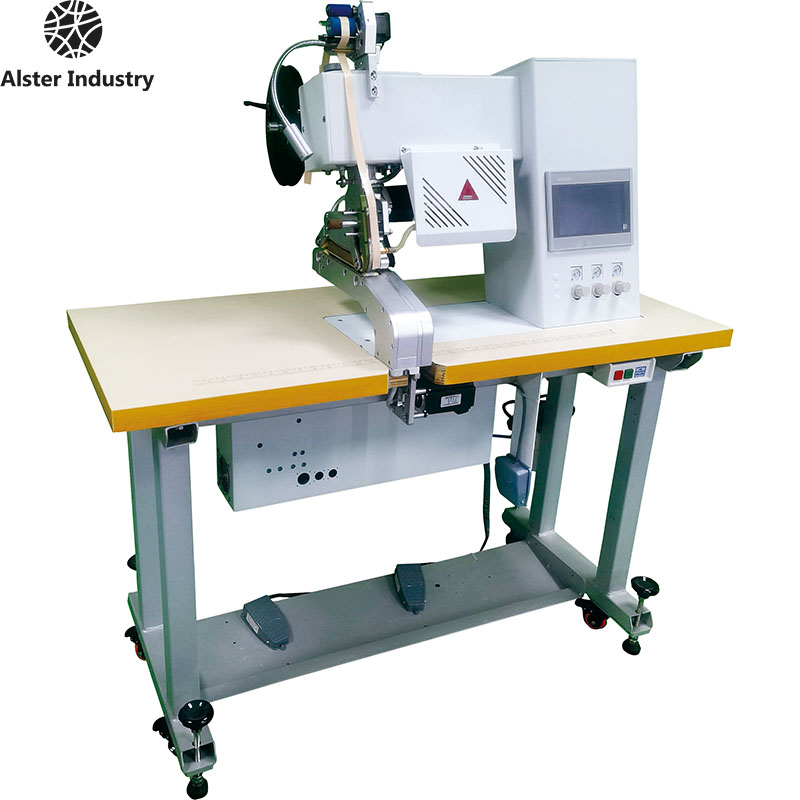
For example, the Alster AT-211 seamless overlapping machine provides an adjustable feeding speed of 0–150 mm/second. Its upper and lower fabric feeding belts can be adjusted independently, allowing operators to adapt the feeding conditions to different materials and processing requirements.
4. Check Pressure Adjustment and Presser Foot Design
Pressure application is essential for achieving consistent fabric bonding.
After the hot melt adhesive film is heated, the overlapping fabric sections need sufficient contact pressure to allow the adhesive to bond with both surfaces.
Different fabric thicknesses and structures may require different pressure settings. Lightweight elastic fabrics, thicker blended materials, and multilayer fabric sections do not necessarily respond to identical processing conditions.
When choosing an overlapping machine, manufacturers should pay attention to:
Adjustable Pressure: The machine should allow operators to adapt pressure settings according to fabric thickness and bonding requirements.
Stable Pressure Application: Consistent pressure helps reduce variations in bonding quality across different production batches.
Presser Foot Movement: A suitable lifting structure makes it easier to feed materials and accommodate different fabric thicknesses.
The AT-211 uses a cylinder-driven presser foot with a 10 mm lifting space. This design provides clearance for fabric positioning and supports the bonding process for different material thicknesses within the machine’s operating range.
5. Look for an Effective Fabric Trimming Function
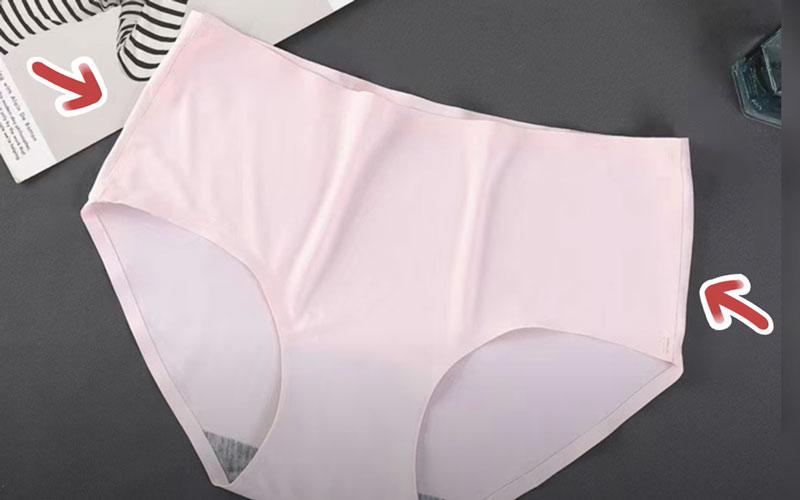
A clean fabric edge is important in seamless underwear manufacturing. Excess material around the overlapping area can affect the appearance and finishing quality of the garment.
An overlapping machine equipped with a trimming function can remove excess fabric during processing, helping create neater edges and reduce additional manual finishing work.
Before purchasing equipment, consider the following questions:
- Does the machine include an integrated trimming function?
- Can it trim excess fabric consistently during the bonding process?
- Is the trimming operation suitable for the fabric thickness used in production?
- Can operators maintain the trimming system conveniently?
- Does the trimming result meet the garment’s appearance requirements?
For manufacturers producing seamless bras, underwear, and other close-fitting garments, an effective trimming function can help improve the neatness of bonded fabric sections.
However, trimming performance should always be evaluated using actual production materials and garment designs.
6. Evaluate Equipment Stability and Safety Protection
Equipment stability is especially important for factories operating overlapping machines for extended production periods.
Unstable heating conditions, abnormal feeding, or unexpected equipment shutdowns can interrupt production and create additional quality inspection work.
A machine with suitable monitoring and protection functions can help operators identify potential problems earlier.
Important features to consider include:
Built-In Fault Detection System
A fault detection system monitors equipment operating conditions and provides alerts when abnormalities occur. This helps operators identify potential equipment issues and respond promptly.
Temperature Difference Alarm
Abnormal temperature differences may affect adhesive activation and bonding consistency. An alarm function helps operators identify temperature-related problems during operation.
High-Temperature Protection
High-temperature protection helps prevent overheating and reduces the risk of damage caused by abnormal thermal conditions.
Stable Electrical and Pneumatic Systems
Manufacturers should also check the machine’s electrical requirements, compressed air pressure, and air consumption to ensure compatibility with existing factory facilities.
For the AT-211, the specified compressed air pressure is 0.5 MPa, with compressed air consumption of 10–23 L/min. Its maximum power is 3500 W, and it uses a single-phase 220 V power supply.
Checking these requirements before purchasing can help avoid installation and production preparation problems.
7. Compare Technical Specifications Before Making a Decision
Technical specifications provide a useful starting point when comparing different overlapping machines.
However, buyers should evaluate specifications in relation to their actual production requirements rather than focusing on individual numbers.
The following table summarizes the main specifications of the Alster AT-211 seamless overlapping machine.
| Specification | AT-211 Parameters |
|---|---|
| Compatible bonding material | Hot melt adhesive film |
| Feeding system | Upper and lower fabric feeding belts |
| Feeding speed | 0–150 mm/second |
| Presser foot | Cylinder-driven |
| Presser foot lifting height | 10 mm |
| Compressed air pressure | 0.5 MPa |
| Compressed air consumption | 10–23 L/min |
| Maximum power | 3500 W |
| Input power supply | Single-phase 220 V |
| Net weight | 120 kg |
| Gross weight | 180 kg |
| Packing dimensions | 133 × 66 × 138 cm |
These specifications help manufacturers evaluate whether the equipment can fit their production environment.
For example, the feeding speed is relevant when estimating processing capacity, while the power supply and compressed air requirements are important for factory installation planning.
The machine’s dimensions and weight should also be considered when arranging the production floor and transportation.
8. Check Whether the Machine Supports Different Production Requirements
A seamless underwear factory may manufacture several product types using different fabrics, bonding materials, and garment structures.
A machine with flexible adjustment capabilities can make it easier to adapt production conditions when changing between materials or product designs.
Before selecting an overlapping machine, consider whether it supports:
- Different fabric thicknesses and compositions.
- Various hot melt adhesive film specifications.
- Adjustable feeding speed and temperature.
- Independent adjustment of heating components.
- Different airflow and temperature settings.
- Suitable pressure adjustment for different materials.
- Fabric edge trimming during the bonding process.
The AT-211 offers independent adjustment of the upper and lower feeding belt speeds and temperatures. Its heating tank temperature and blowing system can also be controlled separately.
These adjustment functions give operators greater control over the bonding process and help accommodate different production requirements.
9. Ask the Supplier About Testing and Technical Support
Technical specifications alone cannot fully demonstrate whether an overlapping machine is suitable for a particular seamless underwear production line.
Before placing an order, manufacturers should communicate their requirements clearly with the equipment supplier.
It is advisable to prepare the following information:
- Fabric Information: Specify the fabric composition, thickness, elasticity, and surface characteristics.
- Adhesive Film Information: Provide the adhesive film type, thickness, and recommended processing conditions.
- Product Requirements: Explain whether the machine will be used for bras, underwear, sportswear, or other seamless garments.
- Bonding Requirements: Describe the desired overlap width, bonding strength, flexibility, and appearance.
- Production Expectations: Provide information about expected production volume and working hours.
You should also ask about equipment operation, installation requirements, maintenance, spare parts, and technical assistance.
If possible, arrange a sample bonding test before purchasing. Testing actual materials is one of the most effective ways to evaluate the machine’s suitability for your production process.
Find the Right Overlapping Machine for Your Production Line
Selecting an appropriate overlapping machine involves balancing fabric compatibility, bonding quality, production efficiency, equipment stability, and long-term operating requirements.
For seamless underwear manufacturers, equipment with adjustable feeding speed, independent temperature control, suitable pressure application, and effective trimming functions can provide greater flexibility in production.
The Alster AT-211 seamless overlapping machine is designed to meet these requirements for hot melt adhesive film bonding applications. If you are planning to upgrade your seamless garment production equipment or establish a new production line, contact Alster to discuss your fabric materials and processing needs.
Explore the AT-211 overlapping machine and request further technical information or a customized quotation.