
A Continuous Fusing Pressing Machine plays an important role in modern textile and garment production by combining controlled temperature, pressure, and processing speed to bond different fabric layers and textile materials. Compared with manual pressing or intermittent bonding equipment, a continuous system can process materials steadily through a heated and pressurized working area, making it suitable for production environments that require consistent bonding quality and higher processing efficiency.
For garment manufacturers, textile factories, underwear producers, bag manufacturers, and other fabric-processing businesses, understanding the main functions of this type of machine can help with equipment selection and production planning. A machine such as the AT-NHG600 is designed with adjustable temperature, speed, bonding time, and pneumatic pressure, allowing manufacturers to adapt the fusing process to different materials and products.
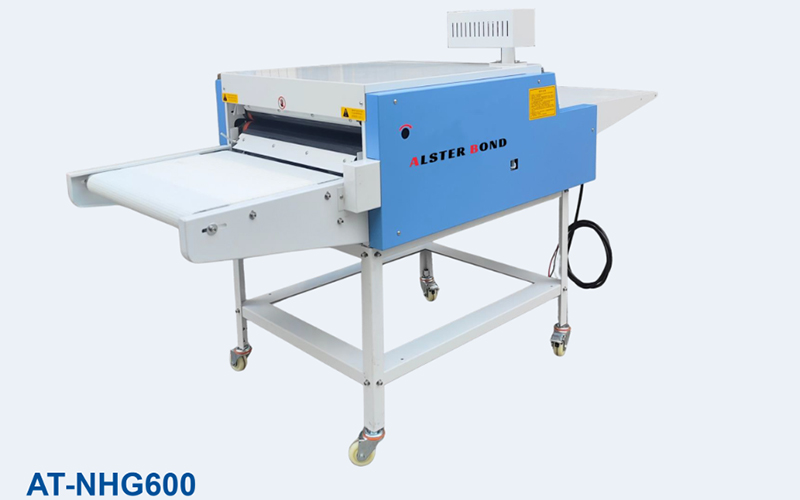
1. Continuous Fabric Fusing
The primary function of a Continuous Fusing Pressing Machine is continuous fabric fusing. The machine allows fabric, interlining, adhesive materials, or other textile components to pass through the working area while controlled heat and pressure are applied.
This continuous processing method is useful when manufacturers need to produce multiple bonded fabric pieces without repeatedly stopping the machine for individual pressing operations. The material can enter the processing area, receive the required heat and pressure, and move through the machine at a controlled speed.
Continuous fusing can help improve production efficiency, especially when large quantities of fabric components need to be bonded. It also provides a more consistent processing environment because temperature, pressure, and speed can be adjusted and maintained throughout production.
For textile manufacturers handling regular production orders, this function can reduce dependence on manual pressing and create a more standardized bonding process.
2. Controlled Heating for Adhesive Activation
Heat is another major function of a Continuous Fusing Pressing Machine. Many interlining and textile bonding materials require a specific temperature to activate their adhesive layer and create a reliable connection with the fabric.
The AT-NHG600 provides a bonding temperature range from room temperature to 230°C. This broad adjustment range allows operators to select an appropriate processing temperature according to the characteristics of the fabric, adhesive, interlining, or other bonding material.
Accurate temperature control is important because excessive heat may damage sensitive fabrics, cause discoloration, affect surface appearance, or change the properties of the adhesive. Insufficient heat, on the other hand, may prevent the adhesive from activating properly.
By providing adjustable heating, the machine enables manufacturers to establish suitable processing conditions for different production requirements.
3. Uniform Pressure Application
Heat alone is not enough to achieve stable textile bonding. Pressure is also required to bring the materials into close contact and support adhesive transfer and bonding.
A Continuous Fusing Pressing Machine uses a controlled pressing system to apply pressure while the materials pass through the machine. The AT-NHG600 uses a pneumatic double-roller double-pressure structure with pressure up to 5 kg/cm².
The double-roller structure helps distribute pressure across the bonding area. Uniform pressure can reduce problems caused by insufficient contact between layers and help create more consistent bonding results across the width of the material.
This function is particularly useful for interlining, fabric reinforcement, apparel components, and other applications where stable bonding is important for the final product.
4. Adjustable Bonding Time
Different materials may require different exposure times to heat and pressure. Therefore, bonding time is an important parameter in textile fusing.
The AT-NHG600 offers a bonding time range of 10 to 34 seconds. Operators can adjust the processing conditions according to material thickness, adhesive characteristics, fabric structure, and required bonding performance.
For thinner materials, a shorter processing time may be sufficient. Thicker or more difficult-to-bond materials may require different settings to achieve the desired result.
The ability to adjust bonding time gives manufacturers greater flexibility than a fixed-speed or fixed-cycle pressing process. It also allows production teams to test different combinations of temperature, pressure, and speed before establishing the most suitable parameters for a specific material.
5. Adjustable Processing Speed
Another important function of a Continuous Fusing Pressing Machine is controlled material transport speed. The AT-NHG600 has an operating speed range of 2 to 20 m/min.
Speed directly affects the amount of time the material remains within the heating and pressing process. When the machine runs at a slower speed, the material receives a longer processing period. A higher speed can increase production throughput when the material can achieve adequate bonding within a shorter processing cycle.
Adjustable speed allows manufacturers to balance bonding quality and production efficiency. Instead of using one fixed speed for every material, operators can select a suitable setting based on the actual production requirements.
6. Wide-Width Fabric Processing
The maximum bonding width is another important function when selecting textile fusing equipment. The AT-NHG600 provides a maximum bonding width of 600 mm, making it suitable for a range of fabric components and textile materials.
A wider working area allows manufacturers to process broader materials or multiple smaller components within the available working width. This can be useful for garment production, fabric reinforcement, bag manufacturing, and other applications.
For businesses handling different product sizes, a wide processing width can also provide greater flexibility when arranging materials for production.
7. Automatic Belt Correction
Continuous operation requires stable material transportation. If the conveyor belt gradually moves away from its intended position, production may become unstable and maintenance requirements may increase.
The AT-NHG600 incorporates an automatic belt correction system designed to help prevent belt deviation during operation. This function supports stable movement as materials pass through the machine.
Automatic belt correction is particularly valuable during longer production cycles. Instead of relying entirely on manual adjustment, the machine can help maintain proper belt alignment while operating.
Stable belt movement can also contribute to more consistent processing because the material is transported through the heating and pressing areas in a controlled manner.
8. Temperature Safety Protection
Safety is another important function of modern textile fusing equipment. Continuous heating creates the need for effective temperature monitoring and protection systems.
The Continuous Fusing Pressing Machine includes automatic safety temperature shutdown and over-temperature protection. These functions are designed to reduce risks associated with excessive temperature during operation.
If the temperature exceeds the appropriate range, the safety system can help prevent continued overheating. This not only supports safer machine operation but can also help protect heating components, conveyor belts, and processed materials.
Temperature protection is especially important for production environments where machines operate for extended periods and stable thermal conditions are required.
9. Stable Belt Guidance
In addition to automatic belt correction, the AT-NHG600 uses a linear guidance belt structure. This design supports accurate belt movement during continuous processing.
Stable guidance is important because the material must travel smoothly through the heating and pressing zones. Unstable movement can affect processing consistency and may create difficulties when working with accurately positioned fabric components.
A reliable belt guidance structure can also reduce unnecessary adjustment and contribute to smoother long-term operation. For factories that use the machine continuously, stable material transportation is an important part of maintaining production efficiency.
10. Processing Different Textile Products
A Continuous Fusing Pressing Machine is not limited to one specific garment component. Its combination of heating, pressure, speed adjustment, and continuous processing makes it suitable for multiple textile applications.
In garment manufacturing, it can be used for interlining and fabric fusing. Interlining bonding is important for providing structure, support, and dimensional stability to selected garment areas.
The machine can also support underwear production, including processing applications involving expansion ribs, shoulder straps, and other components. In cap manufacturing, controlled bonding can assist with fabric assembly and shaping processes.
Bag manufacturers can use continuous fusing equipment for fabric fitting and bonding applications. The machine can also be used in foam printing and bronzing-related processing where controlled heat and pressure are required.
The exact processing parameters should always be determined according to the material, adhesive, product structure, and production requirements.
11. Improving Production Consistency
One of the most valuable functions of a Continuous Fusing Pressing Machine is helping manufacturers standardize the bonding process.
Manual pressing can depend heavily on operator experience and may produce differences in temperature, pressure, pressing time, or positioning. A continuous machine provides adjustable and repeatable processing parameters, helping production teams establish more consistent operating conditions.
When temperature, speed, pressure, and bonding time are properly matched to the material, manufacturers can reduce variations between production batches and improve the repeatability of the bonding process.
This consistency is particularly important for commercial garment and textile production, where large quantities of similar products need to maintain stable quality.
12. Supporting Efficient Textile Production
Continuous processing can also improve overall production efficiency. Instead of repeatedly loading and unloading individual pieces for separate pressing cycles, operators can feed suitable materials through a continuous working process.
The result can be a smoother production workflow, reduced manual handling, and better utilization of production time.
For factories processing large quantities of fabric components, these advantages can make continuous fusing equipment an important part of the production line. However, the actual production capacity will depend on the material, bonding specifications, machine settings, operator workflow, and product design.
How to Select the Right Fusing Parameters
Using a Continuous Fusing Pressing Machine effectively requires more than simply setting the highest temperature or fastest speed. The correct combination of temperature, pressure, bonding time, and speed should be determined through material testing.
First, manufacturers should identify the type and thickness of the fabric and bonding material. Next, they can establish a suitable temperature range and test different processing speeds. Pressure should also be adjusted according to the material structure and adhesive requirements.
During testing, manufacturers should check bonding strength, surface appearance, fabric deformation, adhesive penetration, and other quality indicators. Once suitable parameters have been established, they can be recorded as standard production settings for future orders.
Conclusion
The main functions of a Continuous Fusing Pressing Machine include continuous fabric fusing, controlled heating, uniform pneumatic pressure, adjustable bonding time, variable processing speed, wide-width processing, automatic belt correction, temperature protection, and stable belt guidance.
These functions make continuous fusing equipment suitable for interlining, garment components, underwear, caps, bags, and other textile bonding applications. By combining adjustable processing parameters with continuous operation, a machine such as the AT-NHG600 can help textile manufacturers improve bonding consistency, production efficiency, and operational stability.
For factories selecting fusing equipment, the most important consideration is not simply machine capacity. Temperature range, pressure system, bonding time, working width, speed adjustment, safety protection, and belt control should all be evaluated according to the materials and products being processed. With the right machine settings and production procedures, continuous fusing technology can provide a practical solution for modern textile bonding operations.