
Seamless clothing production requires reliable bonding materials that can join fabrics without creating bulky stitches, visible seams, or uncomfortable edges. As apparel manufacturers increasingly focus on lightweight construction, clean appearance, stretchability, and production efficiency, hot melt adhesive film for seamless clothing has become an important solution for bonding different textile components.
From sportswear and underwear to shapewear, swimwear, functional garments, and fashion apparel, adhesive films can support a wide range of seamless manufacturing processes. However, selecting the right film requires consideration of fabric type, bonding temperature, elasticity, washing resistance, thickness, and production equipment.
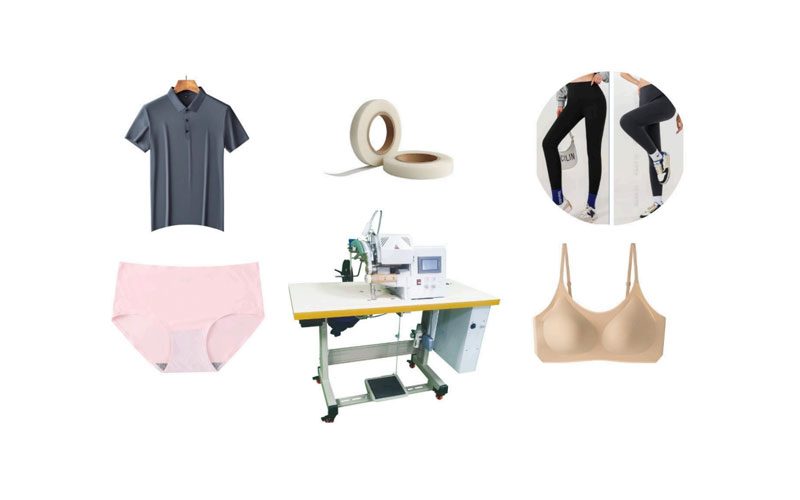
Why Hot Melt Adhesive Film Is Used in Seamless Clothing
Traditional sewing creates mechanical connections between fabric components, but stitching can leave visible lines, increase thickness, and affect the flexibility of lightweight fabrics. Adhesive bonding provides an alternative method that can create a flatter and cleaner connection.
A suitable hot melt adhesive film for seamless clothing can be applied between two textile layers and activated by controlled heat and pressure. Once the adhesive melts, it penetrates or adheres to the surfaces. After cooling, it forms a stable bond without requiring conventional thread.
This approach is particularly useful when manufacturers need smooth edges and a low-profile appearance. It can also reduce the need for additional sewing operations in selected garment structures.
Applications in Seamless Apparel Manufacturing
Hot melt adhesive films can be used for many garment components rather than only for joining large fabric panels.
Common applications include:
- Seamless underwear construction
- Sportswear and activewear
- Shapewear and compression garments
- Swimwear
- Leggings and yoga clothing
- Bra and intimate apparel components
- Functional and performance clothing
- Bonded hems and cuffs
- Waistbands and elastic components
- Decorative textile applications
- Garment labels and patches
- Reinforcement areas
In sportswear, for example, manufacturers may use adhesive films to create bonded seams around areas that experience repeated movement. In underwear and intimate apparel, a flat bonded edge can improve comfort by reducing the pressure associated with conventional stitching.
Key Benefits of Hot Melt Adhesive Film
1. Smooth and Low-Profile Seams
One of the main reasons apparel manufacturers consider adhesive bonding is the appearance and feel of the finished garment.
A properly selected adhesive film can produce a relatively thin bonding layer. This helps manufacturers create cleaner garment edges without the raised profile that may occur with conventional stitching.
For clothing worn directly against the skin, reducing bulky seams can also improve comfort.
2. Improved Design Flexibility
Seamless construction gives designers greater freedom when developing modern garment structures. Instead of relying entirely on traditional sewing patterns, manufacturers can combine bonding, cutting, pressing, and fabric forming processes.
This can be especially useful for close-fitting garments where the appearance of every seam matters.
3. Compatibility With Stretch Fabrics
Many modern garments use elastic or stretchable textiles. The adhesive therefore needs to maintain sufficient flexibility after bonding.
A suitable hot melt adhesive film for seamless clothing should be matched to the stretch characteristics of the fabric. If the adhesive layer becomes excessively rigid, the bonded area may restrict movement or create an uncomfortable transition between materials.
For highly elastic garments, manufacturers should evaluate both initial adhesion and flexibility after repeated stretching.
4. Cleaner Production
Adhesive bonding can reduce thread consumption in applications where sewing can be replaced or partially replaced by bonding.
It may also simplify certain production steps. Depending on the garment structure and equipment, manufacturers can combine adhesive film placement with heat-pressing or continuous bonding processes.
This can help improve production consistency when the bonding parameters are properly controlled.
How to Select the Right Adhesive Film
Not every hot melt film is suitable for apparel. The selection should begin with the characteristics of the fabric and the final garment.
Fabric Type
Different textiles have different surface structures and chemical properties. Polyester, nylon, cotton, spandex blends, microfiber, and laminated fabrics may require different adhesive characteristics.
Before purchasing adhesive film, manufacturers should test compatibility with the actual production fabric rather than relying only on general material descriptions.
Adhesive Thickness
Film thickness influences both bonding performance and garment feel.
A thinner film may be suitable for lightweight clothing where flexibility and a low-profile appearance are important. A thicker film can provide greater adhesive quantity for certain substrates or applications, but excessive thickness may affect softness and flexibility.
The correct thickness should therefore be determined according to the fabric, bonding area, required strength, and end-use conditions.
Melting and Activation Temperature
Processing temperature is another important factor. The adhesive must activate sufficiently during pressing without damaging the textile.
If the temperature is too low, the film may not melt or flow adequately. If it is too high, sensitive fabrics, coatings, elastic materials, or dyes may be affected.
Manufacturers should therefore establish the correct temperature, pressure, and dwell time through practical testing.
Stretch and Recovery
For sportswear, underwear, shapewear, and other close-fitting garments, stretch performance is particularly important.
The adhesive should remain sufficiently flexible after cooling and should not crack or separate easily during repeated stretching. Testing should include multiple stretch cycles rather than evaluating the bond only immediately after production.
Bonding Process for Seamless Clothing
A typical bonding process begins with cutting the adhesive film to the required shape or width. The film is then positioned between the textile components that need to be joined.
The fabric and adhesive are placed into a heat-pressing or continuous bonding machine. Controlled temperature and pressure activate the adhesive. Once the bonding cycle is completed, the materials are allowed to cool while maintaining the required structure.
Production parameters may vary according to the adhesive formulation, fabric construction, film thickness, and equipment.
For large-scale apparel production, manufacturers should establish standardized operating parameters and conduct regular quality checks. Small variations in temperature, pressure, or processing speed can affect the final bond.
Performance Testing Before Mass Production
Before adopting a new adhesive film, apparel manufacturers should conduct application testing using their actual fabrics and production conditions.
Important tests can include:
- Peel strength testing
- Tensile and stretch testing
- Washing resistance
- Dry-cleaning resistance when applicable
- Heat resistance
- Low-temperature flexibility
- Repeated stretching
- Aging performance
- Edge appearance
- Bonding uniformity
Washing resistance is particularly important for garments intended for frequent use. A bond that performs well immediately after production may not maintain the same performance after repeated washing and drying.
Testing should therefore simulate the real conditions that the finished garment will experience.
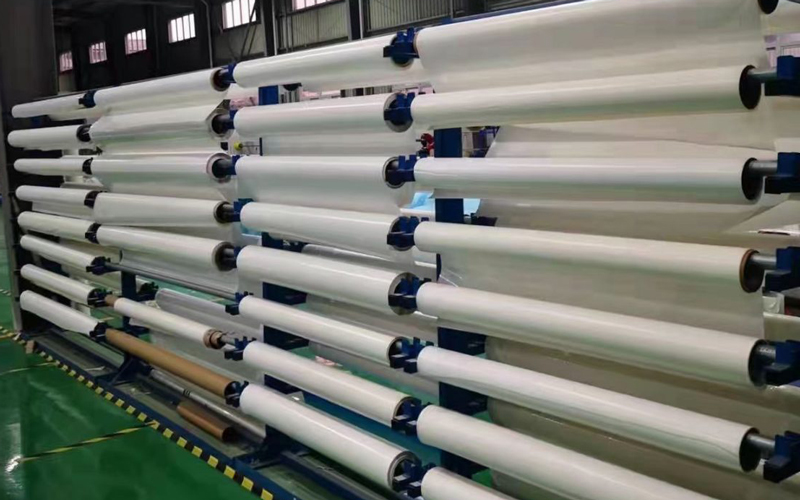
Hot Melt Film vs. Traditional Sewing
Adhesive film does not necessarily replace sewing in every garment application. Instead, it can complement conventional stitching or provide an alternative in selected areas.
Sewing remains useful where mechanical strength, structural support, or complex three-dimensional construction is required. Adhesive bonding is particularly attractive for flat seams, hems, decorative components, labels, and areas where a smooth appearance is important.
For many manufacturers, the best approach is a combination of technologies. Strategic use of adhesive film can reduce unnecessary stitching while maintaining mechanical reinforcement where it is needed.
Factors Affecting Bonding Quality
Even a high-quality hot melt adhesive film for seamless clothing may not perform properly if the production conditions are unsuitable.
Fabric cleanliness is one important factor. Dust, oil, moisture, finishing agents, or other contaminants can interfere with adhesion.
Pressure distribution is also important. Uneven pressure can result in areas with incomplete bonding or inconsistent adhesive flow.
Machine speed must also be considered. In continuous production, the bonding time available to the adhesive depends partly on line speed. Increasing production speed without adjusting temperature or pressure can reduce bonding quality.
Storage conditions should not be overlooked either. Adhesive films should generally be protected from excessive heat, moisture, contamination, and direct sunlight according to the supplier’s recommended storage requirements.
Choosing a Supplier for Apparel Adhesive Film
For garment manufacturers, supplier selection should go beyond price per roll or kilogram.
A reliable supplier should be able to provide technical information about adhesive composition, film thickness, activation conditions, recommended substrates, and expected performance.
Customization can also be important. Depending on the application, buyers may require specific film widths, thicknesses, colors, release liners, melting characteristics, or bonding performance.
Sample testing before bulk purchasing is strongly recommended. Manufacturers should provide the supplier with information about the fabric, garment application, bonding equipment, expected washing conditions, and required flexibility.
Conclusion
Hot melt adhesive film for seamless clothing provides apparel manufacturers with a practical bonding option for creating smooth, flexible, and visually clean garment structures. It can be used in sportswear, underwear, shapewear, swimwear, activewear, and various other textile applications where traditional stitching may create unwanted bulk or visible seams.
Successful application depends on matching the adhesive film to the fabric, controlling temperature and pressure, selecting the appropriate film thickness, and testing performance under realistic garment-use conditions.
For manufacturers planning to introduce adhesive bonding into their production lines, the most effective approach is to begin with fabric-specific testing and gradually establish optimized production parameters. With the right material and process, hot melt adhesive film can support more efficient seamless apparel manufacturing while maintaining the comfort, flexibility, and appearance expected from modern clothing.