
Hot melt adhesive films have become increasingly important in modern manufacturing industries because they provide efficient, clean, and reliable bonding solutions for different materials. Compared with traditional liquid adhesives and mechanical fastening methods, hot melt adhesive films offer advantages such as fast processing, uniform bonding, environmental friendliness, and improved product appearance.
Among various types of hot melt adhesive films, EVA (Ethylene Vinyl Acetate) and TPU (Thermoplastic Polyurethane) are two widely used materials. Both provide excellent bonding performance, but they have significant differences in flexibility, durability, temperature resistance, and application fields.
When manufacturers select adhesive materials for textiles, footwear, automotive interiors, electronics, and industrial products, understanding the differences between EVA and TPU is essential. The choice between these two materials directly affects product quality, service life, and production efficiency.
This article provides a detailed comparison of EVA hot melt adhesive film vs TPU, explaining their characteristics, advantages, limitations, and applications to help manufacturers choose the most suitable adhesive solution.
What Is EVA Hot Melt Adhesive Film?
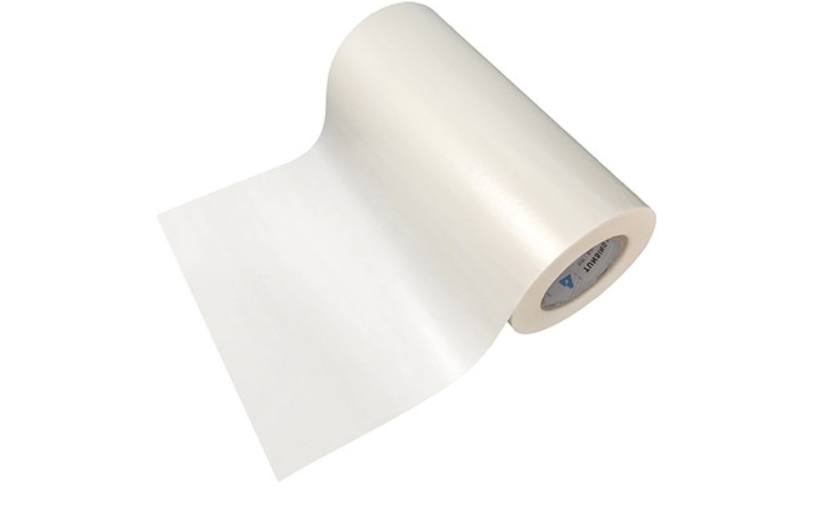
EVA hot melt adhesive film is a thermoplastic adhesive material made from ethylene vinyl acetate copolymer. It becomes soft and adhesive when heated and forms a strong bond after cooling.
EVA is one of the most commonly used hot melt adhesive materials because of its balanced performance and cost-effectiveness. It has good adhesion to many materials, including textiles, plastics, paper, wood, and metal surfaces.
The vinyl acetate content in EVA determines many of its properties. Higher vinyl acetate content generally improves flexibility and adhesion, while lower content provides higher hardness and strength.
Common characteristics of EVA hot melt adhesive film include:
- Good initial bonding strength
- Easy processing
- Low activation temperature
- Good compatibility with various materials
- Cost-effective production
- Stable performance for general applications
Due to these advantages, EVA hot melt adhesive film is widely used in packaging, textile lamination, footwear manufacturing, furniture production, and general industrial bonding.
What Is TPU Hot Melt Adhesive Film?
TPU hot melt adhesive film is made from thermoplastic polyurethane, a material known for its excellent elasticity, toughness, and resistance properties.
Unlike many traditional adhesive materials, TPU combines strong bonding performance with rubber-like flexibility. After bonding, it can maintain excellent stretchability and recover its original shape, making it especially suitable for flexible and high-performance applications.
TPU hot melt adhesive film is commonly used in industries that require high durability and demanding performance, including:
- Seamless garment manufacturing
- Sportswear production
- Medical textiles
- Automotive interiors
- Waterproof products
- Electronic components
The major advantages of TPU include:
- Excellent elasticity
- High abrasion resistance
- Strong washing resistance
- Good transparency
- Superior durability
- Excellent low-temperature flexibility
Because of these properties, TPU has become a preferred material for advanced textile bonding applications.
EVA Hot Melt Adhesive Film vs TPU: Key Differences
1. Flexibility and Elasticity
One of the biggest differences between EVA and TPU hot melt adhesive films is flexibility.
EVA provides moderate flexibility, making it suitable for applications where materials do not experience frequent stretching or movement. It can maintain stable bonding performance but has limited elasticity compared with TPU.
TPU, on the other hand, offers outstanding elasticity. It can stretch and recover repeatedly without losing bonding strength. This makes TPU particularly suitable for applications involving dynamic movement.
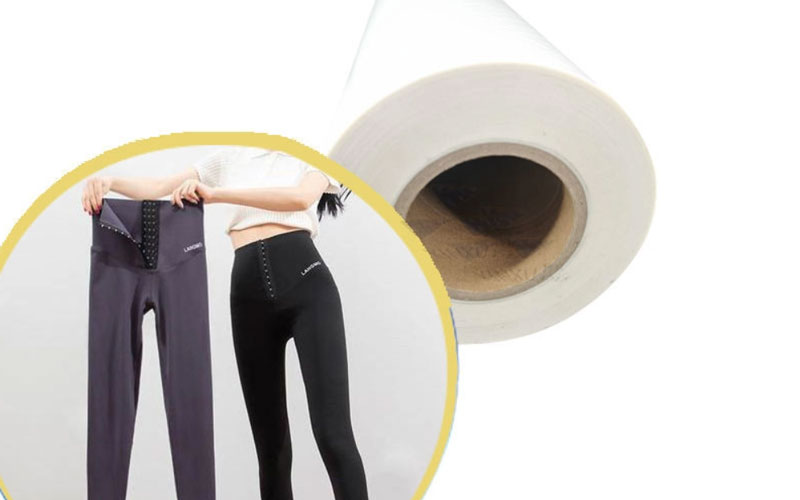
For example, in seamless garment manufacturing, fabrics such as sports leggings, compression clothing, and performance underwear require adhesive materials that can move with the body. TPU hot melt adhesive film performs better because it maintains flexibility during repeated stretching.
Therefore, when comparing EVA hot melt adhesive film vs TPU in terms of elasticity, TPU has a clear advantage.
2. Bonding Strength
Both EVA and TPU provide reliable bonding performance, but their strengths are suitable for different applications.
EVA hot melt adhesive film provides good adhesion to many common materials. It is widely used because it offers sufficient bonding strength at a competitive cost.
However, TPU generally provides stronger and more durable bonding, especially under demanding conditions. It maintains adhesion when exposed to repeated stress, vibration, and environmental changes.
For products requiring long service life and high mechanical performance, TPU is usually the better choice.
3. Temperature Resistance
Temperature resistance is another important factor when selecting hot melt adhesive films.
EVA has good processing performance at relatively low temperatures. It melts easily and can be processed efficiently. However, its heat resistance is generally lower than TPU.
TPU provides better resistance to high and low temperatures. It can maintain stable performance in more challenging environments.
For outdoor products, automotive applications, and industrial materials exposed to temperature fluctuations, TPU often provides better reliability.
4. Washing Resistance
For textile and garment applications, washing resistance is extremely important.
EVA adhesive films can provide acceptable washing performance for many general textile products. However, repeated washing, especially at high temperatures, may gradually reduce bonding strength.
TPU hot melt adhesive film offers excellent resistance to water, detergent, and repeated washing cycles. This makes it highly suitable for garments that require frequent cleaning.
In seamless garment production, TPU is commonly selected for:
- Sportswear
- Underwear
- Yoga clothing
- Outdoor apparel
- Medical compression garments
These products require long-term durability after repeated use and washing.
5. Environmental Performance
Both EVA and TPU hot melt adhesive films are considered cleaner alternatives compared with solvent-based adhesives because they do not require harmful solvents during processing.
EVA is widely used because of its simple composition and cost advantages. It provides an economical solution for many industries.
TPU also has good environmental advantages and can meet stricter performance requirements. Some TPU materials offer better recyclability and improved sustainability options.
With increasing demand for environmentally friendly manufacturing, both materials continue to develop toward greener solutions.
6. Fabric Compatibility
Material compatibility plays a key role in adhesive selection.
EVA hot melt adhesive film has good adhesion to many conventional materials, including cotton, polyester, paper, and some plastics.
TPU has excellent compatibility with synthetic fabrics, elastic materials, and technical textiles. It bonds well with fabrics containing spandex, nylon, and polyester blends.
For advanced textile applications, especially seamless clothing, TPU usually provides better results because it maintains fabric softness and elasticity.
Applications of EVA Hot Melt Adhesive Film
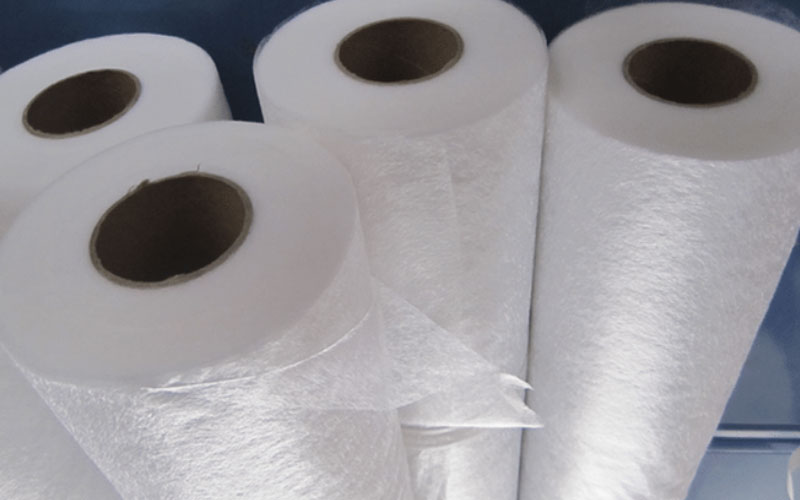
EVA hot melt adhesive film is widely used across various industries because of its balanced performance and affordability.
Textile and Fabric Lamination
EVA adhesive films are commonly used for bonding textile layers, adding decorative materials, and improving fabric structures.
Applications include:
- Clothing labels
- Fabric reinforcement
- Textile composites
- Decorative materials
Footwear Manufacturing
EVA is frequently used in shoe production for bonding components such as:
- Insoles
- Upper materials
- Decorative elements
Its easy processing and good adhesion make it suitable for mass production.
Packaging Industry
EVA hot melt adhesive film is also widely used in packaging applications, including:
- Paper bonding
- Flexible packaging
- Protective materials
Its low cost makes it attractive for large-scale production.
Applications of TPU Hot Melt Adhesive Film
TPU hot melt adhesive film is mainly used in applications requiring higher performance.
Seamless Garment Manufacturing
One of the most important TPU applications is seamless garment production.
Modern apparel manufacturers use TPU adhesive film for:
- Seam bonding
- Hem bonding
- Elastic attachment
- Waterproof seam sealing
- Functional fabric bonding
TPU helps create lightweight and comfortable garments without traditional stitching.
Sportswear and Activewear
Sportswear requires flexibility, durability, and comfort. TPU adhesive film provides excellent stretch performance and maintains garment structure during movement.
It is widely used in:
- Running clothes
- Cycling apparel
- Compression garments
- Fitness wear
Medical Textiles
Medical products often require strong bonding and skin-friendly properties. TPU adhesive film is used in:
- Compression supports
- Protective textile products
- Medical clothing
Its softness and durability make it suitable for long-term contact applications.
EVA Hot Melt Adhesive Film vs TPU: Which One Should You Choose?
The choice between EVA and TPU depends on the specific requirements of the application.
Choose EVA hot melt adhesive film when:
- Cost efficiency is a priority
- Moderate bonding strength is sufficient
- The application does not require high flexibility
- Standard materials need to be bonded
- Production volume is large
Choose TPU hot melt adhesive film when:
- High elasticity is required
- Products experience frequent movement
- Excellent washing resistance is needed
- The application requires long durability
- Flexible fabrics need bonding
For seamless garments and performance textiles, TPU is usually the preferred option because of its superior flexibility and durability.
Conclusion
When comparing EVA hot melt adhesive film vs TPU, both materials have unique advantages and suitable application areas. EVA provides an economical and reliable bonding solution for general manufacturing applications, while TPU offers superior flexibility, durability, and performance for demanding industries.
For seamless garments, sportswear, and technical textiles, TPU hot melt adhesive film is generally the better choice because it maintains elasticity, withstands repeated washing, and supports modern lightweight garment designs.
Understanding the differences between EVA and TPU allows manufacturers to select the right adhesive material, improve product performance, and create higher-quality products that meet modern market requirements.