
In modern underwear manufacturing, bonding technology has become an important alternative to traditional sewing. It helps create smooth edges, reduce visible seams, improve wearing comfort, and produce lightweight underwear with a clean appearance. As seamless underwear, bonded bras, and functional underwear continue to develop, manufacturers are paying more attention to the selection of bonding films.
Different underwear products require different bonding performance. Factors such as fabric composition, elasticity, washing resistance, softness, and bonding temperature all influence the final result. Choosing the right bonding film is therefore essential for achieving reliable adhesion without affecting the comfort and flexibility of the garment.
This article introduces the main types of bonding films for underwear and explains how manufacturers can select suitable materials for different applications.
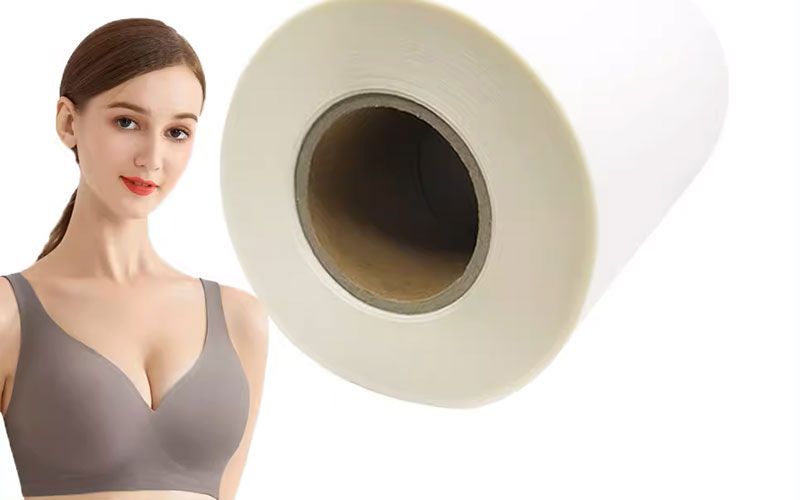
1. Why Are Bonding Films Used in Underwear Manufacturing?
Underwear is worn directly against the skin, so comfort, flexibility, and appearance are particularly important. Traditional stitching can sometimes create raised seams, pressure points, or visible sewing lines. Bonding films provide another way to join fabric layers and secure garment components.
Common advantages include:
- Smooth and flat edges: Bonding films help create clean finishes without bulky stitching.
- Improved wearing comfort: Thin adhesive layers reduce the feeling of hard or raised seams against the skin.
- Flexible bonding: Suitable films can maintain fabric elasticity during stretching and movement.
- Lightweight construction: They help reduce additional material around bonded areas.
- Better appearance: Bonded edges and seams support the clean, minimal appearance required in modern underwear designs.
- Production efficiency: With suitable heat pressing equipment and process parameters, bonding can simplify certain garment assembly operations.
However, not every bonding film is suitable for every underwear fabric. Material compatibility and processing conditions must be evaluated before production.
2. Main Types of Bonding Films for Underwear
Bonding films are available in different polymer formulations, each offering specific adhesive properties. The following are commonly considered options for underwear manufacturing.
2.1 TPU Bonding Films
Thermoplastic polyurethane (TPU) bonding films are widely used in apparel bonding applications because of their flexibility, elasticity, and soft hand feel.
For underwear, TPU films are particularly useful when the bonded area needs to stretch together with the fabric. They can be considered for bonding elastic fabrics, microfiber materials, nylon-spandex blends, and polyester-spandex textiles.
Key characteristics include:
- Good flexibility and stretch recovery.
- Soft touch suitable for close-fitting garments.
- Adhesion to various synthetic textile materials, depending on the formulation.
- Good resistance to repeated movement.
- Available in different thicknesses and melting temperature ranges.
TPU bonding films are often considered for bonded underwear edges, bra components, waistbands, and other areas where flexibility is important.
2.2 PA (Polyamide) Bonding Films
Polyamide bonding films offer good adhesion to various textile materials and are valued for their mechanical strength and durability.
Compared with softer TPU formulations, some PA films provide a firmer bonding effect. Their suitability depends on the fabric construction and the required flexibility of the finished product.
Potential applications include:
- Reinforcement of selected underwear components.
- Bonding textile layers that require stable adhesion.
- Structural areas of bras and other intimate apparel.
- Bonding applications where washing durability is an important consideration.
When selecting PA bonding films, manufacturers should evaluate the bonding temperature carefully to avoid damaging delicate or heat-sensitive fabrics.
2.3 PES (Polyester) Bonding Films
Polyester bonding films are another option for textile lamination and garment assembly. They can provide good bonding strength and are commonly considered for polyester-based fabrics.
Their performance depends on the specific polymer formulation, fabric surface, and processing conditions.
For underwear production, PES films may be suitable for selected polyester fabric combinations, decorative components, and applications where dimensional stability is required.
However, polyester bonding films are not automatically suitable for every elastic underwear fabric. Manufacturers should test whether the finished bonded area maintains sufficient flexibility and comfort.
2.4 Co-Polyamide and Co-Polyester Bonding Films
Modified polyamide and polyester formulations are designed to provide different combinations of adhesion, flexibility, and processing performance.
These materials may be considered when standard adhesive films do not meet the requirements of a particular fabric combination.
For example, manufacturers working with mixed textile compositions may need a customized bonding solution that balances adhesion strength with fabric softness.
The appropriate grade should be selected according to the substrate, bonding temperature, washing requirements, and intended application.
3. How to Choose Bonding Films for Different Underwear Products
The best bonding film depends not only on the adhesive material but also on the garment structure and its intended use.
3.1 Seamless Underwear
Seamless underwear typically uses elastic knitted fabrics containing nylon, polyester, and spandex.
The bonding film should provide sufficient stretchability and a soft finish. TPU bonding films are often worth evaluating for these applications because of their flexible characteristics.
Manufacturers should pay particular attention to edge bonding, repeated stretching, and resistance to peeling after washing.
3.2 Bras and Bralettes
Bras and bralettes may contain several different materials, including microfiber, elastic fabrics, mesh, and molded components.
Different bonding areas may have different requirements. For example, cup reinforcement may require more structural stability, while side panels and elastic edges need greater flexibility.
TPU and selected PA or PES formulations can be evaluated according to the specific fabric combination and construction design.
3.3 Shapewear and Compression Underwear
Shapewear requires a balance between elasticity, support, and dimensional stability.
The bonding film must maintain adhesion when the garment is repeatedly stretched during wearing. Excessively rigid adhesive layers may affect comfort and restrict movement.
Flexible TPU formulations are worth considering for elastic bonding areas, while other adhesive types may be suitable for selected structural components.
3.4 Waistbands and Leg Openings
Waistbands and leg openings experience frequent stretching and movement. Bonding films used in these areas should maintain adhesion without making the edges feel stiff.
Important selection factors include film thickness, elasticity, recovery, and compatibility with the fabric.
4. Important Factors When Selecting Bonding Films
Before purchasing bonding films for underwear production, manufacturers should evaluate several technical factors.
1. Fabric compatibility
Identify the exact fabric composition, including nylon, polyester, spandex, and blended materials. Different textile surfaces can produce different bonding results.
2. Activation temperature
The bonding temperature must be suitable for both the adhesive film and the fabric. Excessive heat may cause fabric shrinkage, discoloration, or deformation.
3. Stretchability
For elastic underwear, the adhesive layer should accommodate repeated stretching without cracking or peeling.
4. Softness and thickness
A thick or rigid adhesive layer may reduce wearing comfort. Thin and flexible films are often preferred for underwear applications.
5. Washing resistance
Underwear is washed frequently. Bonding performance should be evaluated after repeated washing and drying cycles under the intended care conditions.
6. Bonding equipment
The selected film must be compatible with the manufacturer’s heat press, seamless bonding machine, or other bonding equipment.
5. Testing Bonding Films Before Mass Production
Before introducing a new bonding film into mass production, manufacturers should conduct practical testing.
A recommended evaluation process includes:
- Initial adhesion test: Check whether the film bonds evenly to the selected fabrics.
- Peel strength test: Evaluate the adhesion between the bonded layers.
- Stretching test: Observe whether the bonded area cracks, deforms, or separates under repeated stretching.
- Washing test: Check adhesion and appearance after multiple washing cycles.
- Hand-feel assessment: Confirm that the bonded area remains soft and comfortable against the skin.
- Appearance inspection: Look for adhesive marks, fabric discoloration, wrinkles, and uneven bonding.
Testing should use the actual fabric combinations and production equipment whenever possible. Laboratory results alone may not fully represent real manufacturing conditions.
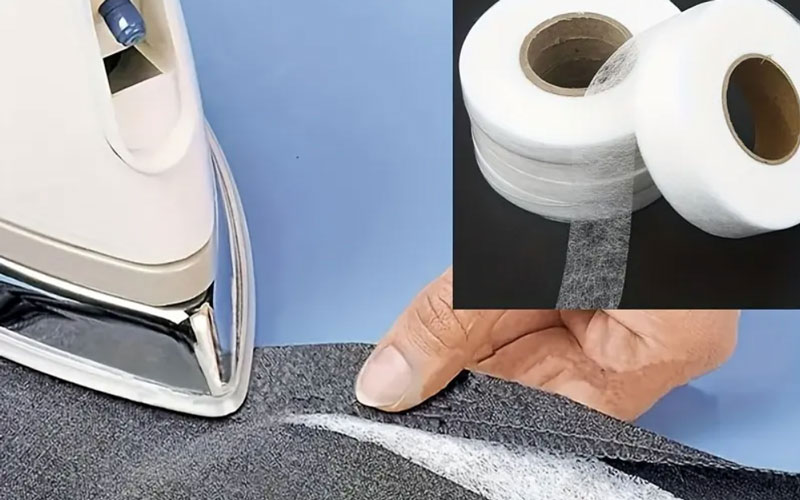
6. Work with the Right Bonding Film Supplier
Selecting suitable bonding films is an important part of developing high-quality underwear products. A reliable supplier should be able to provide different adhesive formulations, film thicknesses, widths, and activation temperature options.
For underwear manufacturers, customized recommendations are particularly valuable because fabric composition and garment construction can vary considerably between products.
Before confirming a bulk order, provide the supplier with fabric samples, application details, required stretch performance, washing conditions, and available bonding equipment. This information helps identify a suitable adhesive film and reduces unnecessary production trials.
Conclusion
Choosing the right bonding films for underwear requires more than comparing adhesive strength. TPU, PA, PES, and modified polymer films each offer different performance characteristics, making them suitable for different fabric combinations and garment structures.
For seamless underwear, bras, shapewear, and elastic garment edges, manufacturers should prioritize fabric compatibility, flexibility, softness, activation temperature, and washing resistance.
By testing the adhesive film with actual production materials and equipment, underwear manufacturers can achieve more consistent bonding results, improve garment comfort, and support the development of modern seamless apparel.