
Textile manufacturing increasingly requires processes that combine accurate material positioning, controlled heating, and consistent bonding. While conventional flat pressing remains useful for many products, some textile components feature curved profiles that demand a different approach.
Curve heat pressing can support selected applications involving shaped fabric assemblies, thermal bonding, and specialized textile components. Its suitability depends on the geometry of the product, the material combination, the adhesive system, and the required finished appearance.
For garment manufacturers, understanding where curved heat pressing can be used is an important step toward choosing appropriate equipment. It also helps production teams identify applications that may benefit from improved process control, repeatability, and more suitable pressing configurations.
Understanding Curve Heat Pressing
Curve heat pressing applies controlled heat to a workpiece with a curved or shaped surface. Depending on the equipment design, the process may be used to activate thermal adhesives, join compatible layers, or shape selected components during manufacturing.
The process is different from simply pressing a flat fabric panel. A curved workpiece can have variations in contact area, material thickness, and surface orientation. If the pressing configuration does not match the product, some areas may receive inadequate contact while others experience excessive compression.
Manufacturers should therefore consider both the heating conditions and the geometry of the component. The correct temperature, cycle duration, and pressing arrangement depend on the specific materials and the adhesive system used.
Curve heat pressing should not be treated as a universal replacement for sewing, ultrasonic welding, conventional flat pressing, or other joining methods. Instead, it is one potential processing option for applications where its capabilities match the product requirements.
1. Shaped Components in Garment Manufacturing
Garment manufacturing includes many components that are not completely flat during processing. Certain structured panels, shaped fabric assemblies, and specialized garment sections may require localized heat bonding or forming.
In these applications, manufacturers need to consider how the fabric behaves when placed against the pressing surface. Stretch characteristics, thickness, coatings, and reinforcement layers can all affect the final result.
A suitable curved pressing arrangement may help maintain contact across the intended processing zone. This can be particularly relevant when a component’s geometry makes ordinary flat pressing difficult or when the production team needs more repeatable processing conditions.
Before introducing the process, manufacturers should identify the exact bonding area and determine whether the selected machine can accommodate the product without unwanted folds or distortion. Sample trials can help establish suitable temperature and time settings.
2. Seamless Apparel and Thermal Bonding
Seamless apparel production often involves joining or integrating materials while minimizing the appearance or bulk of conventional stitched seams in selected areas. Thermal bonding may be used where compatible adhesives, films, and fabrics support the intended construction.
Curved sections can present additional challenges because the materials may need to follow a shaped contour during bonding. Inconsistent contact can cause incomplete adhesion, while excessive heat may affect the appearance or dimensions of the garment component.
Curve heat pressing may be worth evaluating for suitable localized bonding tasks involving shaped sections of seamless apparel. However, the precise application must be confirmed through material testing because not every seamless garment process uses the same bonding method.
Manufacturers should evaluate stretch recovery, flexibility, wash durability, and the appearance of the finished joint where these properties are relevant. Testing should reflect the actual conditions the product will experience during use.
3. Bonding Multilayer Textile Components
Some textile products combine an outer fabric, an adhesive layer, reinforcement material, foam, or another functional substrate. These assemblies can be difficult to process because the layers may respond differently to heat and pressure.
For example, a thicker substrate may require a different heating duration from a lightweight textile. An adhesive film may also have a narrower processing window than the outer material can tolerate.
Curve heat pressing can be considered when the assembly includes a shaped bonding zone and the equipment can provide suitable contact. The process should be validated for the complete material stack rather than for each layer in isolation.
During testing, inspect the bonded component after cooling. Check for separation, trapped wrinkles, excessive adhesive spread, surface marks, and dimensional changes. Where the product has durability requirements, evaluate the joint under appropriate mechanical or environmental tests.
This approach helps manufacturers determine whether curved heat pressing is a practical option for their multilayer product rather than assuming that one machine setting will work for every combination.
4. Processing Curved Textile Components
The geometry of a product can influence the choice of pressing equipment. Components with rounded profiles or a defined radius may not make uniform contact with a flat pressing surface.
In these situations, manufacturers should examine the relationship between the workpiece curvature and the machine’s working configuration. The pressing surface must be appropriate for the intended contact zone, and the operator must be able to position the component consistently.
A curved configuration may be relevant for shaped textile assemblies, specialized garment components, and selected products that require localized thermal processing. Whether a particular machine can handle a given component depends on its working dimensions, fixture design, and operating characteristics.
Before purchasing equipment, provide the supplier with drawings or physical samples. Confirm the curve radius, dimensions, material thickness, and required bonding area. This makes it easier to determine whether the standard machine is suitable or a customized configuration is needed.
5. Customized Textile Products and Small-Batch Manufacturing
Manufacturers producing customized textile goods may handle different component sizes, shapes, and material combinations. A machine with adjustable processing parameters can be useful when production requires multiple validated settings.
However, customization does not automatically mean that every product can be processed on the same equipment. Workpiece dimensions, surface geometry, and material compatibility still determine whether the machine is suitable.
For small-batch manufacturing, setup time and repeatability are particularly important. If operators must repeatedly determine temperature and cycle duration from scratch, switching between products can become inefficient.
A better workflow is to establish a process sheet for each approved material combination. Record the working configuration, temperature, heating time, positioning method, and inspection requirements. This allows operators to reproduce previously validated conditions when the same product returns to production.
When a manufacturer expects frequent changes in product geometry, it should discuss the available tooling and customization options with the equipment supplier before ordering.
6. Improving Process Consistency and Quality Control
Consistent thermal bonding requires control over several variables. Temperature influences adhesive activation, heating time affects thermal exposure, and pressure or contact conditions influence how the materials interact during processing.
These variables should be controlled together. Increasing the temperature to compensate for poor contact, for example, may damage the material without solving the underlying problem.
Manufacturers should establish clear inspection criteria before production starts. Depending on the product, these may include bond strength, surface appearance, dimensional accuracy, flexibility, and resistance to separation.
It is also useful to retain sample records when new products or materials are introduced. Comparing approved samples with production output helps identify changes in material behavior, equipment conditions, or operator setup.
Where possible, change one process variable at a time during troubleshooting. Documenting the results makes it easier to understand the effect of each adjustment and reduces repeated experimentation.
7. Factors to Consider When Selecting Equipment
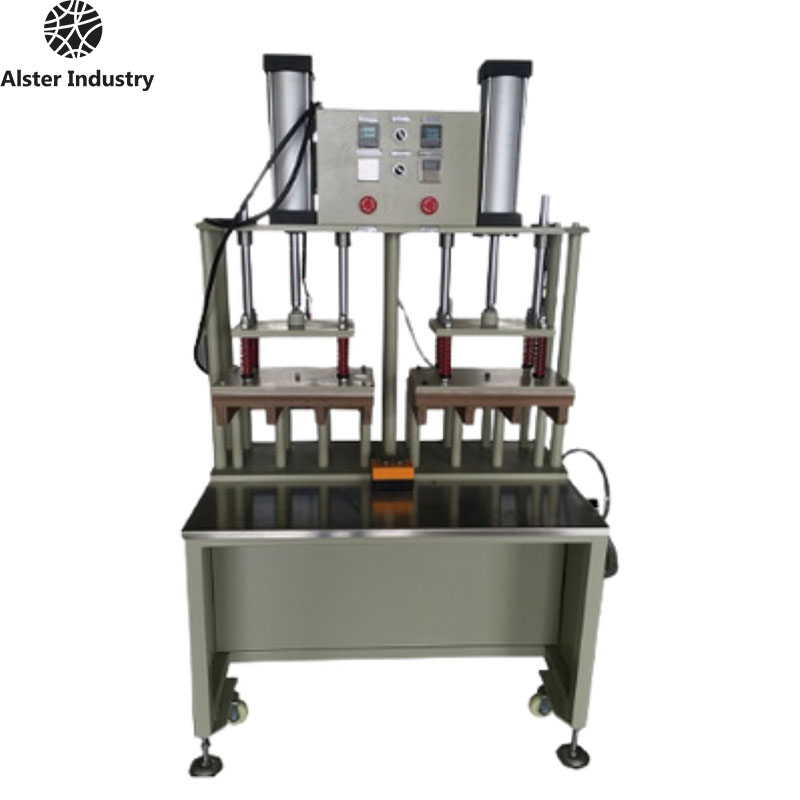
Equipment selection should begin with the actual application rather than a general assumption that a curve hot press machine will suit all textile production tasks.
First, check the temperature range and time control against the adhesive and substrate requirements. Second, compare the machine’s working area and curved configuration with the product dimensions. Third, verify electrical and pneumatic requirements, installation space, and operator access.
Manufacturers should also consider the complete production cycle. Heating time is only one part of the process; loading, positioning, pressing, unloading, and inspection may all affect output.
If the intended products vary significantly, ask whether the machine can accommodate different fixtures or customized working dimensions. Request clarification about maintenance, operating instructions, spare parts, and technical support as part of the purchasing process.
Finally, test representative workpieces wherever practical. Product samples provide evidence of compatibility that cannot be obtained from specifications alone.
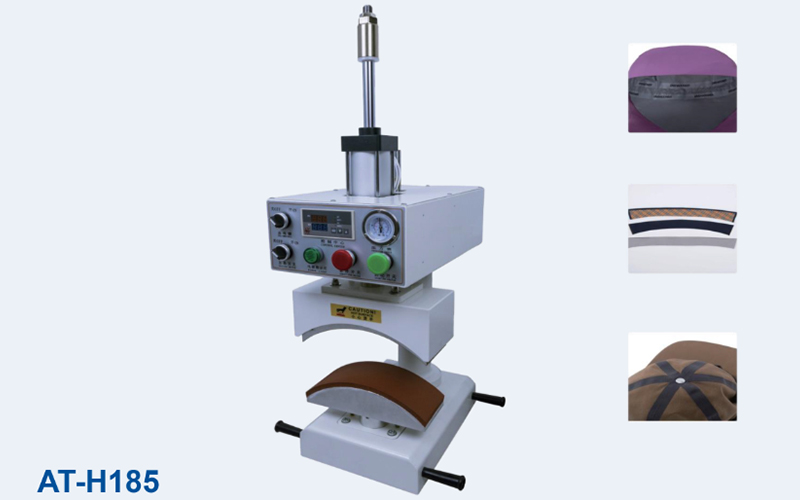
Considering the AT-H185 Curve Hot Press Machine
The AT-H185 Curve Hot Press Machine is designed for curved surface pressing, thermal bonding, and shaping applications. Its adjustable temperature and heating time controls provide parameters that manufacturers can evaluate when planning suitable textile processing tasks.
The listed specifications include single-phase 220V power, 950W machine power, a working air pressure of 0.5 MPa, a temperature range of 0–220°C, and a heating time range of 2–999 seconds. Its stated working area is 250 × 100 × R185 × 70.
These figures can help production teams conduct an initial equipment assessment. Buyers should confirm the working-area dimensions, fixture compatibility, material limitations, and any customized requirements with the manufacturer before finalizing their selection.
The machine’s suitability for a particular seamless apparel or textile application should be established through sample testing. A product category alone is not enough to guarantee compatibility, because adhesives, fabric structures, and component geometries can vary considerably.
Conclusion
Curve heat pressing can be a useful option for selected garment and textile applications involving shaped components, compatible thermal bonding materials, and curved processing surfaces. Potential uses include certain garment assemblies, multilayer textile products, specialized shaped components, and customized manufacturing tasks.
Successful implementation depends on matching the equipment to the workpiece, validating temperature and time settings, maintaining suitable contact, and establishing repeatable quality checks.
For manufacturers considering a curved pressing process, the best starting point is a clear definition of the application and a representative material sample. Comparing these requirements with machine specifications and conducting controlled trials can help determine whether a curve hot press machine offers a practical solution for the intended production workflow.