
TPU hotmelt film is an important bonding material in modern seamless underwear manufacturing. As the lingerie industry continues to prioritize comfort, lightweight construction, smooth edges, and attractive appearance, manufacturers are increasingly exploring adhesive films that can join fabrics without traditional stitching. TPU hotmelt film provides a practical solution for bonding elastic fabrics, fixing garment components, and creating smooth, seamless structures.
Seamless underwear is designed to minimize visible seams and reduce the discomfort associated with bulky stitching. Unlike conventional underwear that relies heavily on sewing, seamless products often use heat bonding, ultrasonic bonding, and other specialized manufacturing techniques. In these processes, TPU hotmelt film can act as an intermediate adhesive layer that connects compatible materials under controlled temperature and pressure.
Understanding the properties, applications, and processing requirements of TPU hotmelt film helps underwear manufacturers select suitable bonding materials for different garment designs. From bonding waistbands to attaching lace and reinforcing garment edges, this material supports flexible production options while helping maintain the appearance and functionality of finished underwear.
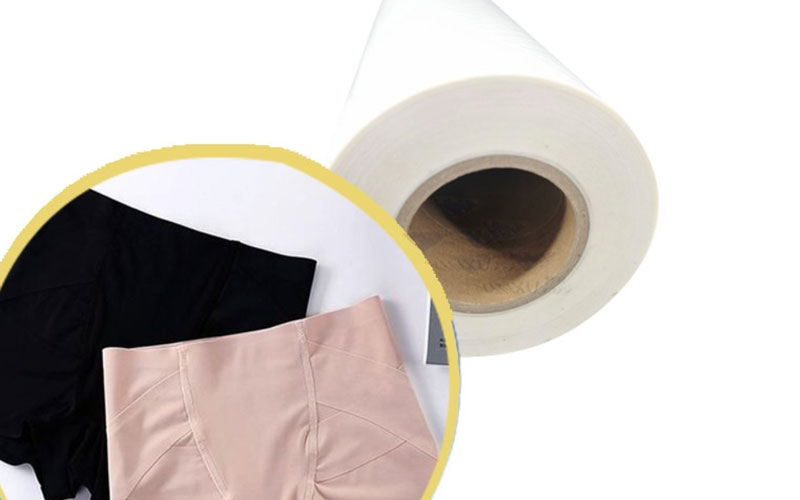
What Is TPU Hotmelt Film?
TPU hotmelt film is a thermoplastic polyurethane-based adhesive film that softens when heated and develops a bond as it cools. TPU, or thermoplastic polyurethane, is known for its flexibility, elasticity, and abrasion resistance. These characteristics make it a useful material for textile bonding applications where the finished product must accommodate repeated stretching and movement.
Unlike liquid adhesives, hotmelt film is supplied in a solid, film-shaped form. This allows manufacturers to position the adhesive accurately between fabric layers before applying heat and pressure. After the bonding process, the adhesive forms a layer that holds the selected materials together.
Different TPU hotmelt films can vary in thickness, hardness, melting or activation temperature, elasticity, and bonding strength. These differences are important in seamless underwear production because lightweight lingerie fabrics behave differently from thicker elastic fabrics or multilayer garment structures.
The appropriate film should be selected according to the fabric composition, bonding equipment, garment design, and required performance. Compatibility testing is essential because some synthetic fabrics, elastane blends, and delicate textiles may respond differently to heat and pressure.
Why TPU Hotmelt Film Is Suitable for Seamless Underwear
1. Flexible Bonding for Stretch Fabrics
Elasticity is one of the most important requirements in underwear manufacturing. Products must stretch during dressing and movement while returning to their original shape as much as possible.
TPU hotmelt film can provide flexible bonding when its formulation is matched to the stretch requirements of the garment. This helps bonded areas move with the surrounding fabric rather than becoming unnecessarily rigid.
For seamless underwear, this property is particularly useful around waistbands, leg openings, side panels, and other areas that experience repeated stretching. The final performance depends on the adhesive grade, fabric combination, bonding conditions, and garment construction.
2. Smooth Edges and a Clean Appearance
Visible stitching can create raised edges or lines under tight-fitting clothing. Seamless underwear manufacturers therefore aim to create flatter transitions between garment components.
TPU hotmelt film can bond fabric layers without requiring a conventional stitched seam at every connection. When combined with suitable cutting and bonding techniques, it can help produce smooth edges and a cleaner garment appearance.
This is valuable for briefs, panties, shapewear, and other close-fitting underwear products. However, the film alone does not guarantee an invisible bond. Film thickness, adhesive distribution, fabric transparency, and processing precision all influence the final appearance.
3. Lightweight Construction
Lightweight materials are important for underwear designed for everyday wear. Excessive adhesive thickness or unnecessary layers can affect flexibility and create noticeable areas within a garment.
TPU hotmelt film is available in different thicknesses, allowing manufacturers to choose a suitable adhesive layer for lightweight textile assemblies. A properly selected film can support secure bonding without adding excessive bulk.
For delicate lingerie, the goal is to balance bonding strength with softness and flexibility. Testing different film thicknesses helps manufacturers identify the best option for their particular fabric and product design.
4. Potential for Durable Bonds
Seamless underwear must withstand repeated stretching, washing, drying, and everyday use. A bond that separates after a limited number of wear cycles can compromise garment quality.
A suitable TPU hotmelt film can provide reliable adhesion to compatible fabrics when processed under appropriate conditions. Its thermoplastic properties also make it suitable for heat-activated textile bonding processes.
Nevertheless, durability is not determined by the adhesive alone. Fabric surface characteristics, temperature, pressure, dwell time, and post-bonding conditions all affect the result. Manufacturers should evaluate peel strength, stretch recovery, and wash durability before approving a film for mass production.
Main Applications of TPU Hotmelt Film in Seamless Underwear
Bonding Waistbands and Leg Openings
Waistbands and leg openings require secure connections while maintaining elasticity and comfort. TPU hotmelt film can help attach elastic bands or bond folded fabric edges where the materials are compatible with the adhesive.
The film must be flexible enough to accommodate movement without creating stiff areas. Bonding tests should focus on repeated stretching and resistance to peeling, particularly in areas subjected to continuous tension.
Attaching Lace and Decorative Fabrics
Lace, mesh, and decorative textile panels are common in lingerie designs. These materials may have delicate structures that make conventional stitching difficult to conceal.
TPU hotmelt film can be used to bond selected lace or mesh components to compatible base fabrics. A thin, appropriately formulated adhesive layer can help preserve a neat appearance while minimizing additional stitching.
Because lace patterns and mesh openings vary considerably, manufacturers should assess adhesive visibility, penetration, and bonding uniformity. Excessive heat or pressure may distort delicate materials or produce an unwanted glossy effect.
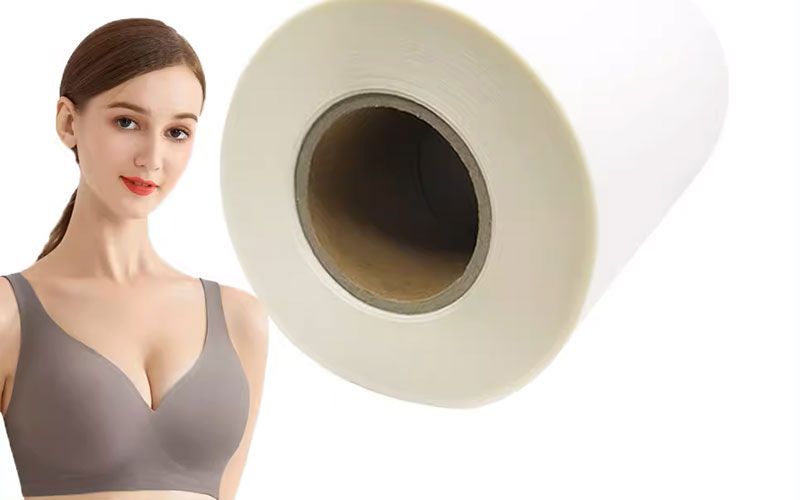
Bonding Bra Components
Some seamless underwear and lingerie products incorporate bonded bra cups, lining fabrics, support panels, or other structural components. TPU hotmelt film may be used to join compatible textile layers within these assemblies.
The selected film should provide an appropriate balance between flexibility, adhesion, and resistance to repeated deformation. For components that require substantial support, the adhesive must be evaluated alongside the overall garment structure rather than treated as a substitute for mechanical design.
Reinforcing Edges and Decorative Details
Certain underwear designs require localized reinforcement around openings, attachment points, or decorative elements. TPU hotmelt film can provide a controlled bonding layer in these areas, helping secure components without adding conventional seams everywhere.
The exact application depends on the film’s activation conditions, the fabric’s heat resistance, and the required flexibility of the finished product.
How TPU Hotmelt Film Is Applied During Manufacturing
The bonding process generally begins with selecting compatible fabrics and preparing the adhesive film. Manufacturers cut the film to the required dimensions and position it between the materials that need to be joined.
The assembly is then processed using suitable heat-bonding equipment, such as a heat press or specialized textile bonding machine. Temperature, pressure, and dwell time must be adjusted according to the film specification and fabric characteristics.
Once the adhesive has activated and the assembly has been processed, the bonded area is allowed to cool or stabilize as required by the material supplier’s instructions. The finished component can then proceed to subsequent cutting, shaping, assembly, or inspection operations.
Process control is essential. Insufficient heat may result in weak adhesion, while excessive heat can damage elastic fibers, distort fabric, or cause adhesive overflow. Excessive pressure may also flatten delicate textures or change the appearance of lace and mesh.
Before mass production, manufacturers should conduct small-scale trials and document the successful bonding parameters for each material combination.
How to Choose the Right TPU Hotmelt Film
Selecting a suitable TPU hotmelt film requires more than comparing price or thickness. Manufacturers should consider several technical factors.
First, check fabric compatibility. Nylon, polyester, elastane blends, lace, and mesh may have different surface properties and heat tolerances. The adhesive must bond effectively without damaging the textile.
Second, evaluate activation temperature and processing requirements. A lower-temperature film may be preferable for heat-sensitive fabrics, provided it delivers the required bonding performance.
Third, consider elasticity and softness. The bonded area should accommodate the intended garment stretch without becoming excessively rigid or restricting movement.
Fourth, assess durability. Peel strength, repeated stretching, washing resistance, and aging performance should be tested under conditions representative of the finished product’s intended use.
Finally, consider film thickness, transparency, color, and cutting accuracy. These factors influence the appearance of thin fabrics and the consistency of automated or high-volume production.
Conclusion
TPU hotmelt film offers underwear manufacturers a versatile option for bonding compatible textile materials in seamless garment production. Its potential benefits include flexible connections, smooth edges, lightweight construction, and reliable adhesion when the correct formulation and processing conditions are used.
Applications include waistband bonding, leg opening construction, lace attachment, bra component assembly, and localized reinforcement. Successful implementation depends on selecting the right film for the fabric, controlling heat and pressure, and validating the finished garment through stretching and washing tests.
For manufacturers developing comfortable, close-fitting underwear, evaluating TPU hotmelt film as part of the overall garment construction process can help improve production consistency and support modern seamless design requirements.