
In modern manufacturing, bonding technology plays a decisive role in product performance, durability, and production efficiency. Among the various adhesive solutions available today, hot melt glue film has emerged as one of the most versatile and reliable materials across industries such as apparel, footwear, automotive interiors, electronics, medical textiles, and packaging. With increasing demand for cleaner production processes, automation compatibility, and sustainable materials, hot melt glue film continues to gain global attention.
This article provides a comprehensive introduction to hot melt glue film, including its definition, composition, working principles, performance characteristics, classifications, application processes, and major industrial uses. By understanding its capabilities and advantages, manufacturers can better evaluate how hot melt glue film fits into their production systems.
What Is Hot Melt Glue Film?
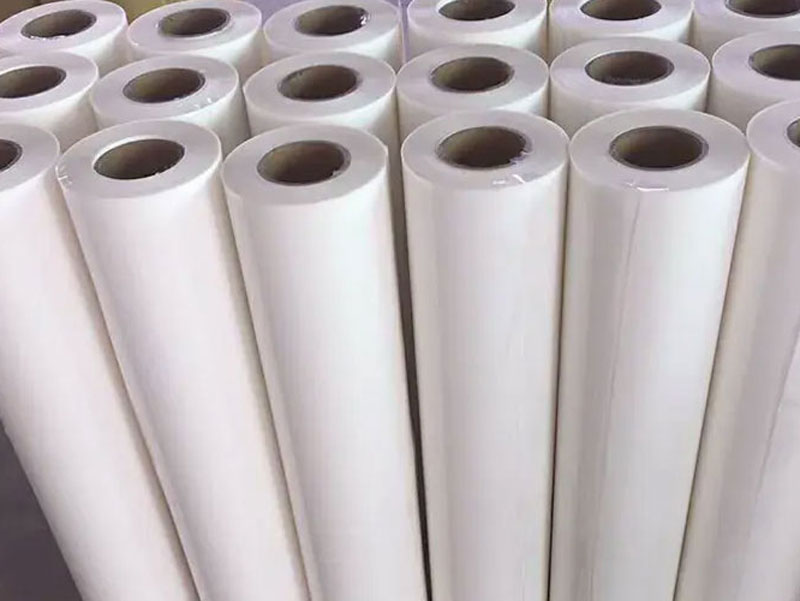
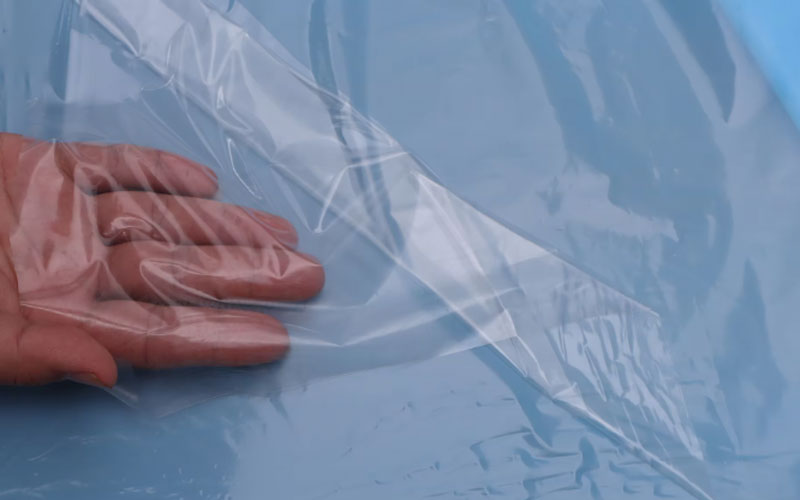
Hot melt glue film is a thermoplastic adhesive material manufactured in thin sheet or roll form. It remains solid at room temperature but becomes tacky and active when heated to its specific activation temperature. Under heat and pressure, it melts and flows into the surface of the substrates being bonded. Once cooled, it solidifies and forms a strong, durable bond.
Unlike solvent-based adhesives, hot melt glue film does not rely on chemical curing or evaporation. Its bonding mechanism is purely physical, based on thermal softening and solidification. This characteristic allows for fast production cycles and environmentally friendly operation.
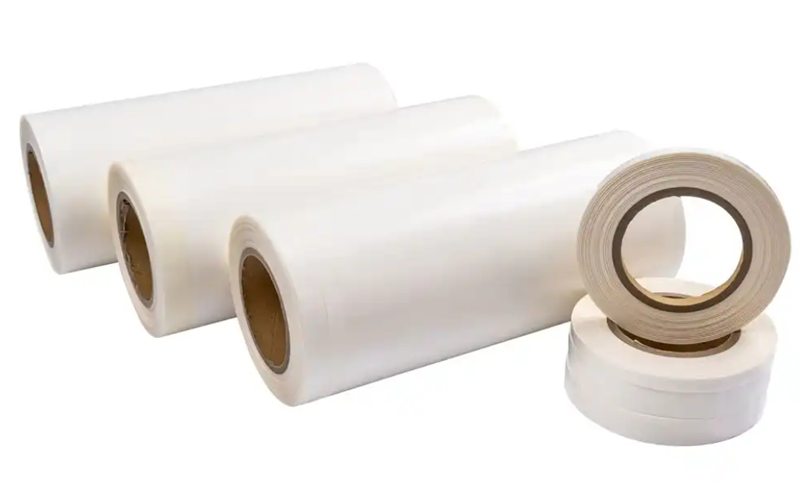
Hot melt glue film is typically available in thicknesses ranging from 0.03 mm to 0.2 mm or more, depending on the application requirements. It can be supplied in rolls, sheets, or customized die-cut shapes for specific industrial uses.
Basic Composition and Material Types
The performance of hot melt glue film largely depends on its polymer base. Different raw materials provide different mechanical properties, temperature resistance, flexibility, and bonding strength.
1. Thermoplastic Polyurethane (TPU)
TPU-based hot melt glue film is widely used in textile and garment industries due to its elasticity and softness. It offers:
- Excellent flexibility and stretch recovery
- Strong bonding performance with synthetic fabrics
- Good wash resistance
- Comfortable hand feel
TPU film is particularly suitable for seamless garments, sportswear, and compression apparel.
2. Polyester (PES)
Polyester-based hot melt glue film is known for its:
- High bonding strength
- Good chemical resistance
- Excellent heat resistance
It is often used in automotive interiors, industrial fabrics, and structural lamination applications.
3. Polyamide (PA)
PA-based film provides:
- Superior heat resistance
- Strong adhesion to metals and engineering plastics
- Excellent durability
It is commonly applied in electronics and industrial component bonding.
4. Ethylene Vinyl Acetate (EVA)
EVA hot melt glue film features:
- Lower activation temperature
- Cost-effectiveness
- Good flexibility
It is widely used in packaging, footwear, and lightweight assembly products.
Key Characteristics of Hot Melt Glue Film
Hot melt glue film offers several significant advantages compared to traditional adhesive systems.
Environmental Friendliness
Because it contains no solvents, hot melt glue film produces no volatile organic compound (VOC) emissions during bonding. This makes it compliant with strict environmental regulations in North America, Europe, and other developed markets.
High Bonding Efficiency
The bonding process requires only heat and pressure, eliminating drying time. Production cycles are significantly shorter compared to liquid adhesives.
Uniform Adhesive Layer
Since it is manufactured in film form, the thickness of the adhesive layer is consistent. This improves product quality and bonding stability.
Clean Application
There is no glue overflow or dripping, which ensures a neat working environment and reduces material waste.
Strong and Durable Bond
Once cooled, the film forms a stable bond with excellent peel strength, shear resistance, and wash durability.
Automation Compatibility
Hot melt glue film integrates easily with automated production lines, including heat press systems, lamination machines, and seamless bonding machines.
Bonding Process of Hot Melt Glue Film
The bonding procedure is relatively simple but requires controlled temperature and pressure.
Step 1: Material Preparation
The substrates to be bonded must be clean and properly aligned. Contaminants such as dust, oil, or moisture may reduce bonding performance.
Step 2: Positioning the Film
Hot melt glue film is placed between the two materials or on one bonding surface.
Step 3: Heat Activation
Using a heat press or lamination machine, the film is heated to its activation temperature. The temperature varies depending on the polymer type.
Step 4: Pressure Application
Pressure ensures the melted adhesive penetrates the fiber or surface structure of the substrates.
Step 5: Cooling
After heating, the bonded materials are allowed to cool. The adhesive solidifies and forms a permanent bond.
Major Applications of Hot Melt Glue Film
Hot melt glue film has expanded into multiple industries due to its versatility.
1. Seamless Garment Manufacturing
The garment industry is one of the fastest-growing application sectors for hot melt glue film. Sportswear and intimate apparel brands such as Nike and Adidas have adopted bonding technology to enhance garment comfort and appearance.
Applications include:
- Seamless sportswear panel bonding
- Bra cup assembly
- Elastic waistband attachment
- Compression garment reinforcement
- Waterproof seam sealing
By replacing traditional stitching, hot melt glue film reduces seam bulk, eliminates needle holes, and improves overall comfort.
2. Footwear Industry
In footwear manufacturing, hot melt glue film is used for:
- Shoe upper lamination
- Insole bonding
- Decorative logo attachment
- Waterproof membrane bonding
Its flexibility allows shoes to maintain durability under repeated bending and stress.
3. Automotive Interior Industry
Automotive manufacturers such as Toyota require high-performance adhesives for interior components.
Hot melt glue film is applied in:
- Headliner lamination
- Seat fabric bonding
- Door panel decoration
- Sound insulation materials
The adhesive must withstand temperature fluctuations, vibration, and long-term use without degradation.
4. Electronics and Electrical Industry
Hot melt glue film is widely used in electronics for:
- Insulation bonding
- Flexible printed circuit reinforcement
- Component encapsulation
- Protective film lamination
Its solvent-free nature makes it ideal for sensitive electronic environments.
5. Medical and Protective Textiles
Medical garments and protective clothing often require waterproof and breathable seams. Hot melt glue film enables:
- Seam sealing for surgical gowns
- Protective suit bonding
- Disposable medical product assembly
The absence of solvents ensures safety and hygiene compliance.
6. Packaging and Printing Industry
Hot melt glue film improves efficiency in packaging production by:
- Bonding paperboard layers
- Laminating decorative films
- Assembling gift boxes
It eliminates long drying times associated with liquid adhesives.
Comparison with Liquid Adhesives
When comparing hot melt glue film with traditional liquid adhesives, several differences become clear:
- No solvent evaporation required
- Faster production speed
- More uniform adhesive thickness
- Reduced waste
- Cleaner factory environment
These advantages make hot melt glue film especially suitable for high-volume automated manufacturing.
Factors to Consider When Selecting Hot Melt Glue Film
Choosing the right hot melt glue film requires evaluation of several factors.
Activation Temperature
Low-temperature films are suitable for heat-sensitive fabrics, while high-temperature films provide stronger bonding for industrial applications.
Substrate Compatibility
Different substrates require compatible adhesive types. For example, TPU films work well with elastic textiles, while PA films bond better to metal and engineering plastics.
Thickness
Thicker films provide stronger adhesion but may affect flexibility and cost.
Environmental Requirements
Manufacturers exporting products must ensure compliance with regulations such as REACH and RoHS.
End-Use Conditions
Consider whether the bonded product will be exposed to washing, moisture, high temperature, or mechanical stress.
Future Trends of Hot Melt Glue Film
As industries move toward sustainability and automation, hot melt glue film continues to evolve.
Development of Bio-Based Materials
Researchers are exploring renewable raw materials to reduce dependence on petroleum-based polymers.
Lower Activation Temperatures
New formulations aim to reduce energy consumption during bonding.
Enhanced Elasticity
Improved elasticity is essential for seamless garments and stretchable fabrics.
Integration with Smart Manufacturing
Hot melt glue film is increasingly used alongside digital control systems and automated production lines.
Conclusion
Hot melt glue film has become a crucial adhesive solution in modern manufacturing. Its solvent-free nature, high bonding efficiency, consistent thickness, and compatibility with automated systems make it superior to many traditional adhesive methods.
From seamless sportswear and footwear to automotive interiors and electronics, hot melt glue film continues to expand its industrial presence. As technology advances and sustainability requirements grow stricter, hot melt glue film will play an even more important role in shaping the future of manufacturing.
For companies seeking improved production efficiency, enhanced product quality, and environmentally responsible bonding solutions, hot melt glue film offers a reliable and forward-looking choice.